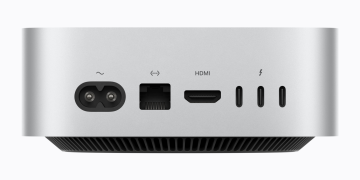





Apple has unveiled the next Mac mini, and it’s sticking with the same small footprint from the 2024 M4 lineup while packing in significantly stronger chips, faster storage, and quicker networking.
As before, there are two versions: a standard model built around the new M6 chip, and a higher-end model with the M5 Pro, the same chip found in this year’s MacBook Pro.
Pricing and Availability
The M6 Mac mini starts at $899, and the M5 Pro model starts at $1,699. Both prices are $100 higher than the previous M4 generation.
Preorders are now open, but the computers won’t actually ship until September 22, which should give Apple time to build up stock after the last generation ran into shortages driven by demand for AI workloads.
What’s Inside the M6 Model?
The base Mac mini starts at 16GB of unified memory (configurable up to 32GB) and 256GB of storage, matching last generation’s starting point, but the storage itself is now twice as fast, in line with the recent MacBook Air and Pro updates.
The M6 chip itself is a real jump. It has a 12-core CPU, up from 10 cores on the M4, split into two “super cores,” four performance cores, and six efficiency cores.
It’s also the first Apple chip built on a 2nm manufacturing process. Apple says this adds up to roughly 40% faster CPU performance than the M4.
The GPU also grows to 12 cores and, for the first time on a Mac mini, includes Neural Accelerators in every core.
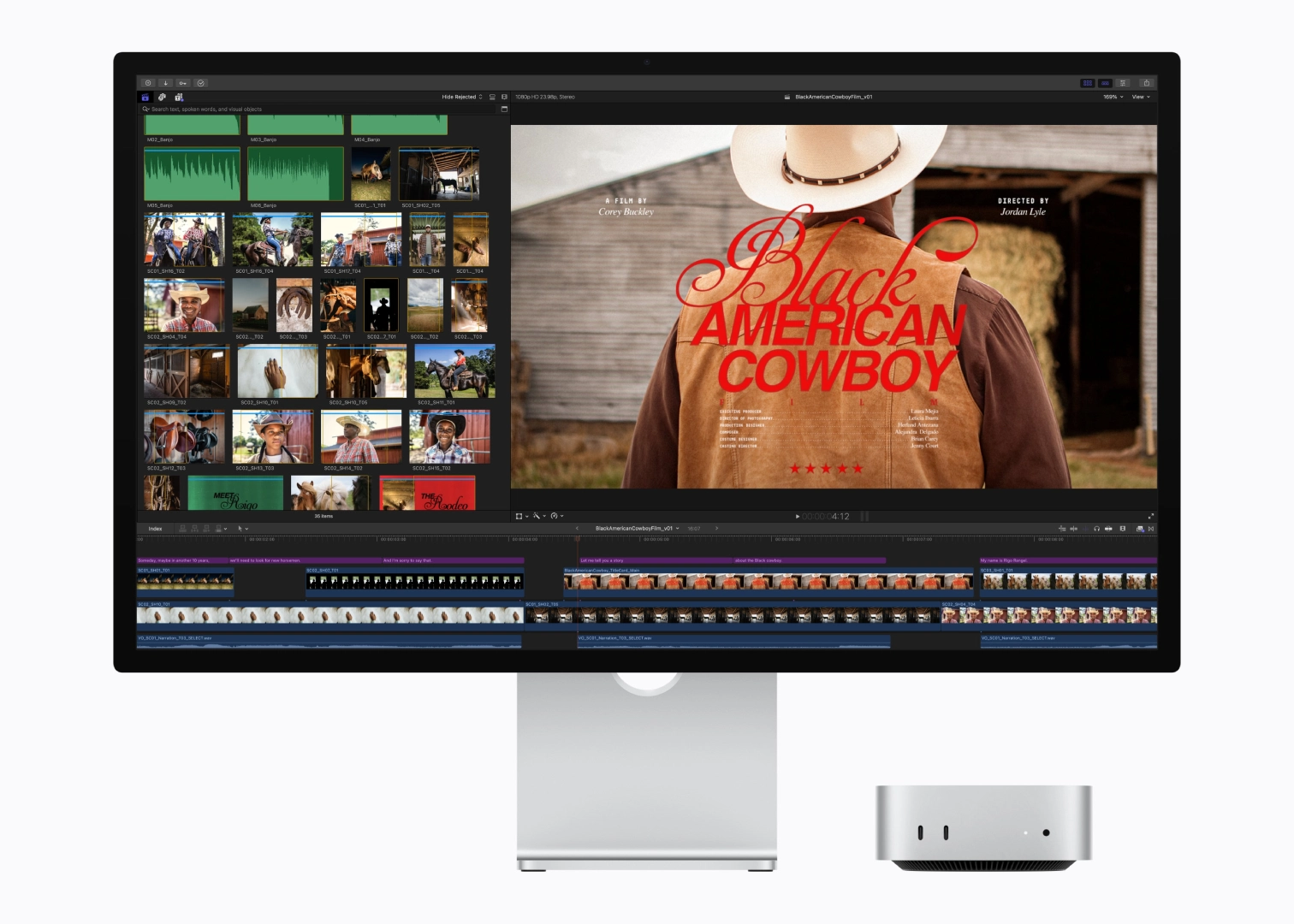
Apple claims this results in graphics performance up to twice as fast as the M4, especially in games using ray tracing, and up to 4x faster AI performance thanks to the accelerators combined with a new Dual 16-core Neural Engine that’s about twice as fast as before.
Memory bandwidth also increases, from 120GB/s on the M4 to 170GB/s on the M6.
READ: Apple Wants You to Stop Buying iPhones and Start Renting Them
What’s Inside the M5 Pro Model?
The M5 Pro version starts at 24GB of memory and 512GB of storage, and it’s configurable up to an 18-core CPU, a 20-core GPU, and 64GB of unified memory, with memory bandwidth up to 307GB/s.
Like the M6, the M5 Pro’s GPU cores now include Neural Accelerators, which Apple says brings real gains in AI-related tasks like upscaling photos and video, and running larger diffusion models locally.
The GPU also picks up an improved shader core and third-generation ray tracing, aimed at people doing 3D design, visual effects, and game development.
READ: BREAKING: Tim Cook to Step Down as Apple CEO After 15 Years, John Ternus to Take Over
Ports and Connectivity
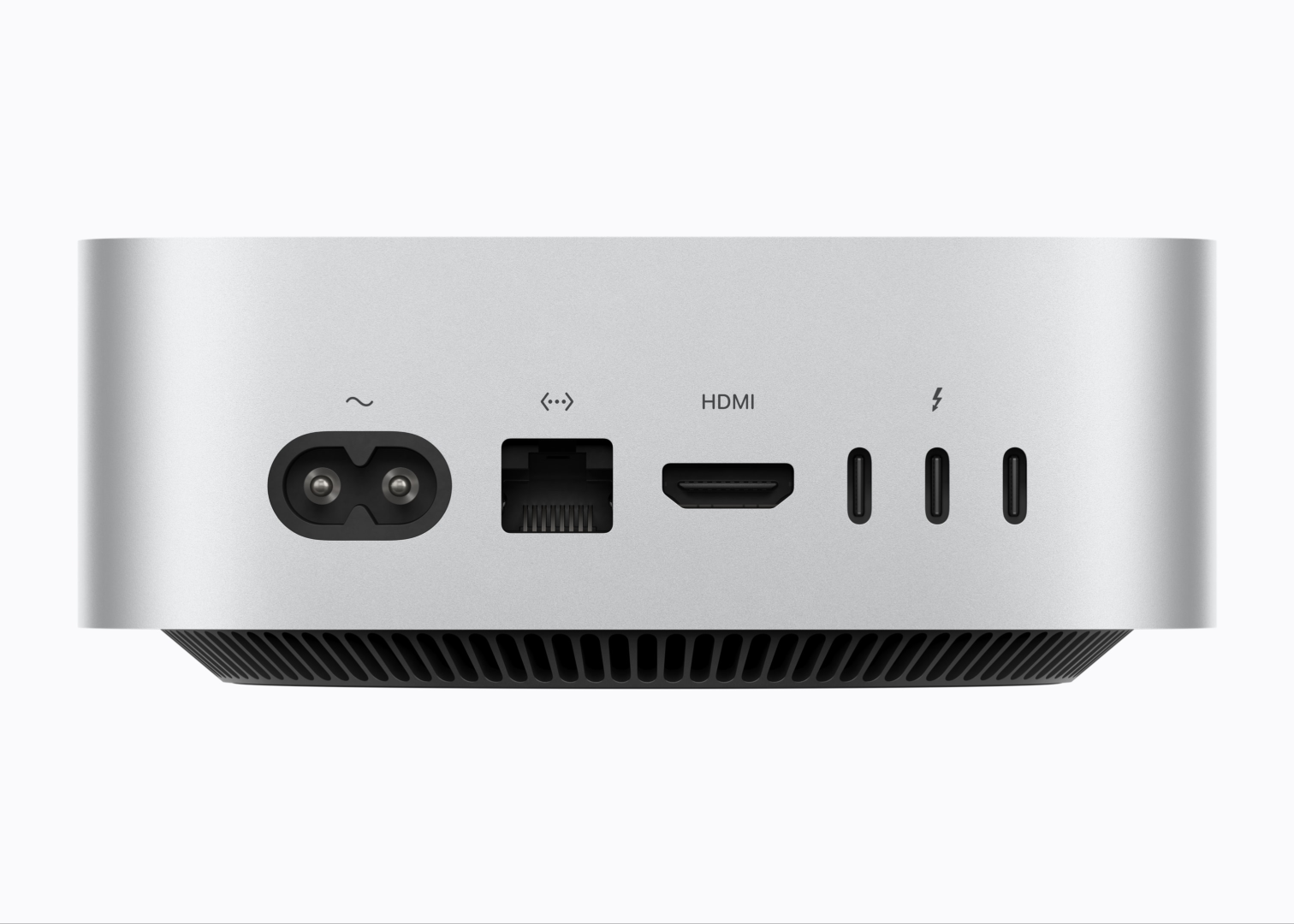
The physical design hasn’t changed, and neither has most of the port layout. Both models keep two USB-C ports on the front (USB 3 speed) along with a headphone jack.
On the back, the M6 model has three Thunderbolt 4 ports, while the M5 Pro gets three faster Thunderbolt 5 ports. Thunderbolt 5 also lets multiple Mac minis be linked together to run large AI models across the connected machines.
Both models now include Wi-Fi 7 and Bluetooth 6 through Apple’s N1 chip, and both upgrade to 2.5 gigabit Ethernet as standard, with an optional jump to 10 gigabit.

A new addition is genlock support over USB-C, which allows precise syncing between a display and a camera, including the iPhone 17 Pro.
READ: Apple Raises MacBook Prices as M5 Chips Debut
Software
Every new Mac mini ships with macOS 27, codenamed Golden Gate, preinstalled. The update brings Siri AI, a more capable version of Siri that can pull in personal context from messages, emails, and photos, work across apps, and integrate into Spotlight and system menus.
There’s also a Visual Intelligence shortcut for asking questions about whatever is on screen, plus updates to Safari, Shortcuts, and Photos, along with visual refinements to the Liquid Glass interface.
Apple hasn’t given an exact public release date for macOS 27, but since it ships preloaded on the new Mac minis, it will be out no later than September 22.