




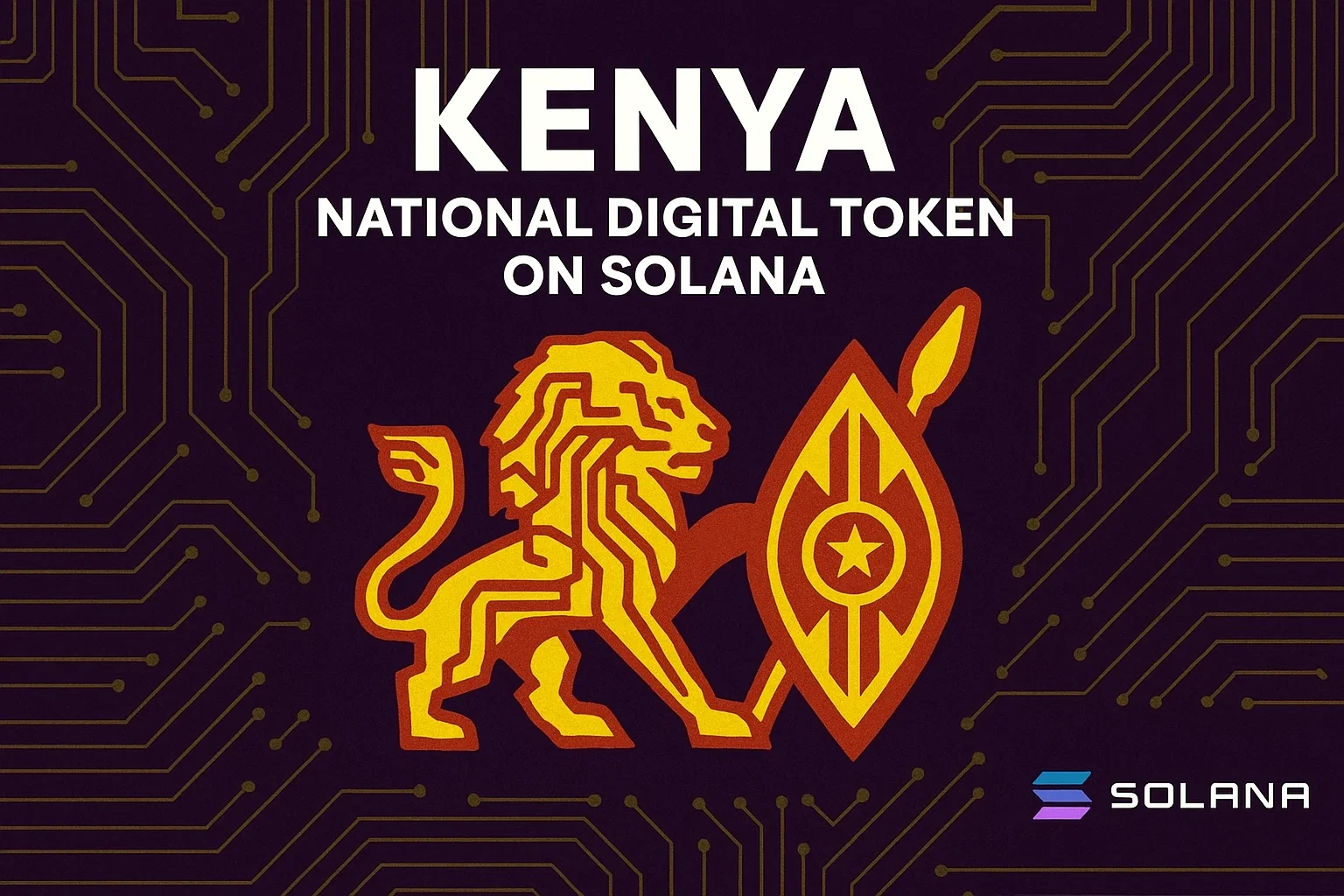
Kenya has launched the Kenya Digital Token (KDT), becoming one of the first African nations to introduce a national digital token.
William Kabogo, the Cabinet Secretary of the Ministry of Information, Communications and the Digital Economy (MoICDE), announced the initiative, which operates on the Solana blockchain under ticker $KDT through the Meteora decentralized platform.
KDT runs on the Solana blockchain for its speed, scalability, and low transaction costs. The platform processes thousands of transactions per second at minimal fees, making it suitable for mass adoption.
The token uses Solana’s IBRL (Increase Bandwidth, Reduce Latency) framework to ensure efficient operations.
Private innovators developed and distributed KDT independently, though it aligns with government digital transformation goals. The decentralized approach distributes control across network participants rather than centralizing power.
The project aims to onboard all 55 million Kenyans into the digital economy. KDT incorporates pre-installed digital wallets, augmented reality education tools, and blockchain-based rewards systems targeting underserved communities like Kibera.
These features address traditional banking barriers in areas where conventional financial services are inaccessible or expensive. The system bypasses traditional infrastructure to provide direct access to global digital markets.
Kenyan citizens currently trade over $500 million in digital assets monthly (KES 64.6 billion). Kenya ranks 28th globally and fourth in Africa for cryptocurrency usage, indicating strong market readiness for national token adoption.
This existing cryptocurrency familiarity reduces educational barriers and provides a foundation for KDT integration into daily transactions.
Regulatory Framework
Kenya is developing a National Policy on Virtual Assets and drafting a Virtual Asset Service Providers (VASP) Bill. The legislation will balance innovation, financial inclusion, and public safety while establishing clear operational guidelines.
The Central Bank, Communications Authority, and Ministry of Finance are negotiating compliance and governance frameworks. The ministry monitors digital asset innovations while working with stakeholders on responsible regulatory development.
Kabogo emphasized that digital assets represent the future of finance and Kenya cannot afford to lag behind.
KDT enables Kenyans to access global markets, raise capital, and invest through blockchain technology. The low-cost, scalable design aligns with government policies ensuring seamless participation in the global digital economy.
The project goes beyond cryptocurrency, encompassing a broader digital transformation that includes identity verification, community-driven economic participation, and greater financial accessibility. Its applications range from remittances and payments to digital identity systems.
Education through augmented reality and community engagement addresses adoption challenges by focusing on practical use cases rather than speculative trading.
KDT positions Kenya as a leader in African digital asset adoption. The initiative could inspire other nations to explore similar projects, potentially creating integrated digital financial ecosystems across Africa.
Success could establish Kenya’s model as a blueprint for national digital token implementation, demonstrating practical blockchain applications in developing economies.