




The CogLabs Robotics Workshop 2.0 kicked off this August in Nairobi, bringing together young learners, developers, educators, and tech leaders for an intensive, hands-on exploration of robotics, AI, and machine learning.
The initiative, powered by Infinix Mobile, supported by UNESCO (United Nations Educational, Scientific and Cultural Organization), and implemented in partnership with Qhala and E3Bots, hopes to democratize STEM education and give young Africans the tools to build with them.
“We’re not just showing students how technology works; we’re giving them the chance to build, code, and test it themselves,” said one of the workshop facilitators.
From Concept to Code
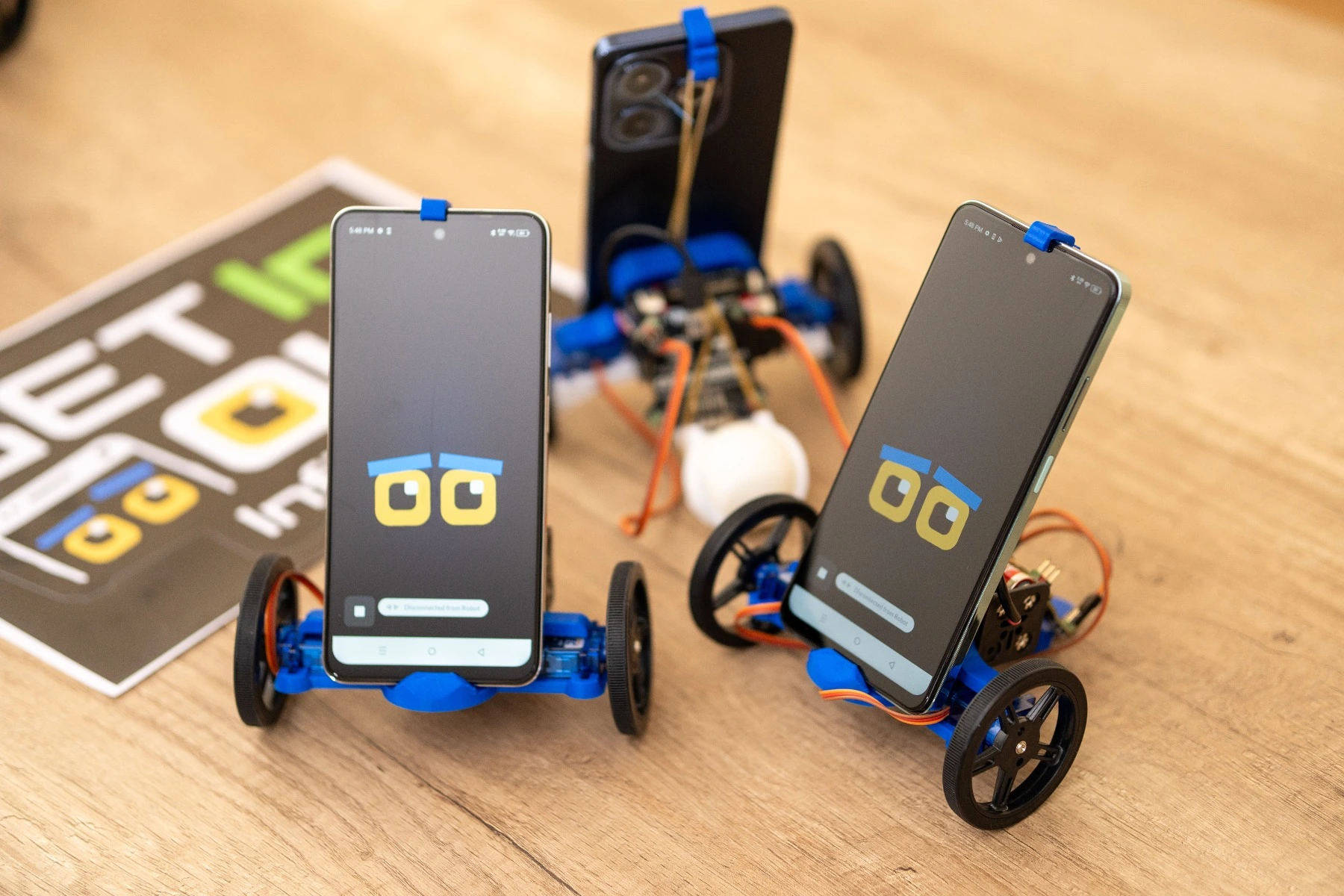
Unlike typical tech events filled with slide decks and passive listening, CogLabs is rooted in action. Students were introduced to the E3Bot, a simple yet powerful robotics kit that uses open-source hardware and accessible software tools.
The workshop took participants through:
- Component Assembly: Understanding motors, sensors, wheels, batteries, and microcontrollers.
- Wiring & Electronics: Connecting the circuits to power and control units.
- Programming: Writing and testing code that controls movement, logic, and behavior.
- AI Integration: Exploring how basic machine learning models can be used in navigation and task execution.
The goal was to demystify robotics, make it hands-on, and ensure learners walk away with skills they can build on.
AI & Machine Learning
The AI segment focused on teaching foundational machine learning concepts like line-following logic and environmental sensing.
The facilitators broke down complex ideas into tangible activities, making it easier for participants to grasp how AI can be used in real-world applications.
Participants were guided on how to:
- Train basic ML models using simplified datasets.
- Understand how AI models “learn” and make decisions.
- Apply those models to control robot actions (like avoiding obstacles or following lines).
A Vision Shared by Partners
Infinix Mobile played a crucial role in powering the event by integrating smartphone tools into the learning process.
By showing that mobile phones can be used in robot control, data visualization, or even as coding platforms, Infinix helped make the workshop even more accessible.
UNESCO’s involvement highlights the importance of inclusive, scalable STEM education across Africa. Their support ensures that the CogLabs initiative remains committed to empowering youth from underrepresented backgrounds.
Qhala, a local innovation and digital transformation firm, provided the space and ecosystem to foster collaboration and experimentation.
“At Qhala, we believe in digitizing and catalyzing tech for Africa,” shared one organizer. “And that begins with workshops like these: hands-on, practical, and inclusive.”
By integrating robotics, AI, and mobile technology into one workshop, the CogLabs initiative demonstrates how curiosity can be ignited, practical skills developed, and new opportunities unlocked.