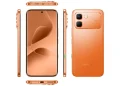






Infinix has built a feature that lets two of its phones talk to each other without any network, internet, or airtime. It’s called Ultra Link, and it works exactly how it sounds: phone to phone, direct connection, voice calls only.
The technology uses Bluetooth or Wi-Fi Direct to create a local link between two compatible Infinix devices. Once both phones have Ultra Link turned on, they find each other automatically and establish a secure connection. No SIM card involved or data used. Just a direct voice channel between the two devices.
The range is short, which makes sense given the underlying tech. You’re looking at typical Bluetooth or Wi-Fi Direct distances, enough to work across a house, between floors in a building, or across a worksite. While the range may not reach kilometers, it is sufficient for most practical scenarios where backup communication is necessary.
READ: Infinix Hot 60 Pro+ vs Infinix Hot 60i: Comparison Review
Most people won’t think about Ultra Link until their network vanishes. That’s when it becomes useful. Rural areas with patchy coverage, underground spaces like parking lots where signals don’t penetrate, buildings with thick walls that block cellular signals – all these are the everyday situations where the feature activates its value.
There’s also the cost angle. In markets like Kenya, where airtime isn’t unlimited and people still buy credit in small denominations, free local calls between nearby phones add up.
Students sharing a campus, workers on the same site, or families in the same compound. They can talk without burning through their prepaid balance.
The emergency use case is obvious but worth stating clearly. When networks collapse during power outages, natural disasters, or infrastructure failures, Ultra Link provides a communication method that doesn’t depend on towers, ISPs, or grid power. It’s limited by battery life and range, but it exists when nothing else does.


Who Actually Needs This?
The feature isn’t for everyone, though. If you live in a city with solid 4G or 5G coverage and unlimited calling plans, Ultra Link will sit unused in your settings menu. But Infinix isn’t building for that market primarily.
The target is people in areas where network coverage fails regularly, communities where communication costs matter, workers in environments where cellular infrastructure doesn’t reach, and anyone who spends time in remote locations where connectivity isn’t guaranteed.
Some examples of such audiences include:
- Construction workers spread across a site with dead zones
- Students trying to coordinate between buildings without spending money
- Travelers moving through areas where roaming is expensive or impossible
- People dealing with frequent outages who need a backup channel that actually works
To be clear, Ultra Link won’t replace your primary phone service. The range limitations mean you need to be relatively close to the other person.
The feature only works between compatible Infinix devices like the Hot 60 Series, so it’s not a universal solution. And it’s voice only, so no video, no messaging, and no data transfer beyond the call itself.
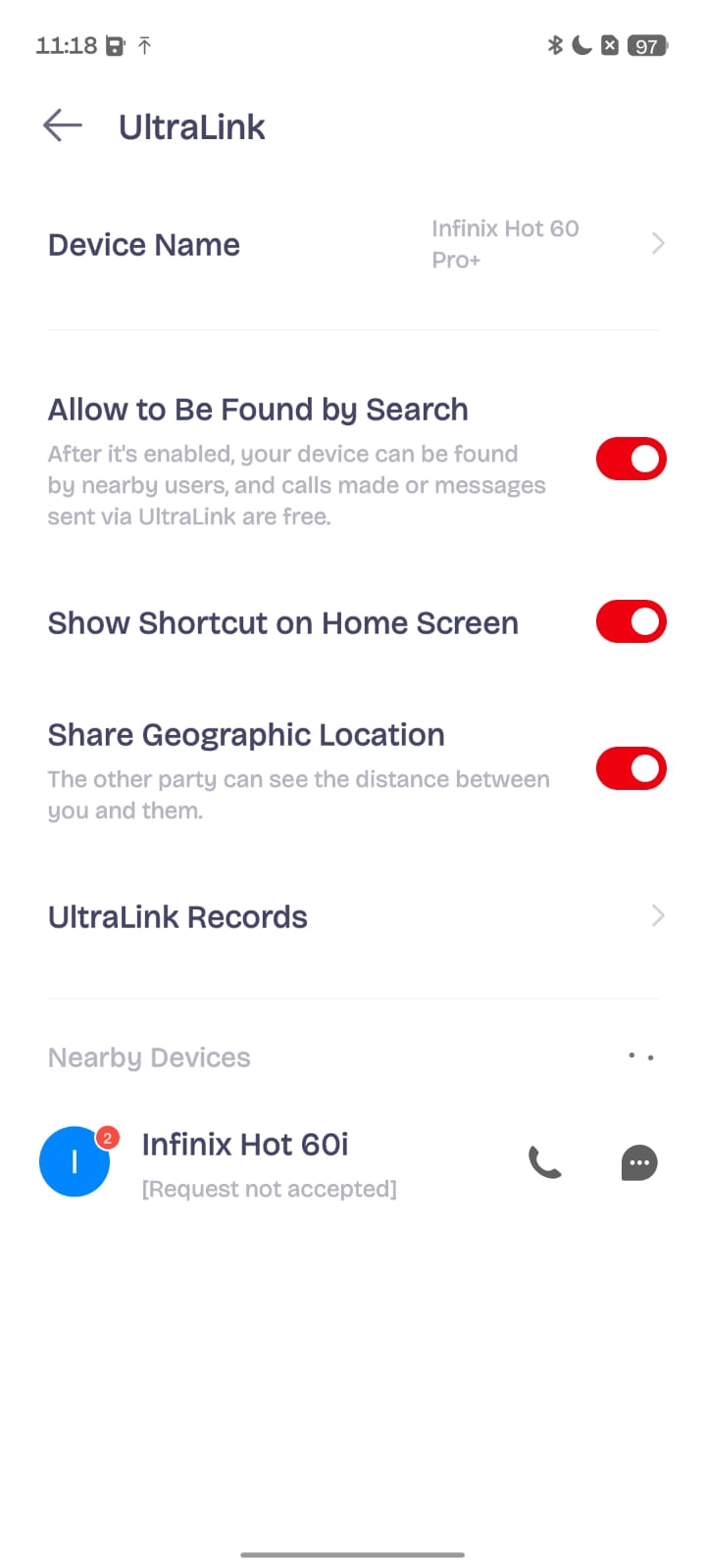
However, within those constraints, it does something pretty useful. It takes existing wireless technologies that every smartphone already has and repurposes them for direct communication.
The implementation is automatic rather than manual, which matters for adoption. Users don’t need to understand the technical details or configure complex settings.
For users in the right circumstances, Ultra Link turns a phone from a device that stops working when the network drops to one that maintains basic communication capability regardless of external infrastructure.
That’s not revolutionary, but in places where connectivity is not guaranteed, it’s genuinely practical.