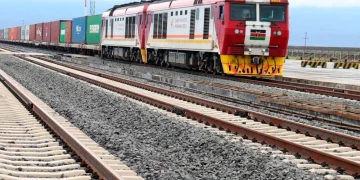





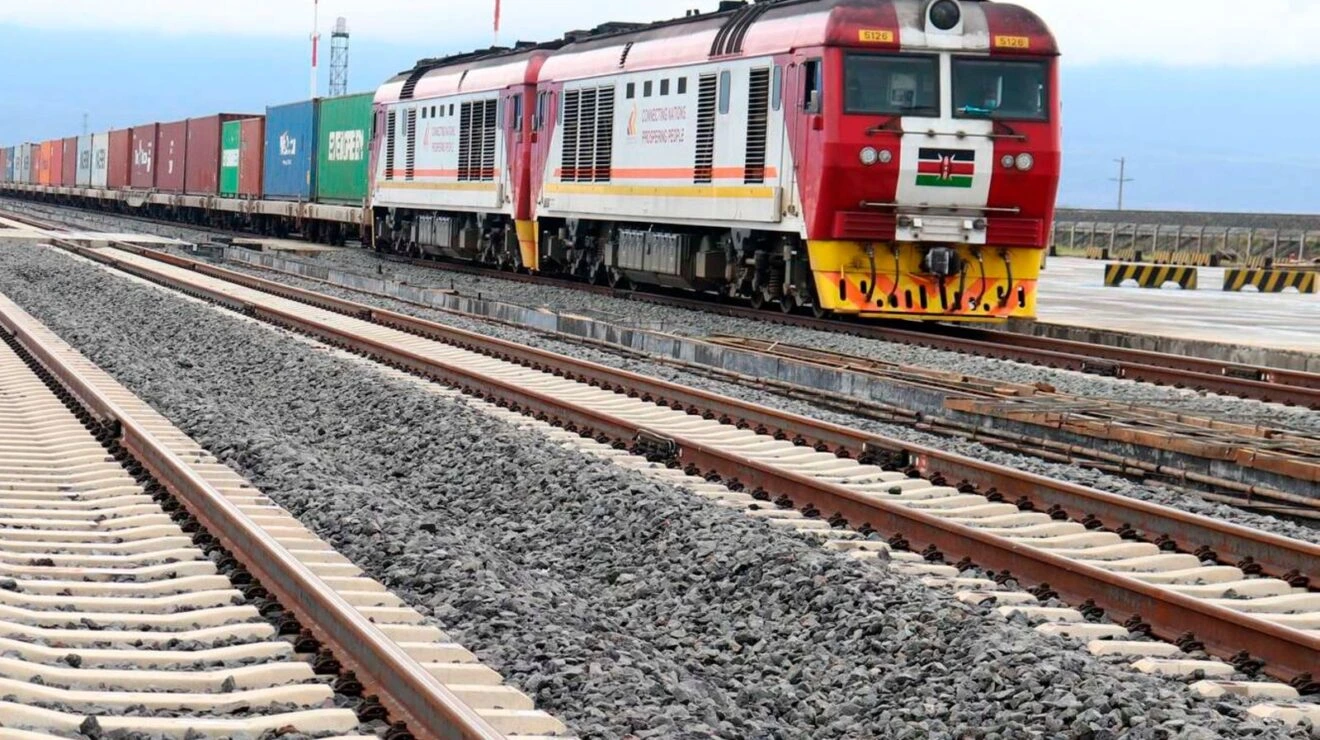
Last month, Kenya Railways safely transported 640,000 tonnes of cargo via the Madaraka Express Freight Service. This volume sets a new monthly record since the launch of the Standard Gauge Railway (SGR) in 2017.
This haul is equivalent to 23,000 trucks. This news comes after earlier reports in the year indicated passenger traffic is also on the rise, with projections estimating up to 2.6 million riders this year, a growth of 300,000 over last year.
According to a statement put out by the Kenya Railways, this milestone is “proof that efficiency, customer trust, and sustainability keep Kenya moving right on track.”
Seen in some quarters as a white elephant, the SGR has operated smoothly in the last eight years without any major hitches. This is a huge contrast to the SGR line in neighboring Tanzania.
Launched in August 2024, the 541km SGR train has been plagued with issues, including a derailment last month.
READ: How to Book an SGR Train Ticket in Kenya in 2025
Kenya’s SGR is still partly managed by the Chinese firm Africa Star Railway Operation Company (Afristar), a subsidiary of China Road and Bridge Corporation.
However, Kenya Railways is now expected to take over operations in December this year, marking a delay from the government’s original plan to assume full control of the SGR in June.
SGR Expansion
While Kenya Railways celebrates this win, Kenyans will hope that the 572km line, which runs from Mombasa through Nairobi to Suswa, can earn even more revenue.
Operating the SGR comes at a heavy price: the Ministry of Roads and Transport reports the country spends an average of KES 1 billion monthly on operations alone. This is in addition to servicing the massive KES 324 billion construction loan.
Plans are underway to expand the current line all the way to Malaba, on the Kenya-Uganda border. This 475km rail extension is projected to cost $4.5 billion and is divided into two parts: Phase 2B (Naivasha to Kisumu) and Phase 2C (Kisumu to Malaba).