







Kenya Railways wants to bring electric trains to Nairobi’s commuter rail network, and the government has lined up KES 65 billion through the World Bank to make it happen. The project is called the Kenya Urban Mobility Improvement Project, or KUMIP.
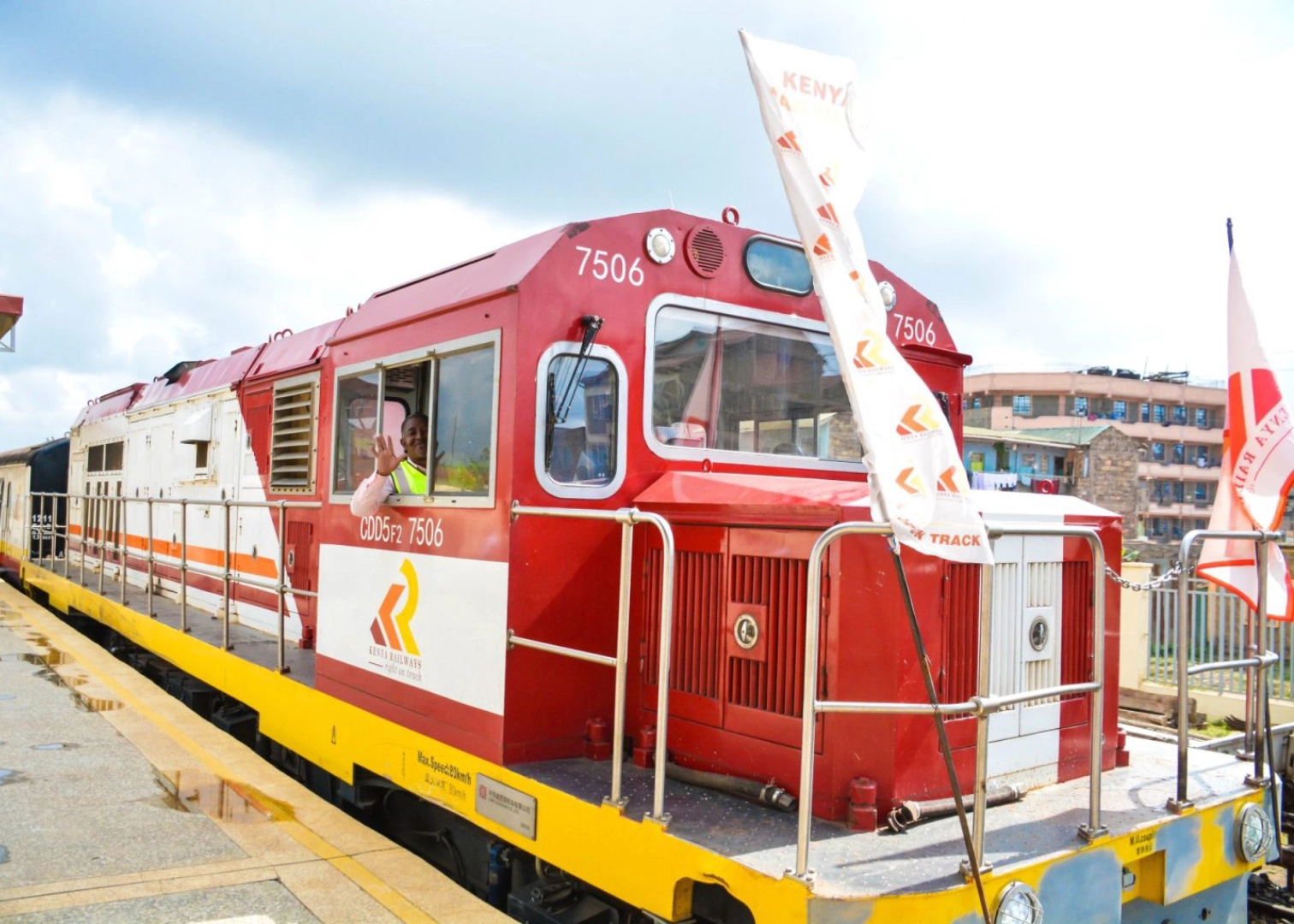
The idea behind it is to replace or supplement the aging diesel locomotives currently running on Nairobi’s commuter lines with electric trains and diesel-electric multiple units.
Electric trains are faster, carry more passengers, and produce fewer emissions. The diesel-electric units are meant to cover routes or periods where full electrification isn’t yet possible.
The network will extend into four counties surrounding Nairobi: Kiambu, Machakos, Kajiado, and Murang’a, reaching towns like Thika, Kikuyu, Ngong, Kitengela, Syokimau, Ruiru, and Karen, among others.
Beyond just buying new trains, the project covers a fairly long list of infrastructure work. The Nairobi Central Station to Thika commuter line will be developed, and the entire commuter network will be electrified to support the new rolling stock.
Maintenance workshops will be built specifically for the new train units, and Kenya Railways plans to set up a local manufacturing facility for rail spare parts and track components, including a concrete sleeper manufacturing plant. The idea is to build some level of local capacity rather than depending entirely on imports for maintenance.
There is also a plan to build the Likoni Road over-railway bridge and its road approaches, construct access roads to commuter stations, and develop multi-modal transfer facilities where passengers can switch between rail and road transport more easily.
Kenya Railways will run the project alongside county governments in the Nairobi Metropolitan Area. Procurement will follow World Bank rules, meaning competitive and transparent bidding.
To get the ball rolling, Kenya Railways has called a consultative meeting with private sector players on June 24, 2026, at the Railway Training Institute in South B, Nairobi. The session runs from 9am to 1pm and is open to online participants as well.
Kenya Railways wants to hear from potential suppliers and contractors about pricing, supply chain risks, available technologies, and market conditions before finalizing its procurement strategy. Anyone interested needs to RSVP to [email protected] by June 21, 2026.