







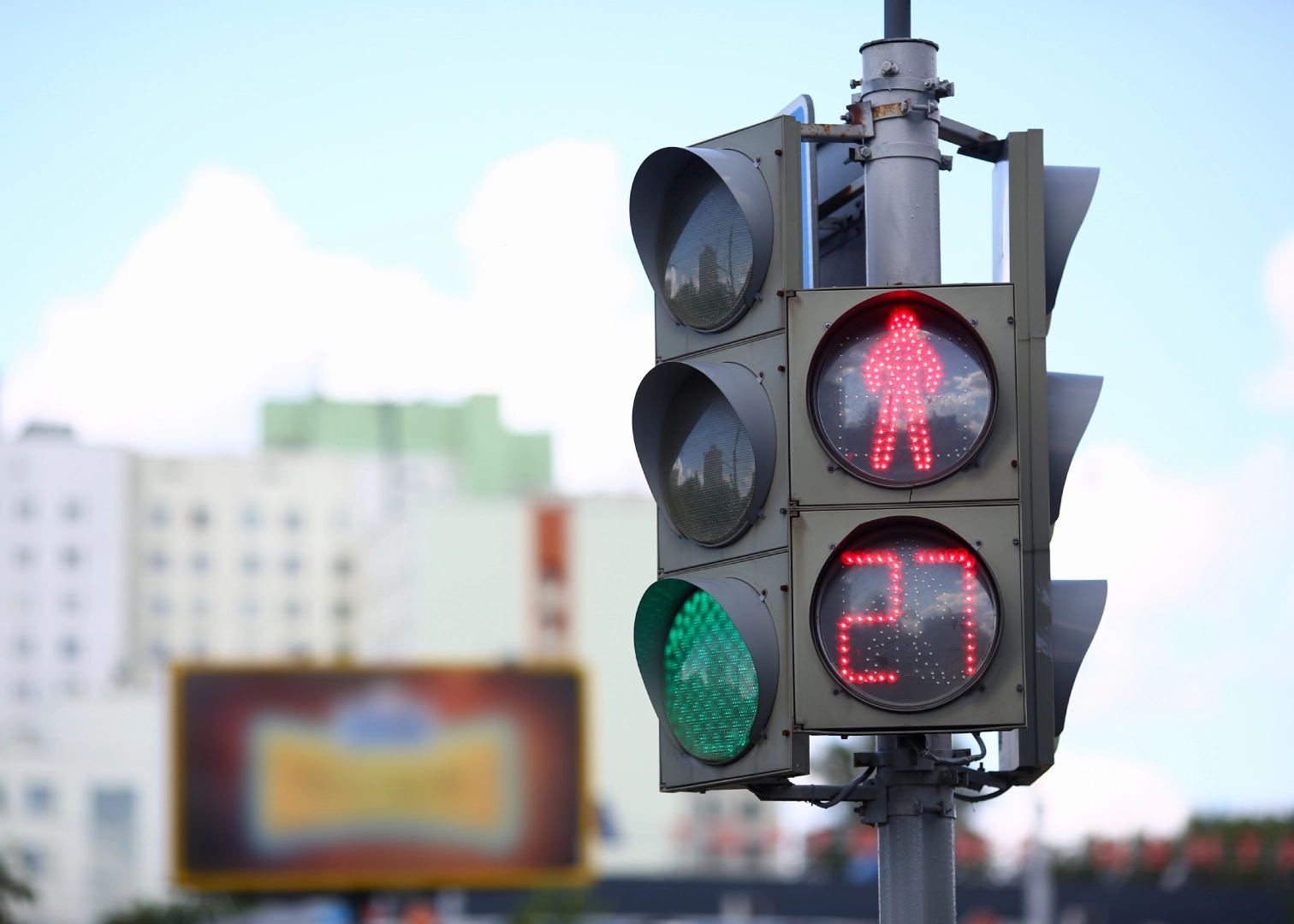
The National government is spending KES 1.18 billion next financial year to roll out AI-powered traffic lights and surveillance cameras across Nairobi, a nearly tenfold increase from the current KES 116.1 million allocation.
The goal is to reduce dependence on traffic police at busy junctions and actually move cars faster through a city notorious for some of Africa’s worst gridlock.
The project, called the Nairobi Intelligent Transport System Phase III, is being run by the Kenya Urban Roads Authority and will cover 125 intersections connected to a central command center at City Cabanas on Mombasa Road.
According to Business Daily, most of the funding (~KES 1.1 billion) comes from a $185 million concessional loan signed with the Export-Import Bank of China in November 2025, with the Kenyan government putting up only KES 75 million itself.
The technology works by embedding cameras and road sensors at intersections that feed live data back to the command center. An AI system then reads traffic density, counts vehicles, tracks movement patterns, and adjusts signal timings on the fly with no officer standing in the road needed.
READ: NTSA Instant Fines: How Much Will You Pay for Traffic Offenses
KURA, in their project documents, stated, “You don’t have to walk into a junction to adjust signal timings any more. Everything happens from the control room.”
Beyond easing traffic, the cameras have a secondary function that drivers will want to know about. They read number plates automatically, flag red-light violations, detect speeding, and can even check whether boda boda riders are wearing helmets.
The system can also estimate how many passengers are inside a vehicle. Detected offenses get transmitted directly for enforcement, laying the groundwork for fully digital traffic policing.
Some of the first junctions targeted include Moi Avenue/Kenyatta Avenue, Koinange Street/Kenyatta Avenue, Raila Odinga Way/Lang’ata Road, and Limuru Road/Muthaiga Road, all of which are reliably awful during rush hour.
READ: NTSA Suspends Instant Fines System to Address Confusion Around Traffic Rules
The plan also involves replacing several roundabouts with synchronized signal systems.
The government is targeting 20% completion by the end of the 2026/27 financial year, scaling to 50% the year after, with full rollout by 2028/29. Total spending over the three years is projected at KES 5.3 billion.
Whether the system will perform as advertised depends heavily on execution, and Kenya has a mixed record on large infrastructure technology projects.
However, if it works, Nairobi would join cities like Singapore and London, where AI-managed traffic signals are already standard and traffic police at intersections become largely redundant.