






NTSA launched its Instant Fines Management System earlier this month, promising a fully automated enforcement regime where cameras catch you, an algorithm decides your guilt, and you get an instant fine with zero paperwork involved.
Within days, the system was blocked by a High Court order. Then today, NTSA withdrew the original go-live notice entirely. That’s three major traffic developments in under three weeks.
How the System Was Supposed to Work
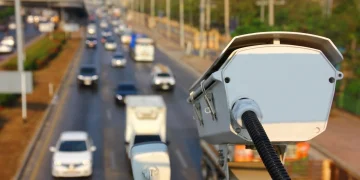
The original setup was a network of 1,000 cameras (700 fixed, 300 mobile) that monitor roads across the country. When a violation is detected, the system reads the number plate, identifies the registered owner, and sends them an SMS with their fine.
Drivers had 7 days to pay through KCB Bank branches. If they missed the deadline, interest would begin to accrue.
In addition, NTSA’s online services would be locked, meaning you can’t transfer vehicle ownership or access other NTSA services while you have an unpaid fine sitting on your account.
Fines ranged from KES 500 to KES 10,000 depending on the offense, covering 37 types of violations.
Speeding within 5 kph of the limit only earns a warning. Go 16-20 kph over, and you’re paying KES 10,000. Driving without an inspection certificate? KES 10,000. Using your phone while driving? KES 2,000.
The system also covered matatu and boda boda operators, and in the case where the vehicle is a PSV or motorcycle-for-hire, the fine goes to the registered owner’s number, not necessarily the person who was actually driving.
Where It Fell Apart
Two petitioners, namely Sheria Mtaani and advocate Shadrack Wambui, went to court arguing the NTSA instant fines system violated constitutional rights.
According to their argument, receiving a fine via SMS, generated entirely by a camera and an algorithm, gives you no opportunity to challenge it, explain the circumstances, or be heard before the penalty is imposed.
No officer made a judgment call, and no hearing happened either. You just get a text with a fine to pay.
Milimani High Court Justice Bahati Mwamuye agreed the matter needed a full hearing and issued a conservatory order blocking NTSA, the State Law Office, and KCB Bank from issuing, generating, demanding, or enforcing any automated traffic penalties while the case proceeds.
The next mention was set for April 9, 2026.
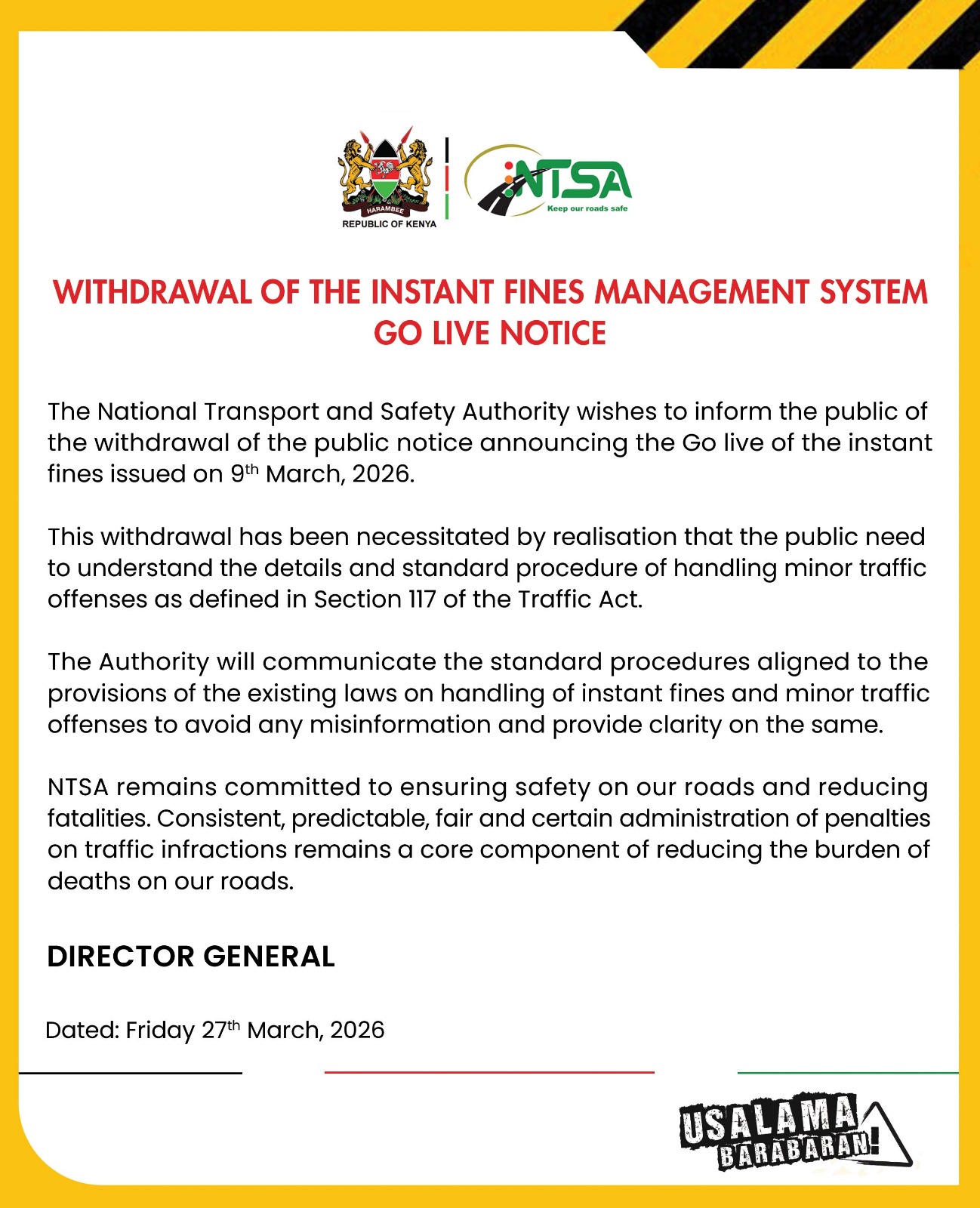
Fast forward to today, NTSA’s Director General issued a statement withdrawing the original March 9 go-live notice. The stated reason wasn’t the court order.
Instead, NTSA said it realized the public needed better understanding of how minor traffic offenses are handled under Section 117 of the Traffic Act and that it would communicate the proper procedures before relaunching.
For now, we can’t say if this is a genuine pause to address public confusion or a strategic retreat while the constitutional case plays out. Either way, the practical outcome is the same: the system is off, for now.
What happens on April 9 and whether automated, police-free enforcement can survive constitutional scrutiny in Kenya will determine what comes next.