





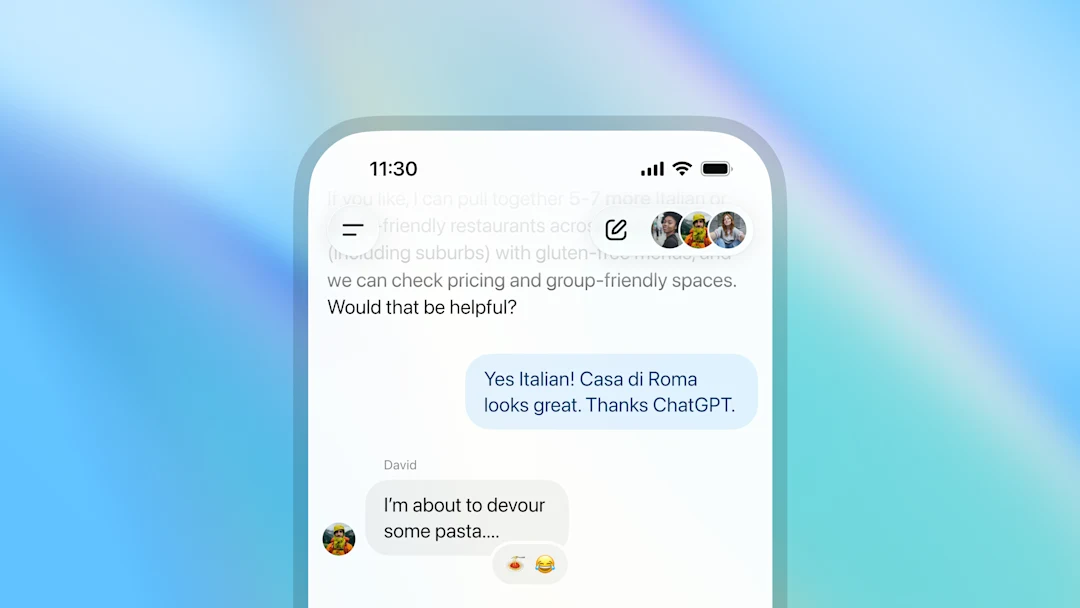
OpenAI is introducing real-time group chats in ChatGPT, allowing up to 20 people to converse with the AI in a shared room.
In this new setup, participants chat normally while bringing the AI into the conversation only when needed. ChatGPT responds when mentioned or when its assistance seems relevant, rather than leading the discussion.
All existing capabilities remain available, including web browsing, file and image uploads, voice input and image generation, ensuring the group mode works much like individual chats.
The feature runs on GPT5.1 Auto, OpenAI’s automated model selection system. It chooses the appropriate model for each participant based on their subscription tier, allowing free and paid users to collaborate without adjusting settings.
OpenAI has also introduced strict memory rules for group chats. The assistant will not use personal memories of individual users during group interactions, and no new personal memory will be created from group conversations. This is meant to prevent private details from resurfacing in shared settings.
Setting up a group chat is straightforward. Users can start a fresh room or convert an existing one-on-one thread. When a private chat is turned into a group, a duplicate version is created so that the original remains intact.
Participants join through an invite link and set up a basic profile with a name, username and avatar.
For now, the feature is being tested in four regions. It is available in Japan, New Zealand, South Korea and Taiwan, with support across all subscription levels. Feedback from these markets will guide when and how the rollout expands.
If the pilot progresses smoothly, group chats could change how people use ChatGPT, turning it into a tool not just for 1-on-1 chats with an AI chatbot but also for collective discussions and decision-making rather than just individual queries.