




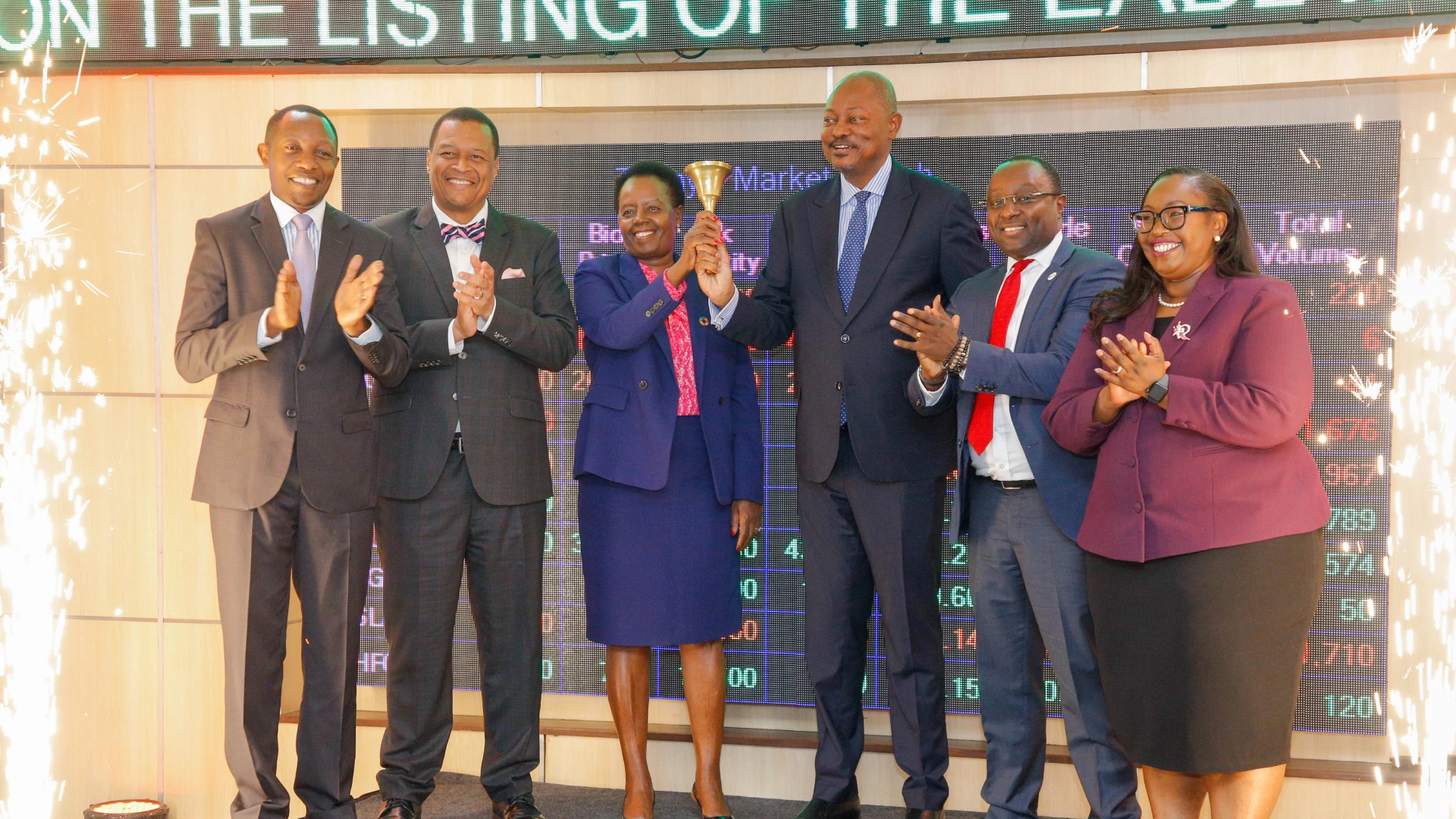
East African Breweries (EABL) rang the bell at the Nairobi Securities Exchange today to celebrate listing the first chunk of its KES 20 billion Medium-Term Note program.
The brewer raised KES 16.76 billion in this initial tranche, and investors wanted more, as the bond was oversubscribed by 52%.
The money will fund EABL’s operations and expansion plans across East Africa. The company structured this as a Medium-Term Note program rather than a single bond issue, which means they can tap the market again later for the remaining KES 3.24 billion when they need it.
That 52% over-subscription tells you something about where Kenya’s economy might be heading. Investors are circling back to corporate bonds after a rough patch, betting that the macroeconomic situation is stabilizing enough to lock money into these instruments for the medium term.
EABL’s CEO Jane Karuku connected the dots between the strong demand and what it says about both her company and the broader market.
“The success of this first tranche is a major endorsement of our growth agenda and the disciplined execution of our long-term strategy. It also illustrates a maturing capital market, where investors are increasingly willing to back long-term corporate instruments from stable and reputable issuers,” she said.
Absa Bank Kenya led the transaction. Their Managing Executive for Corporate and Investment Banking, James Agin, framed it as evidence of Kenya’s financial system getting more sophisticated, with an investor base that can handle these kinds of deals.
EABL isn’t alone in tapping local debt markets. Safaricom secured approval from the Capital Markets Authority on November 7 to establish its own Medium Term Note program worth up to KES 40 billion.
The telco is taking a different route by keeping options open for green, social, or sustainability bonds, though they haven’t specified what projects they’ll fund.
These back-to-back moves by two of Kenya’s corporate heavyweights suggest that large companies are finding the local bond market workable again after months of uncertainty. Whether that confidence holds depends on how stable the macroeconomic environment actually stays.