






Intel has officially launched its Core Ultra Series 3 processors, the first chips manufactured using the company’s 18A process technology.
Previously known by their Panther Lake codename, these mobile processors are Intel’s shift to 2-nanometer manufacturing and introduce architectural changes focused on power efficiency and AI performance.
Laptops featuring these new chips will begin shipping on January 27, with preorders opening this week. Intel has secured over 200 design partnerships, including Dell’s newly announced XPS 14 and 16 models, which the company claims can stream 1080p video for more than 40 hours on a single charge.
Core Configuration and Architecture
The Core Ultra Series 3 lineup consists of 14 different models, ranging from the flagship Core Ultra X9 388H with 16 cores and a 5.1GHz peak clock speed down to the Core Ultra 5 322 with 8 cores and a 4.4GHz top frequency.
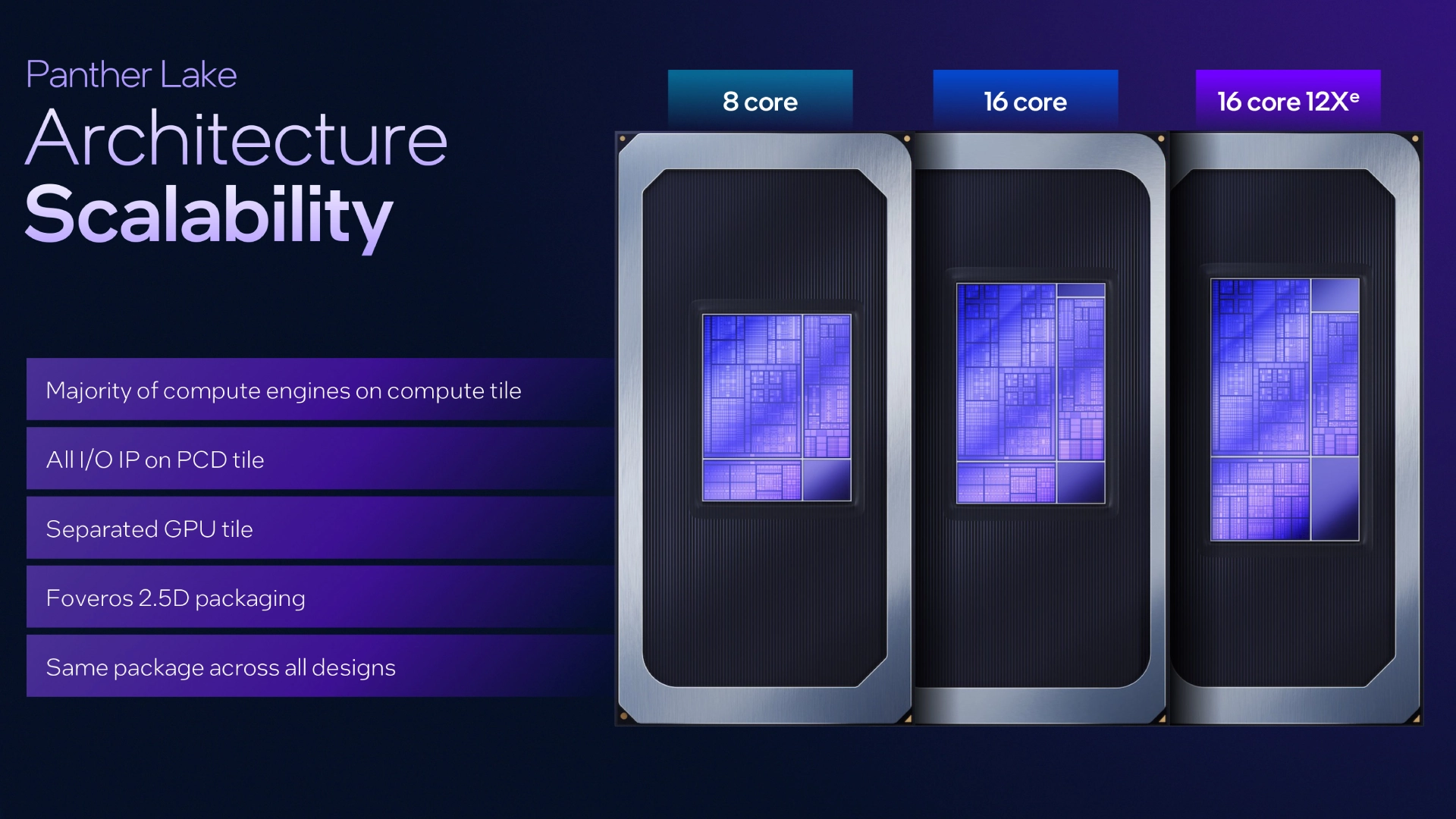
Intel has designed these processors with a 3-tier core structure:
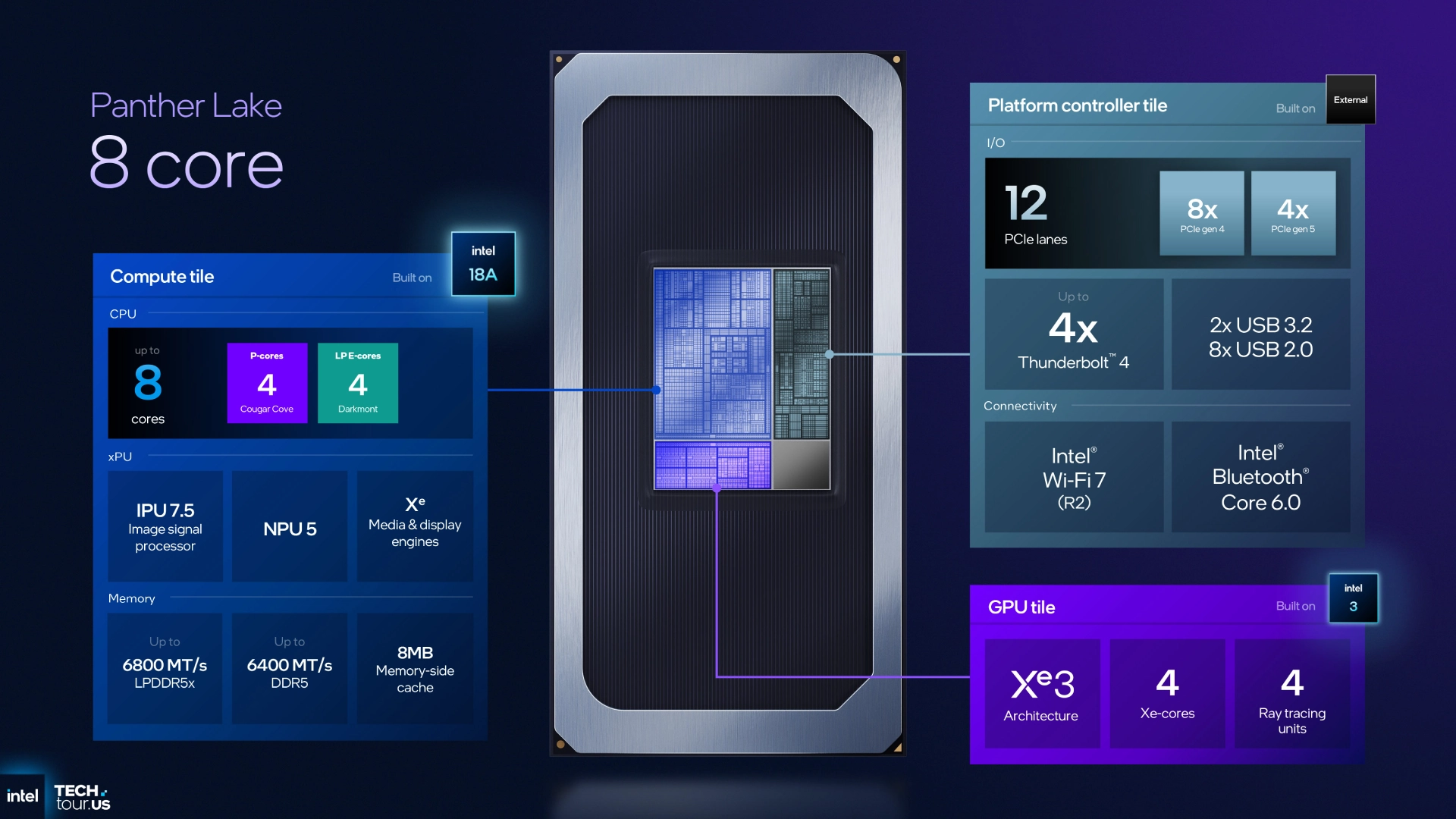
- 4 high-performance P-cores for demanding tasks
- Up to 8 standard E-cores for balanced workloads
- Up to 4 low-power LPE-cores for background tasks that prioritize battery life over speed.
Intel reports a 30% increase in transistor density compared to previous generations, achieved through denser RibbonFET transistors and a design that places power delivery components on the back of the wafer, thanks to the 18A manufacturing process.
The company claims these changes deliver 10% better performance per watt on single-threaded tasks and 50% improvement on multithreaded workloads when compared to the previous Lunar Lake and Arrow Lake processors.
Graphics and Gaming Performance
Intel has equipped these processors with Xe3 Arc graphics, an architecture derived from the company’s Battlemage discrete GPUs like the Arc B580.
The top configurations feature 12 Xe cores, a 50% increase over the previous generation. These integrated GPUs can deliver up to 120 TOPS of AI processing power and support Intel’s XeSS 3 upscaling technology, which includes multi-frame generation to boost frame rates in games.
Intel claims the top-tier Core Ultra X9 388H offers over 70% better gaming performance than the previous Core Ultra 9 285H, despite having fewer P-cores and a lower clock speed on paper.
The company attributes this improvement to architectural efficiency rather than raw specifications. An Endurance Gaming Mode helps extend battery life during gaming sessions by dynamically adjusting frame rates.
AI Capabilities
Each processor includes Intel’s NPU 5, a dedicated AI accelerator capable of 50 TOPS. Combined with the GPU’s 120 TOPS, the chips can theoretically reach 170 TOPS when both components handle AI workloads simultaneously.
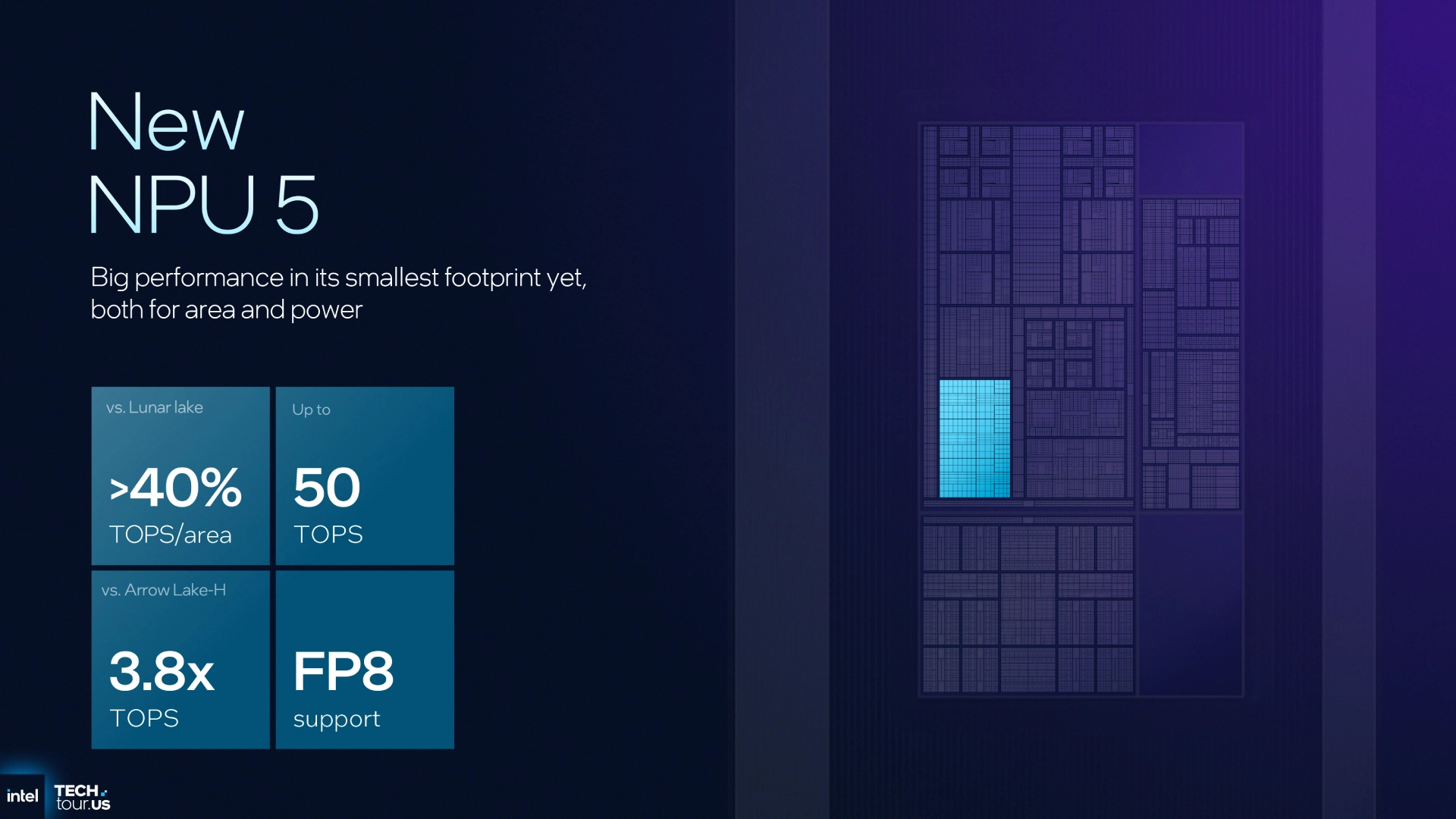
The design philosophy separates simple AI tasks to the power-efficient NPU while reserving the GPU for more demanding operations.
Intel has also introduced Intelligent Display technology, which uses AI to adjust screen brightness and refresh rates based on user activity.
The system lowers both settings when detecting inactivity or simple tasks like reading email, then increases them for video playback or gaming.
Connectivity and Memory
The higher-end models support Thunderbolt 5, offering 80 Gbps of bidirectional bandwidth and up to 120 Gbps in Bandwidth Boost mode.
Lower-tier chips are limited to Thunderbolt 4 with 40 Gbps connections. All processors include Wi-Fi 7 and Bluetooth 6.0 support.
Memory configurations vary by model, with support for up to 96GB or 128GB of LPDDR5x or DDR5 RAM. The two X-series chips support memory speeds up to 9,600 MT/s, while other models top out at 8,533, 7,467, or 6,800 MT/s depending on the specific SKU.
Beyond laptops, Intel has certified these processors for embedded and industrial applications, including robotics, healthcare devices, and edge computing hardware. All processors share a 25-watt base power rating, with turbo modes reaching either 55 or 65 watts.