




For the past few years, global chip shortages have been framed as a problem of demand, especially since the AI boom. But beneath the headlines is a harder question: who can realistically make chips and why? Kenya’s first semiconductor plant offers a useful case study.
It was positioned as a step toward placing the country in a strategically vital industry, one that could improve resilience across the continent. Years later, the plant remains small and experimental.
Modern semiconductor production depends on infrastructure that few countries possess: stable electricity, vast amounts of water, ultra-clean facilities, skilled labor, and long-term financial support.
As chips become treated like strategic resources, shortages become less about demand and more about which countries and companies can sustain these systems.
Kenya’s experience points to an uncomfortable truth: the chip supply chain reflects global inequality in infrastructure.
Kenya’s entry into semiconductor manufacturing began in a repurposed lecture hall at the Dedan Kimathi University of Technology (DeKUT) in Nyeri. In 2022, the country’s president launched a nanotechnology and semiconductor manufacturing facility on the campus.
While DeKUT is respected for engineering and applied sciences, the facility is unlike the industrial-scale fabrication plants (fabs) that supply global electronics brands like Samsung.
The company behind the effort, Semiconductor Technologies Limited (STL), was founded in 2018 by Anthony Githinji, an engineer with over three decades of experience in the U.S. semiconductor industry. His background gave the project credibility and signaled serious intent.
But from the start, the DeKUT facility focused on pilot runs and testing—an early proof of concept. That distinction matters.
The COVID-19 pandemic and Russia’s war in Ukraine exposed just how fragile semiconductor supply chains had become. Ukraine, for example, supplied a significant share of the world’s highly purified neon gas for the US chip industry.
In response, the United States promoted friend-shoring (sourcing and manufacturing goods from countries that are geopolitical allies) to shift parts of the supply chains to allied countries. Kenya emerged as a beneficiary.
STL received a $1.3 million (~ KES 169 million) grant from the U.S. Trade and Development Agency, alongside access to suppliers, buyers, and discounted materials. The funding supported a feasibility study exploring expanded fabrication capability.
READ: Kenya to Expand Semiconductor Chip Production with $1.3 Million US Grant
However, the opportunity was fragile. Friend-shoring depended on policy continuity. Under the Trump administration, U.S. industrial strategy shifted toward prioritizing domestic production, leading to a relative fading of friend-shoring incentives that had benefited projects like this one.
What remains is an ambitious project with limited financial backing and no guaranteed demand to support expansion.
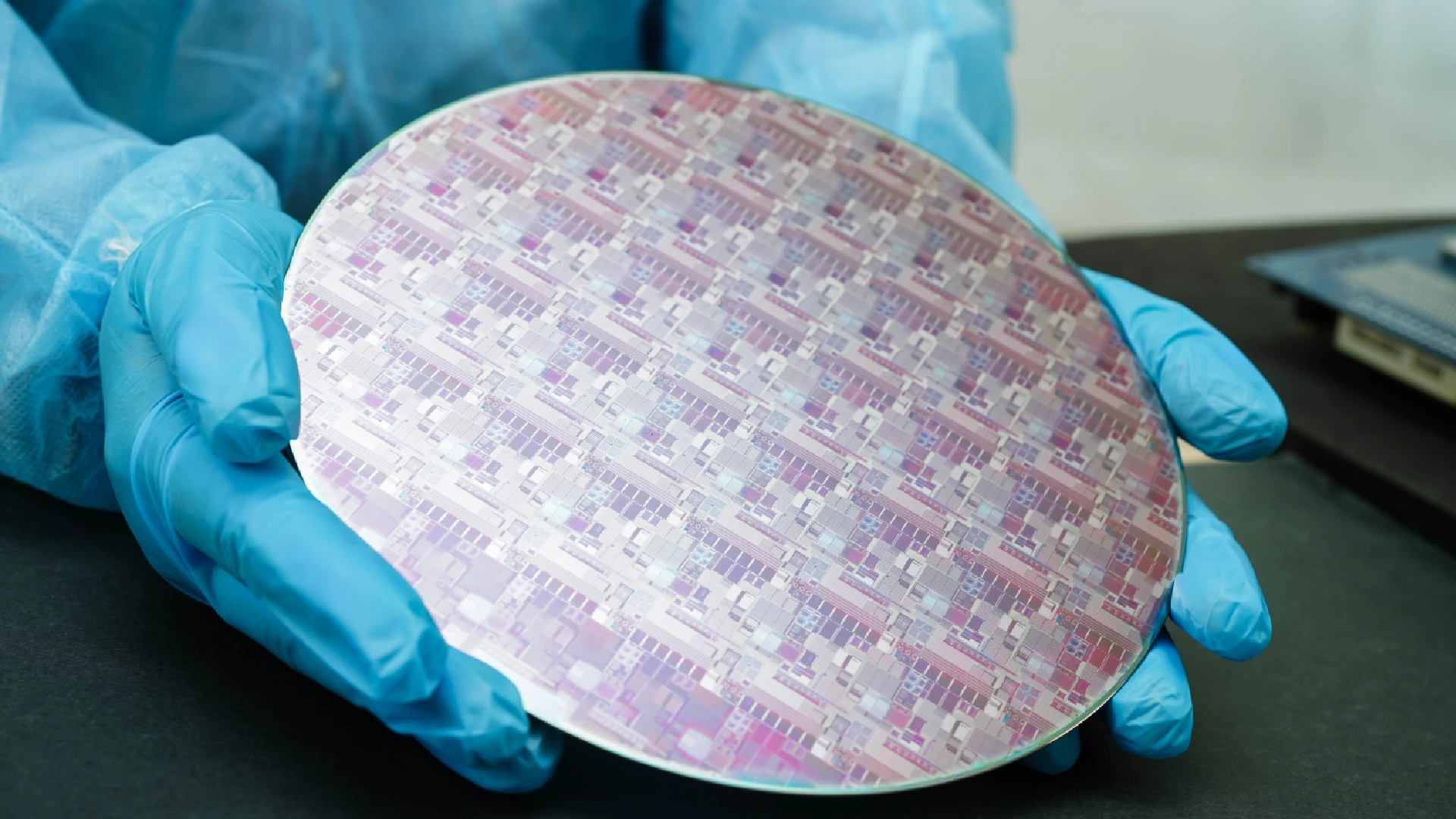
Githinji has spoken of scaling production to as many as 30,000 wafers a month, a level that would require millions of dollars in equipment alone. Those numbers are daunting for a country still building its industrial base, especially without sustained state backing.
Vietnam offers a useful comparison. In 2025, its government approved roughly $500 million in public funding for semiconductor manufacturing, alongside private-sector investment.
The Asian nation already had an electronics manufacturing foundation. It was not creating an industry from scratch but accelerating one that already existed.
Kenya’s approach has been more tentative. The DeKUT plant relied heavily on external funding with limited direct state investment and no guaranteed domestic market.
Supporters of Kenya’s semiconductor ambitions may lean on the country’s mineral wealth as a pillar for semiconductor manufacturing. However, most of the value in the semiconductor industry lies far beyond extraction, in processing and fabrication.
Semiconductor manufacturing is physically demanding too. Fabs require massive volumes of ultrapure water, stable electricity, and cleanrooms. Advanced lithography relies on equipment so complex that one company in the world has a monopoly on making it—ASML.
Beyond equipment, much of the fabricating skill is learned over years and embedded in teams. This is why a handful of regions dominate semiconductor production.
Chips power modern life. Yet only countries with the infrastructure to support them can produce them. This is why shortages persist. Early entrants benefit from decades of accumulated advantage.
For Kenya, questions remain: How much public commitment will such an industry require? What trade-offs is the country prepared to make to support it? Right now, it is too soon to tell what will become of the DeKUT plant.