




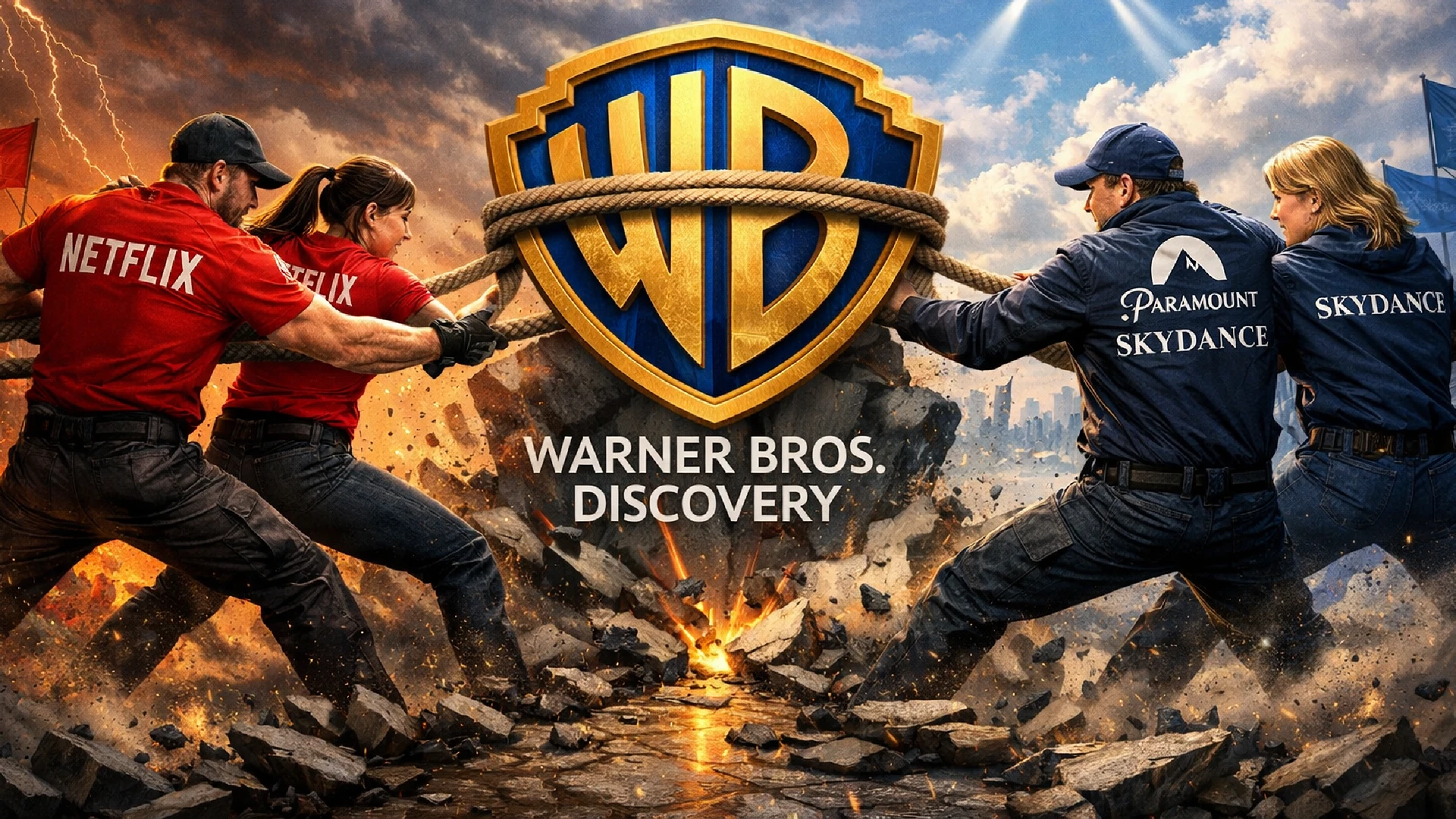
Netflix and Paramount Skydance are both vying for control of Warner Bros. Discovery in a bidding war. This battle is unfolding at a time when the streaming industry is under pressure to scale and control premium content.
Its outcome could reshape the balance of power in global streaming and determine who controls some of the most valuable content libraries in entertainment.
Warner Bros. Discovery’s portfolio includes globally recognized brands such as HBO/HBO Max, CNN, Discovery Channel, HGTV, Food Network, Cartoon Network, and many more.
A sale of Warner Bros. Discovery would include some or all of these assets, depending on how the transaction is ultimately structured.
READ: Warner Bros. Discovery Puts Itself Up for Sale
In late 2025, Netflix agreed to buy Warner Bros. Discovery’s studio and streaming businesses for around $82.7 billion, or about $27.75 per share in cash. They then revised the deal in January 2026 to all-cash at the same value.
The deal has been agreed upon between the companies and supported by the Warner board.
Paramount Skydance jumped into the sweet deal with its own offer aimed at buying the entire Warner Bros. company for about $108.4 billion, or $30 per share, which means more cash up front than Netflix’s proposal.
Paramount’s strategy is to persuade shareholders that its proposal delivers greater value and certainty. Despite having a higher bid, Paramount’s offer was rejected by Warner’s board.
On February 10, 2026, Paramount tried to up the ante without raising its price. It added an estimated $650 million per quarter that it would pay shareholders for every quarter the deal doesn’t close after 2026.
It also said that it would cover Warner’s $2.8 billion breakup fee owed to Netflix if that deal collapses. This is meant to make Paramount’s offer more attractive while acknowledging regulatory and timing risks for shareholders.
Warner’s board has repeatedly rejected Paramount’s proposals to date, maintaining its support for the Netflix transaction and urging shareholders to stick with that plan.
READ: Canal+ Saves 12 DStv Channels in Late Warner Bros. Deal
The battle isn’t just about money. There’s also growing regulatory scrutiny from the U.S. Department of Justice and other international regulators examining whether Netflix’s deal would harm competition.
Combining Netflix and Warner’s content libraries could concentrate a lot of content and its distribution in one studio.
Whoever ends up in control of Warner Bros.’ content will shape not only what audiences watch, but also how competition evolves across the global streaming market.
If Netflix, with its vast international subscriber base, absorbs another major content library, it could further strengthen its lead worldwide. If Paramount succeeds with a full takeover, it could reshape the balance of power among studios.
However, some critics argue it may alter Warner’s longstanding identity and creative direction.