







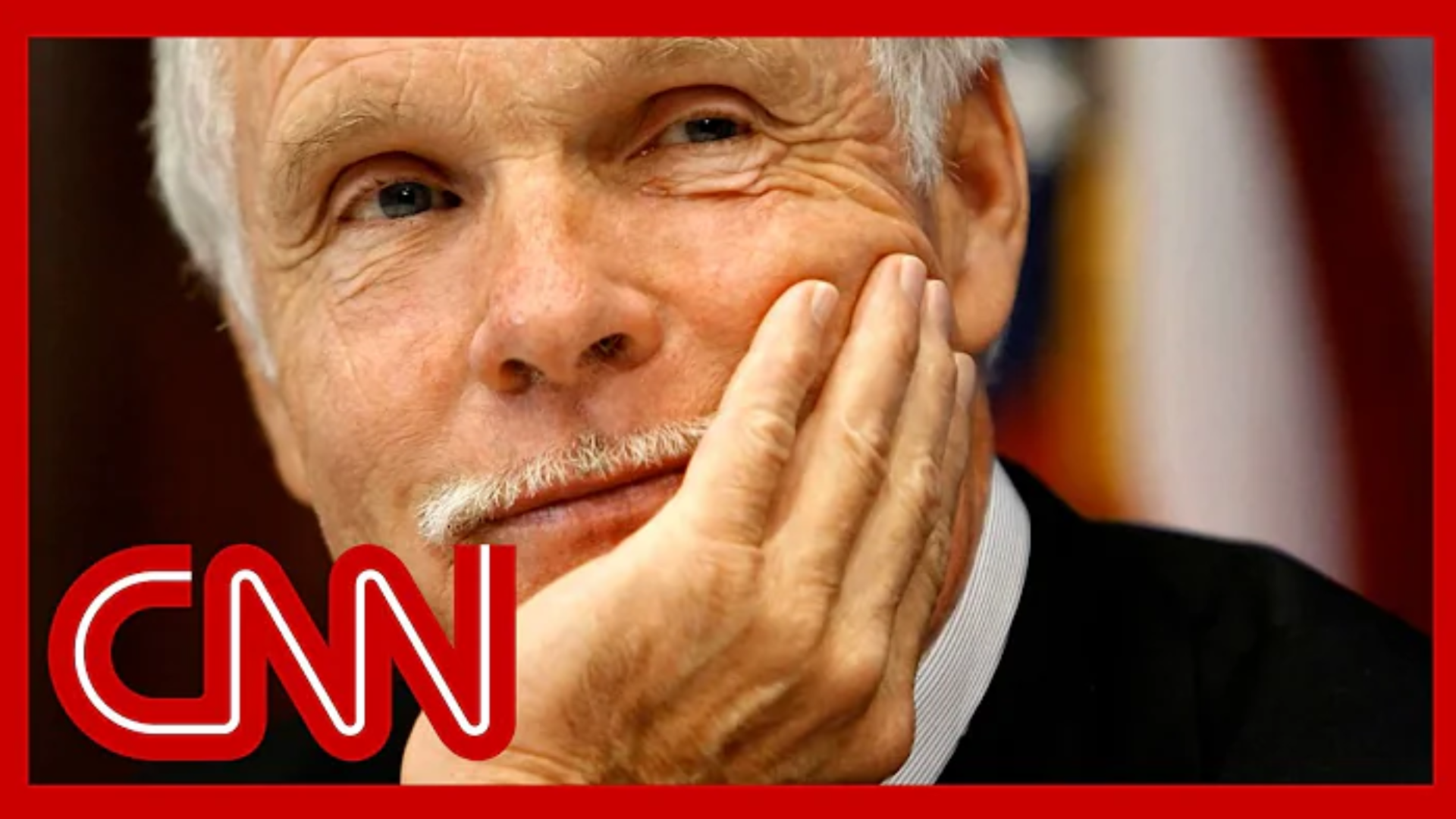
Ted Turner, the media mogul behind the CNN network, has passed away at 87, leaving behind a career so improbable that even the people who watched it unfold struggled to believe it.
He had Lewy body dementia, disclosed in 2018, and spent time in hospital in 2025 after contracting pneumonia.
Turner grew up in Cincinnati, Ohio, moved south with his family at 9, and never finished his degree at Brown University, getting expelled for having a girlfriend in his room, among other infractions.
At 24, his father’s suicide left him in charge of a struggling billboard company. He bought it back after it was sold to pay debts, turned it profitable, and then made a decision everyone around him thought was foolish: spending $2.5 million on a failing Atlanta UHF television station in 1970.
That station became the foundation of everything. By 1976, after federal regulators cleared cable systems to pull satellite signals for programming, Turner was first in line.
His station, WTBS, became the first national “superstation,” beaming content into homes across the US via satellite when almost nobody else had figured out that was even possible.
Within a decade it was pulling over $70 million in annual profit and reaching more than 34 million homes.
He didn’t stop there. In 1980, Turner launched CNN in Atlanta with $21 million scraped together from selling a station he owned in Charlotte with no market research or focus groups. He’d spent five years thinking about 24-hour news and decided it was time.
Critics called it the “Chicken Noodle Network.” Then CNN covered the 1986 Challenger disaster, then the Gulf War live from Baghdad in 1991, and suddenly nobody was laughing.
Time magazine named Turner Man of the Year that year, crediting him with turning “viewers in 150 countries into instant witnesses of history.”
He also built TNT, Cartoon Network, Turner Classic Movies and acquired MGM’s entire film library, which included thousands of titles, a move that gave him the content to fill them.
He even created the Goodwill Games in 1985 to give international athletes a politics-free alternative after back-to-back Olympic boycotts ruined the 1980 and 1984 games.
In 1996, he sold Turner Broadcasting to Time Warner (now Warner Bros. Discovery) for $7.5 billion and made another billion within nine months.
Then in 1997, he donated a third of his entire wealth (~$1 billion) to the United Nations Foundation. He later called it the best investment he ever made.
The AOL-Time Warner merger in 2000 undid much of that. Turner voted for it against his instincts, the stock collapsed, and he lost around 80% of his wealth in two years, roughly $10 million a day for two and a half years by his own count.
He was then pushed out of the company entirely, losing control of every network he had built.
Turner spent his later years on a 113,000-acre ranch in Montana, running Ted’s Montana Grill, a restaurant chain he founded in 2002 built around bison burgers from his own herds.
At his peak he owned nearly 2 million acres across 6 states, making him the largest private landowner in the United States until Liberty Media’s John Malone overtook him.
Turner was married three times, including a decade-long marriage to Jane Fonda that ended in 2001. He is survived by 5 children, 14 grandchildren, and 2 great-grandchildren.
He once said he was trying to set “the all-time record for achievement by one person in one lifetime.” Whether he got there is debatable.
What isn’t is that he invented the 24-hour news cycle, built the modern cable landscape, gave away a billion dollars while still alive, and managed to lose almost everything and keep going. That’s a fairly hard act to follow.
Rest well, Ted.