




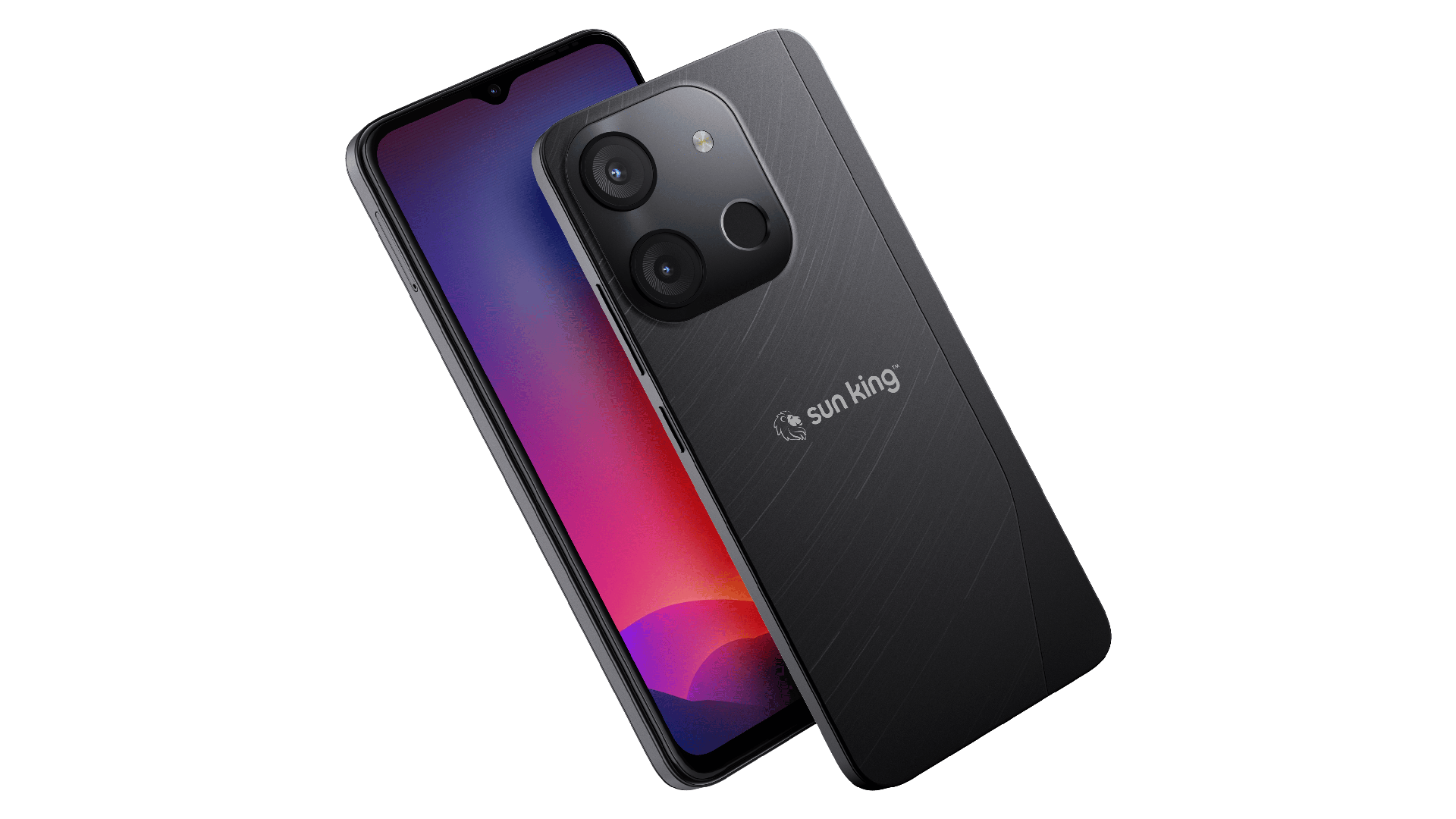
Sun King has officially entered the smartphone market with the launch of EZ 1. This will be the first Sun King-branded smartphone, manufactured locally at Sun King’s recently opened facility in Kenya.
The company is applying the same financing model that helped it scale solar adoption across Kenya to smartphones.
Kenyans can purchase the EZ 1 with a KES 2,999 deposit, followed by KES 60 daily payments through the Lipa Pole Pole plan. This proven model helps overcome the biggest barrier to smartphone adoption in parts of Kenya: the high upfront cost.
The device targets entry-level and budget-conscious users who mostly rely on smartphones for communication, mobile money transactions, online browsing, and small business operations.
Sun King’s EZ 1 comes with 4GB of RAM and an additional 4GB of virtual RAM. It also has 128GB of internal storage, expandable up to 256GB. The phone features a 6.56-inch HD+ display, a 13MP rear camera, and an 8MP front camera for selfies and video calls.
It is powered by a 5000mAh battery and includes both fingerprint and facial recognition. Sun King also bundles the phone with 1GB of data on activation, 50MB daily for 60 days, and a warranty.
For pay-as-you-go customers who value affordability and reliability over premium features, the EZ 1 offers solid value. It isn’t meant to compete with mid-range or flagship phones, but within the entry-level segment, its specs are practical and well-suited for everyday use.
Behind the EZ 1’s market debut is Sun King’s newly established manufacturing facility in Nairobi, its first large-scale production site on the continent.
Opened in October 2025, Sun King asserts that the plant has the capacity to produce up to 700,000 units annually, positioning it as a scalable production hub on top of it being an assembly line for their products.
Sun King is well known in Kenya for its pay-as-you-go solar products. The company estimates that one in five Kenyan households has used its solar solutions.
Expanding into smartphones is a natural next step, as electricity access has improved, but the high cost of smartphones still limits full participation in the digital economy.