






Kenya closed out 2025 with its digital economy accelerating at pace, based on new data from the Communications Authority of Kenya covering October 1 to December 31.
The numbers point to a country that is highly connected and increasingly reliant on mobile technology for everyday life.
The data shows record SIM penetration and rising smartphone adoption, resulting in surging data consumption as well as near-universal mobile money use. The quarter captures a market that continues to expand in scale and sophistication.
At the same time, shifting user behavior shows the declining use of SMS with a gradual shift to internet-based communication and streaming.
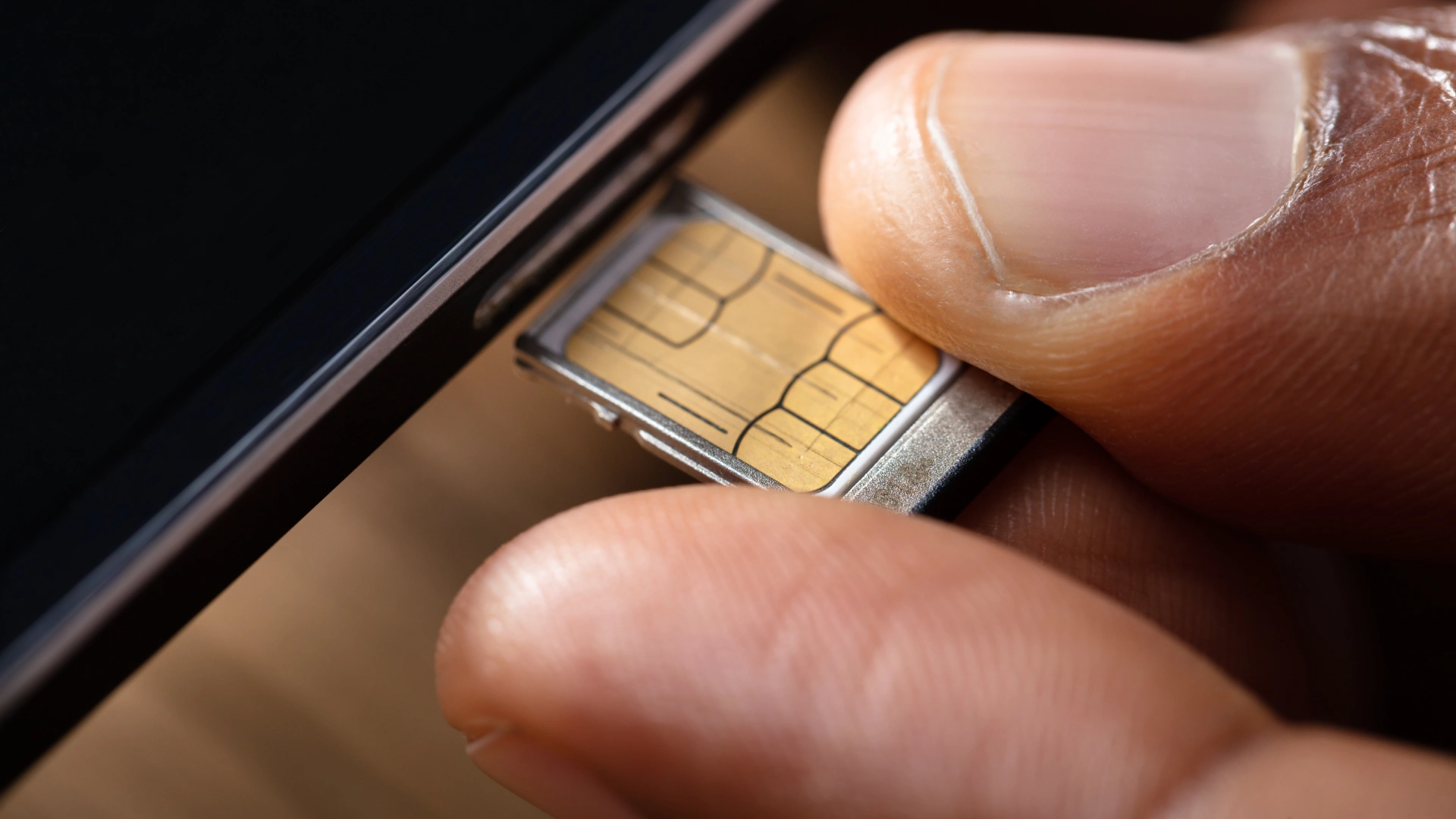
Kenya has more active SIM cards than people; with 78.4 million SIM subscriptions in a country of 52 million people, the mobile penetration rate stands at an incredible 149.5%.
In plain terms, millions of Kenyans are walking around with two or more lines in their pockets, and the numbers keep climbing.

Safaricom Still Runs the Show
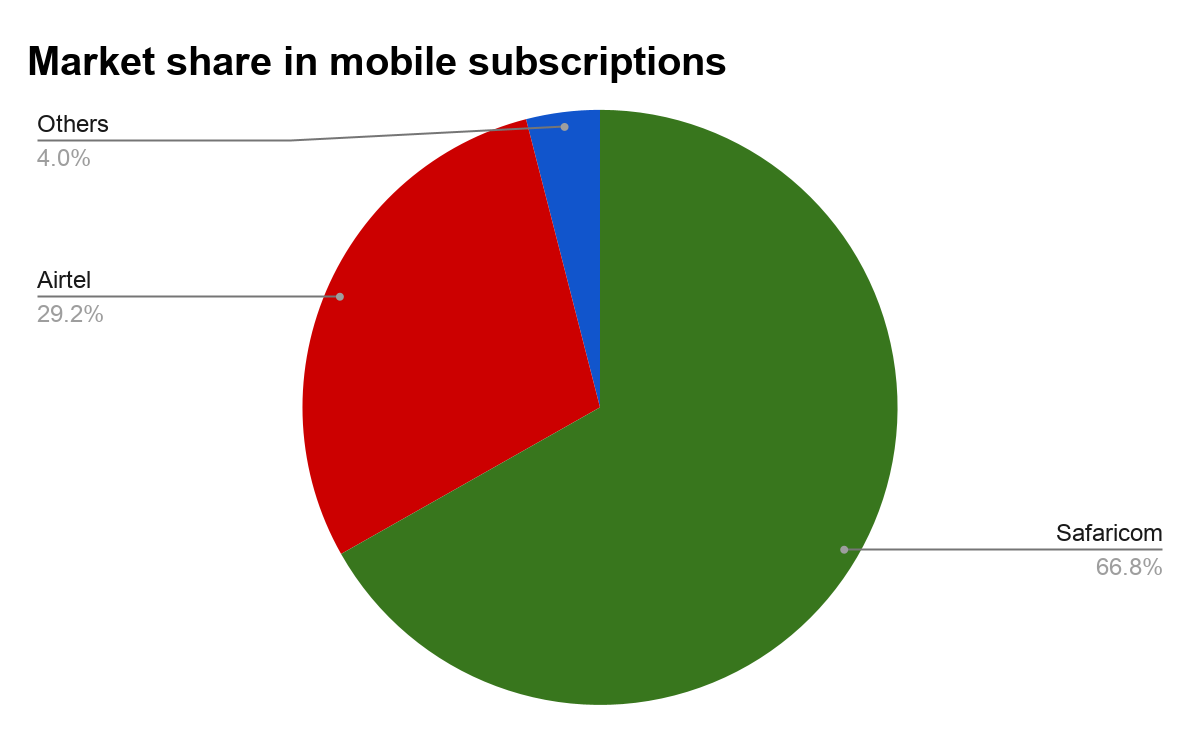
Three operators dominate Kenya’s airwaves, but one towers over the rest. Safaricom commands two thirds of all mobile subscriptions, nearly two thirds of mobile broadband, and almost nine in every ten mobile money users.
Airtel is a credible second, but the gap is wide enough for Safaricom to almost claim a monopoly.
Smartphones Have Taken Over
Feature phones are on their way out. Of the 78.3 million devices connected to Kenya’s mobile networks, 48.7 million are smartphones, giving a penetration rate of 92.9% that is still rising.
Feature phones sit at 56.5% and falling. As smartphones spread, so does the appetite for data, and the numbers reflect exactly that.
4G Is Still King But 5G Is Coming Up Fast
Mobile data subscriptions hit 62 million this quarter. 2G and 3G connections are shrinking, while 4G surged to 44.1 million users and 5G quietly crossed 1.7 million. The average user now pulls 14.6 GB of data per month.
Those on 5G are consuming 46.4 GB on average, more than three times what a typical user goes through. Broadband consumption grew by 12% in a single quarter, the kind of growth that signals infrastructure investment is not slowing down anytime soon.
Mobile Money Is Practically Everywhere
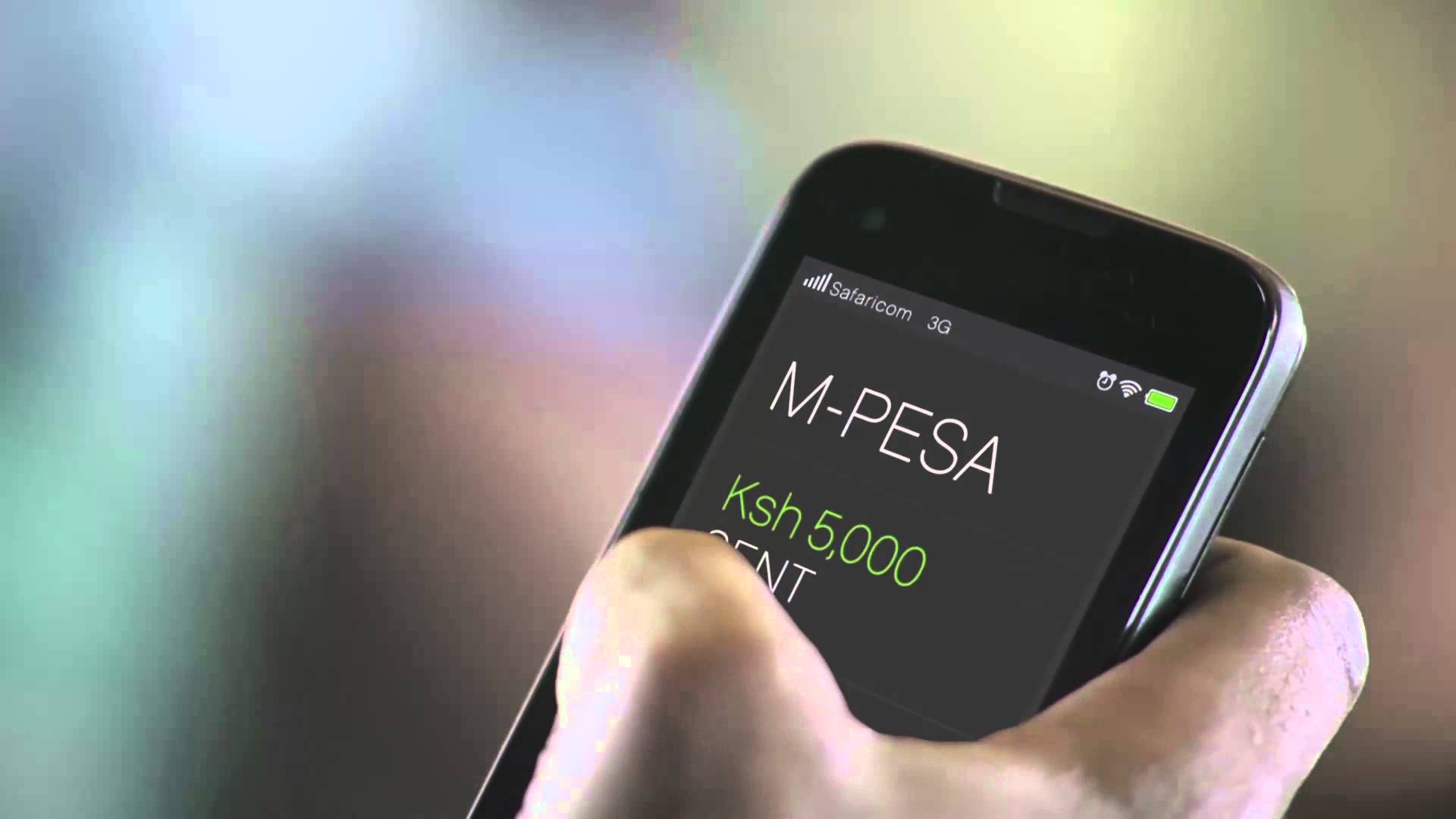
Kenya’s mobile money market added 2.7 million new users in just three months. By December 2025, penetration stood at 98%. The festive season gave it a nudge, with Kenyans spending and sending money over the holidays, driving a 5.6% quarterly jump.
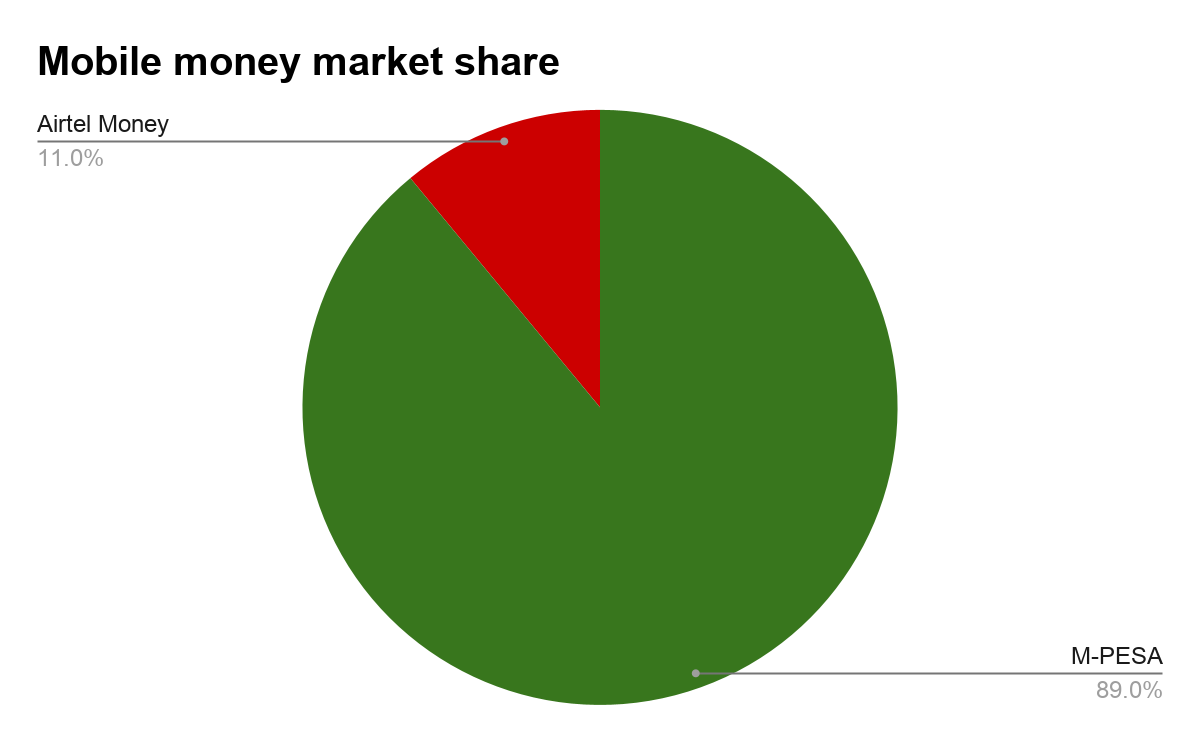
M-Pesa remains the undisputed home of mobile money with an 89% share, backed by 501,399 registered agents scattered across the country.
SMS Is Quietly Dying
In one quarter, SMS traffic dropped from 14.7 billion to 14.4 billion messages. The Communications Authority points the finger squarely at WhatsApp and other internet messaging apps eating into traditional texting.
Voice calls, however, are doing just fine. Kenyans made 31.5 billion minutes of calls, up 5.2% on the previous quarter. People are still talking; they are just not texting on SMS, or rather, are gradually moving to online platforms powered by data.
Fixed Internet Is Fiber-First
Fixed internet subscriptions grew 7.4% to reach 2.46 million, with fiber connections now accounting for 1.38 million of those. Starlink satellite internet has 22,282 subscriptions, a small slice but a sign that the race for last-mile connectivity is getting more creative.
Kenya’s total international internet bandwidth capacity now stands at 24,161 Gbps, with the PEACE submarine cable recording the sharpest growth at 43.9% this quarter alone.
Pay TV Is Losing Subscribers
Broadcast subscriptions fell to 1.66 million, down from 1.68 million the previous quarter. DTT platforms GoTV and StarTimes both shed subscribers, as did most satellite TV providers. Only cable narrowly grew.
The trend points toward streaming displacing traditional pay TV, a global story playing out locally, one cancelled subscription at a time.