





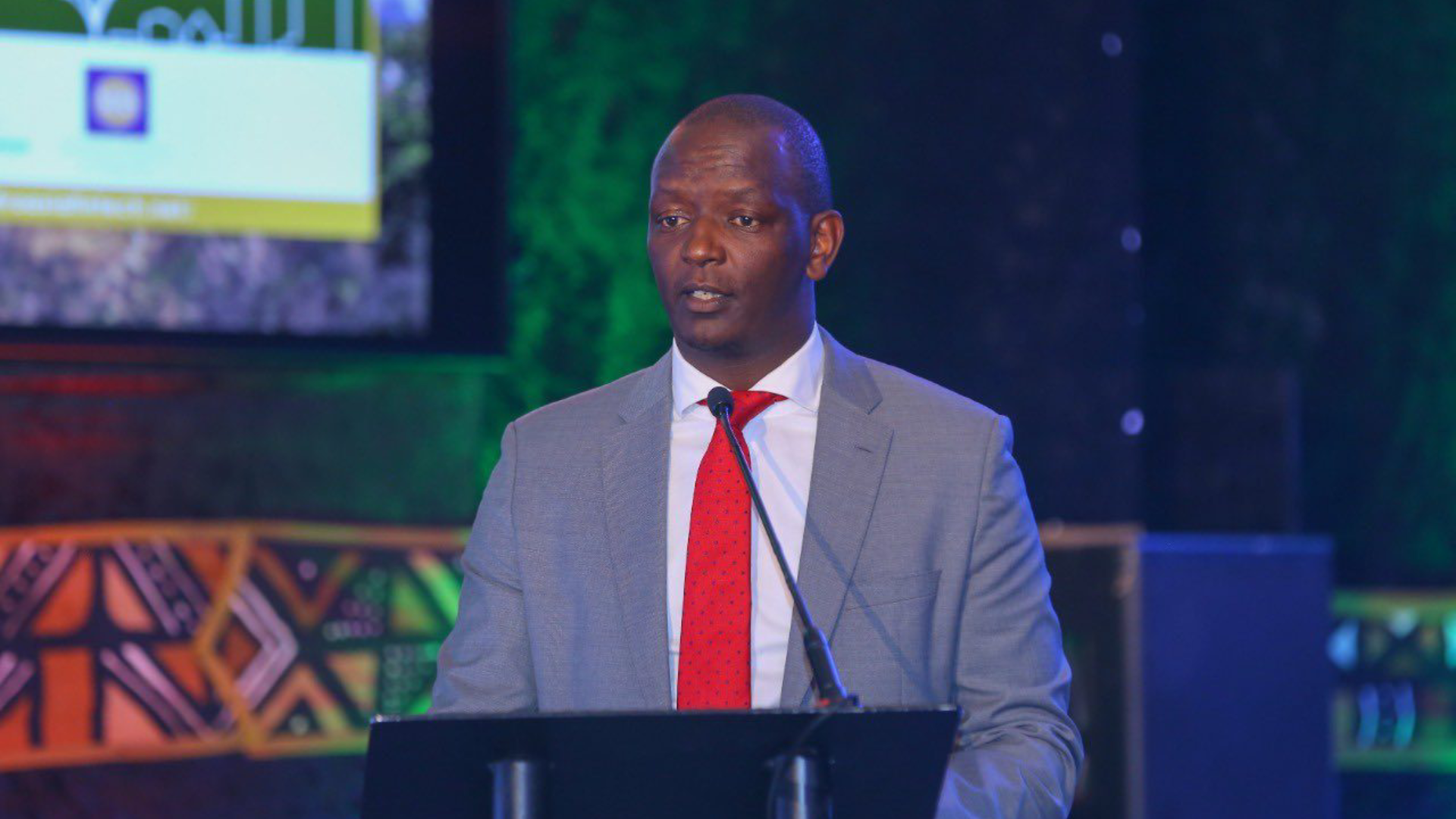
Sitoyo Lopokoiyit, who serves as Managing Director of M-PESA Africa and Chief Financial Services Officer at Safaricom, was recently appointed as Chief Executive for Personal and Private Banking at Absa.
At face value, it may seem like a senior leadership transition, or a poach, but there’s more to this than meets the eye.
His tenure at M-PESA coincided with the platform’s evolution from simple peer-to-peer transfers into a comprehensive financial ecosystem encompassing lending, merchant payments, cross-border transactions, and app-based financial services.
Today, M-PESA serves tens of millions of customers and millions of businesses across multiple markets, thanks to Kenya’s retail financial landscape shifting toward mobile-first engagement.
Over the past decade, mobile money has become the primary transaction interface for Kenyans, handling everything from direct transfers and bill payments to short-term credit, savings, and cross-border remittances.
READ: Kenya Mobile Money Subscriptions Hit 47 Million, Raising Banking Concerns
In this environment, traditional banks did not disappear, but their role changed out of necessity. Growth in retail banking is now closely tied to digital engagement. Customers are easily acquired through mobile apps, while physical branches play a smaller role in everyday transactions.
In this context, Lopokoiyit’s appointment is focused on strengthening Absa’s Personal and Private Banking division, where digital competition is most intense.
This unit serves everyday consumers, salaried workers, entrepreneurs, and high-net-worth individuals, the same customers most targeted by mobile money platforms, fintech lenders, and app-based financial services.
Absa already has a strong digital presence through its mobile wallet and lending platform, Timiza. The bank reports that more than 90% of its transactions now take place digitally, with Timiza continuing to see steady user growth.
However, Kenya’s mobile banking market remains fiercely competitive, with M-PESA continuing to dominate transaction volumes while platforms like KCB Mobile maintain strong positions.
With this in mind, leadership experience in large-scale mobile ecosystems becomes strategically relevant. At M-PESA, new features were introduced and updated quickly.
Lending decisions were guided by real customer transaction data, and partnerships with other companies helped expand what users could do on the platform.
It would be reasonable to expect greater focus on product iteration speed, digital lending models, ecosystem integration, and mobile-first engagement under his leadership at Absa.
This does not imply a drastic overhaul. Banks operate under different regulatory and capital structures than telecom-led platforms. However, it does suggest alignment between leadership experience and market realities.
M-PESA’s success came from serving large numbers of people at low cost through small per-transaction fees at high scale; no donor funding or government subsidies were required.
Despite all the financial literacy and digital inclusion leaps made, Kenya still has a significant digitally active population that is underserved by full banking products.
Micro-entrepreneurs, informal sector workers, and thin-file customers often depend on mobile money but have had limited access to traditional banking services.

For Absa, the opportunity lies in converting this digital engagement into concrete financial relationships. This means offering savings, structured credit, insurance services, and investment products, while maintaining the simplicity that has driven mobile money adoption.
Lopokoiyit’s prior experience may prove useful in balancing scale, risk, and inclusion within a regulated banking framework.
There are also broader regional trends that are at play here. South African banks are increasingly focused on East Africa, especially Kenya, where digital financial infrastructure is advanced and retail transaction volumes are high.
Nedbank’s recent regional expansion, including its plan to acquire a stake in NCBA Group, and Absa’s strategic positioning both reflect a view that future banking growth in Africa will come from digitally driven markets rather than traditional branch expansion.
Kenya presents a unique operating environment. Mobile penetration is high. Digital payments are well embedded. Consumers are accustomed to instant transactions and app-based credit. Any bank looking to scale retail operations in this context must adapt to that behavior.
For years, the prevailing narrative has positioned banks and mobile money operators as pure competitors. In practice, the relationship has always been more nuanced, a form of co-competition involving integration, partnerships, shared infrastructure, and overlapping customer bases.
READ: CBK to Slash Mobile Money Fees by 57% Under New Plan
M-PESA itself, for all its disruption, has required bank partnerships to remain sustainable.
The next phase could be less about competition and more about convergence, with banks building wallet-like experiences while mobile platforms layer on what were traditionally banking services.
Lopokoiyit’s appointment does not guarantee immediate gains in market share. Results will depend on execution. What is clear is that retail banking in Kenya is now digital-first, mobile money models carry more weight than traditional banking, and regional players see East Africa as a key growth market.