








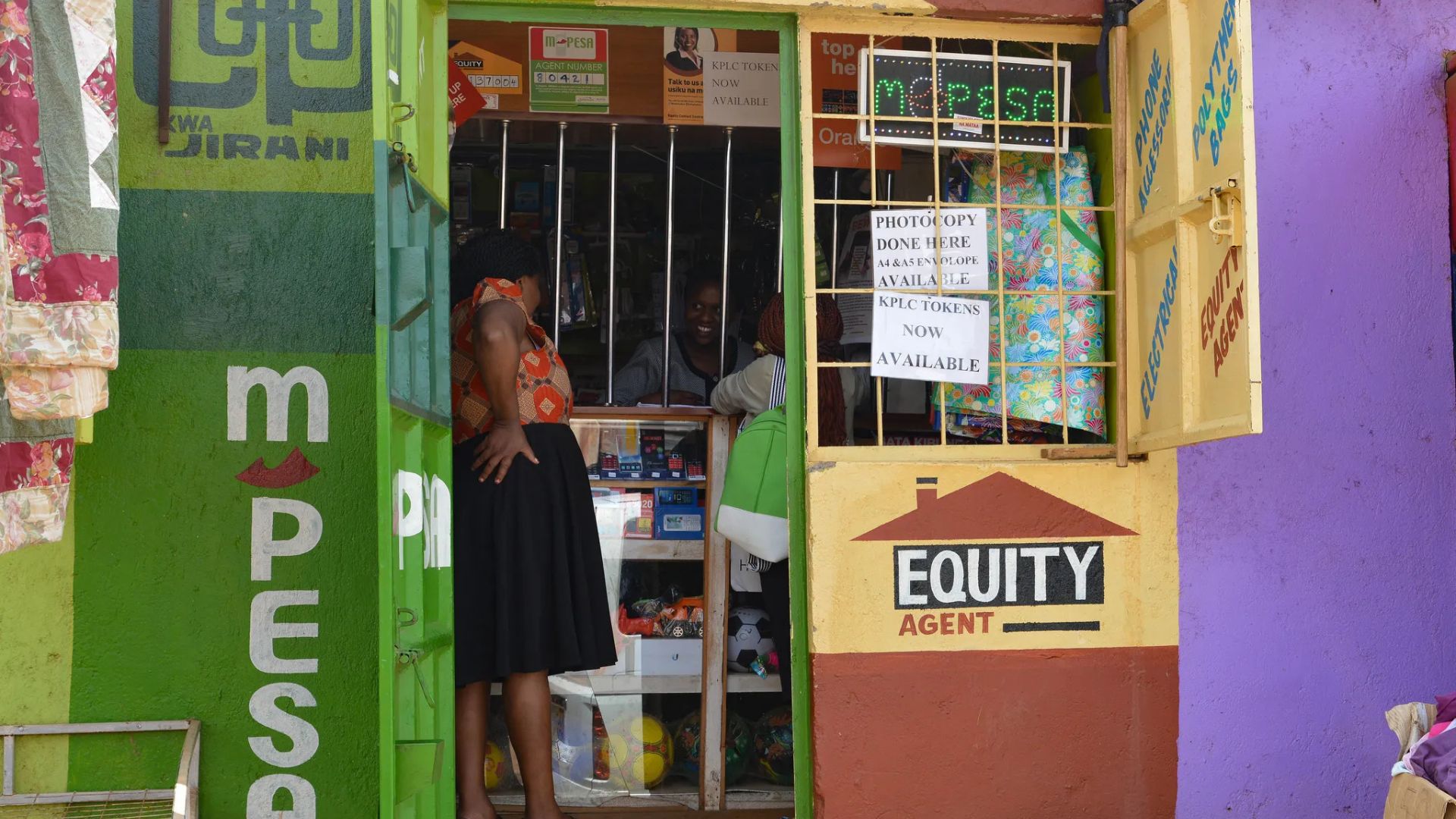
Mobile money subscriptions grew 13.2% over the year to reach 54 million by June 2026, a penetration rate of 101.3%, meaning there are now technically more mobile money accounts registered than there are people in Kenya.
Safaricom, through M-Pesa, controls 88.8% of that market, a share so dominant that it leaves every other provider fighting over roughly one-tenth of the country’s mobile money users.
The odd number in this section is the agent network. While subscriptions kept climbing, the number of registered mobile money agents actually fell 5.6% in a single quarter, from 602,470 to 568,463.
More people are using mobile money, but through fewer physical agents, likely a sign of consolidation among agents and growing use of app-based transactions and merchant payments that don’t require a visit to a physical kiosk.
| Metric | Figure |
|---|---|
| Total Mobile Money Subscriptions | 54 million |
| Year-on-Year Growth | ↑ 13.2% |
| Penetration Rate | 101.3% |
| M-Pesa (Safaricom) Market Share | 88.8% |
| Remaining Providers’ Combined Share | 11.2% |
Mobile money’s importance to the industry becomes clearer when looking at operator revenue. Total mobile service revenue for 2025 rose 3.6% to KES 440.9 billion. When that revenue is broken down by service type, voice and data are not what dominates.
Instead, a catch-all category the report labels “other service revenue” made up the largest single share at 42.8% of all mobile revenue. That category is explicitly defined to include mobile money, roaming charges, bulk SMS, and advance airtime services.
In other words, the single biggest source of income for Kenya’s telecom operators is no longer people talking or texting on their phones. It is the financial and value-added services built on top of the network, with mobile money as the centerpiece.
This also explains why Safaricom‘s overall dominance in the mobile market runs even deeper than its 69.8% share of plain subscriptions.
Safaricom’s 88.8% grip on mobile money means it captures a disproportionate slice of the most lucrative revenue category in the entire sector, reinforcing its position well beyond what subscriber numbers alone would suggest.
Airtel and Telkom Kenya, and newer entrants like Finserve’s Equitel, are left contesting a market where the largest prize is already spoken for.