




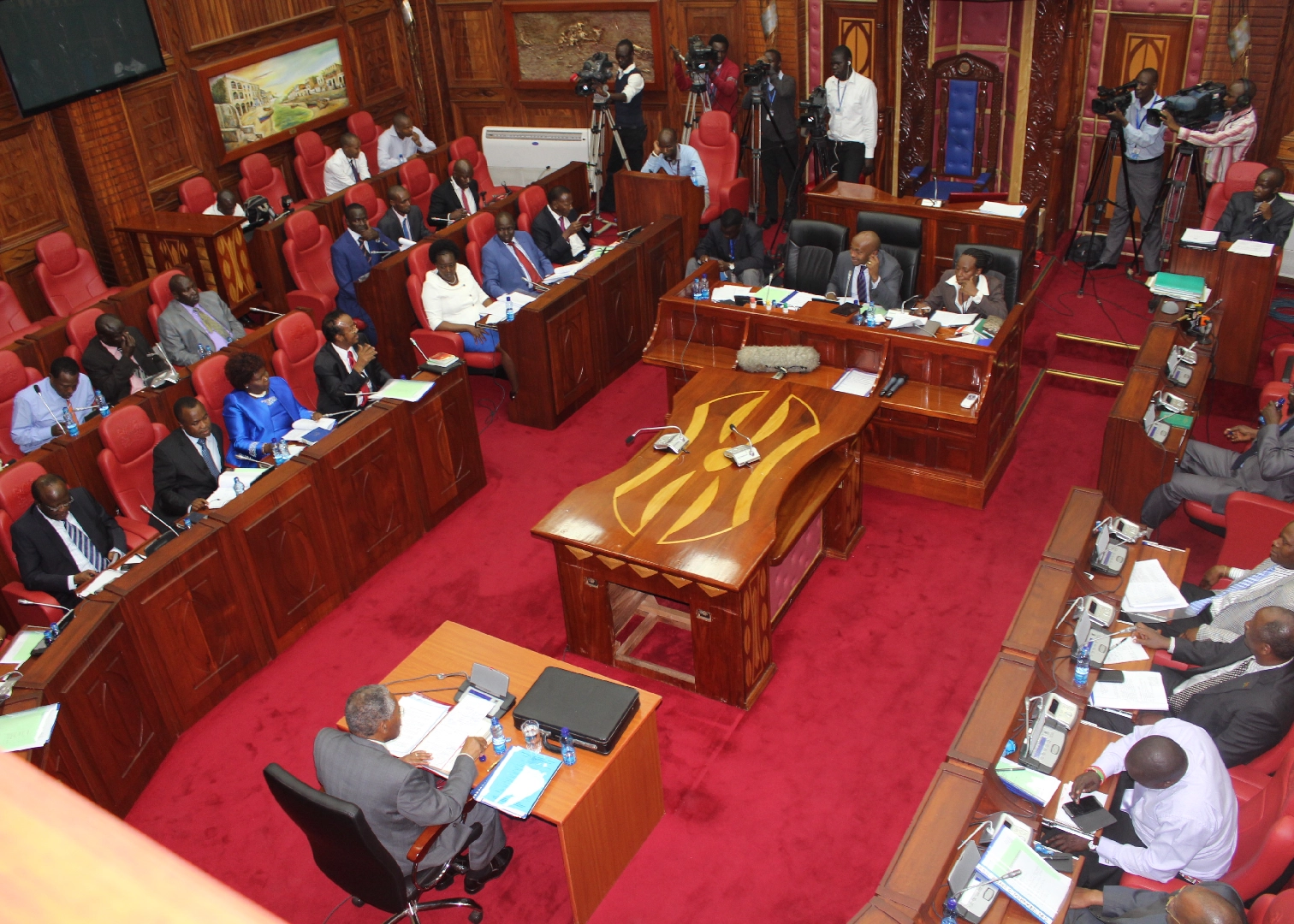
Kenya’s first attempt at a dedicated law to govern artificial intelligence has stalled at the Senate committee level.
The Standing Committee on Information, Communication, and Technology rejected the Artificial Intelligence Bill, 2026, citing that its penalties were too harsh and its rules too heavy for a sector still finding its footing.
The bill, which was sponsored by Nominated Senator Karen Nyamu, had proposed the creation of an Office of the AI Commissioner with powers to register AI systems, conduct audits, investigate complaints, and enforce compliance.
Alongside the Commissioner, it also proposed an AI Authority to set industry standards and run testing sandboxes where startups could trial products under supervision. A third body, an Advisory Committee, would advise the government on emerging risks and trends.
Given the Bill’s ambitions, the penalties it carried were bound to attract attention. Fines of up to KES 5 million, or a percentage of annual turnover, sat alongside criminal liability for offenses including harmful deepfakes, with prison terms of up to two years.
READ: Kenya’s AI Policy, As the Government Sees It
The committee’s position was that this combination of heavy fines, criminal exposure, and strict ongoing compliance duties would not just regulate the sector but actively discourage participation in it, pushing local developers out of a market still too young to absorb that kind of regulatory cost.
That concern is not unfounded. Kenya’s AI sector is not built on large companies with legal teams and compliance budgets. It is built on startups adapting open-source tools for local problems in agriculture, healthcare, lending, and education, operating with thin margins and limited access to capital.
Still, the committee’s rejection does not resolve the problem the bill was trying to solve. Kenya now sits without a dedicated AI law, and the gap is real. The Data Protection Act, 2019, offers some cover, recognizing automated decision-making and giving individuals certain rights around it.
However, it was never designed to handle the broader questions the bill raised, including AI safety, algorithmic accountability, the use of AI in public sector decisions, and the circulation of non-consensual deepfakes.
Those questions remain unanswered, and the legal exposure they create for ordinary Kenyans remains unaddressed.
The Bill also highlighted gaps in existing laws that the committee’s rejection does not address. It pointed to the Science, Technology and Innovation Act and the Data Protection Act, Cap 411C, arguing that they do not adequately cover how AI systems operate in Kenya.
Rejecting the Bill was a decision on its approach, not on whether AI regulation is needed.
The bill had also pulled county governments into the picture, tasking the commissioner with advising them on how to use AI in areas like healthcare, agriculture, and education, with nominees from the Council of Governors required to sit on the Advisory Committee.
This practical recognition acknowledges that counties are already using AI in service delivery, often without any governance framework.
READ: Kenya AI Policy Draft Released for Public Consultation
For now, two competing concerns sit unresolved. Over-regulating too early, Kenya risks chilling investment and driving developers toward markets with lighter oversight.
Under-regulation and the risks to privacy, fair treatment in automated decisions, and protection from AI-generated manipulation remain live, with limited legal recourse for those affected.
The committee’s rejection pushes the question back, not away. The harder task is redesigning a framework that takes enforcement seriously without treating every local developer as a liability and producing something that can actually pass.