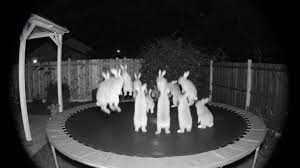





A trampoline, a few bouncing bunnies, and 200 million views. It sounds innocent enough until you realize none of it was real.
TikTok users were recently captivated by what looked like nighttime surveillance footage of rabbits jumping on a backyard trampoline.
The video featured squeaky trampoline springs, distant insect sounds, and a timestamp designed to mimic Ring camera footage, all of which gave it the convincing appearance of genuine surveillance video.
But as tech outlet 404Media revealed, the video was entirely AI-generated and full of subtle glitches if you looked closely enough.
What Tricks Made This AI-Generated Clip Appear Real to so Many?
As AI video tools like Google Veo 3 and OpenAI’s Sora become more advanced, creators are getting smarter about how they use them.
Instead of trying to create crystal-clear realism, many are intentionally mimicking grainy, low-quality formats like night-vision cameras, dashcams, and home security feeds.
Poor video quality acts as a natural filter, making it easier to hide AI-generated inconsistencies. It conceals glitches like unnatural motion, warped limbs, or disappearing objects, making the footage look raw and believable.
We tend to trust surveillance footage because it appears candid and unedited. That psychological bias is exactly what AI creators are exploiting, and it’s working.
The Blurry Line Between AI Entertainment and Misinformation
While bouncing bunnies may seem harmless, the viral success of AI-generated videos raises a serious concern: Shouldn’t viewers know when a video is fake?
Currently, platforms like TikTok, Instagram, and YouTube have limited enforcement when it comes to labeling AI-generated content, especially when it’s not political or harmful in nature.
That means creators can post realistic-looking fakes without disclosing their artificial origins. This blurs the line between:
- Art and deception
- Entertainment and misinformation
- Creative freedom and ethical responsibility
The public’s response to this video revealed everything. “This is the first AI that has ever got me,” read one viral comment.
As these synthetic videos become more lifelike and more widespread, our ability to trust what we see is eroding. We’ll soon get to the point where we can’t trust anything because it’s impossible to distinguish what’s real and what isn’t.