





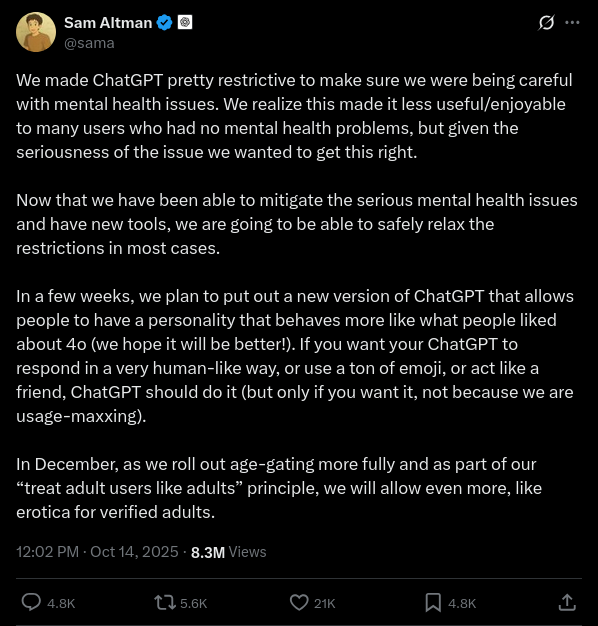
OpenAI is preparing to open a new and rather bold chapter in the ChatGPT story. CEO Sam Altman has confirmed that the AI chatbot will soon allow erotica content for verified adults.
Speaking earlier this week, Altman said the change is part of OpenAI’s goal to “treat adults like adults,” noting that the company has built new tools to ensure such interactions remain healthy, private, and consensual.
The rollout is expected to begin in December 2025, starting with select regions.
Since its debut, ChatGPT has been known for its strict “no adult content” stance. Users attempting to generate erotic or sexually expressive writing were often met with blunt refusals. That’s about to change, but only for verified adults.
OpenAI says the feature will be optional. Users who want access will need to opt in through an age-verification process that confirms they’re over 18.
The exact details haven’t been shared, but reports suggest OpenAI could rely on ID verification or third-party services to confirm a user’s age securely.
Altman explained that advances in the company’s safety systems now make it possible to support adult expression “without compromising user well-being.”
“We’ve built tools that understand context, tone, and boundaries better than before,” he said. “That lets us create a space where adults can engage responsibly with this kind of content.”
For years, OpenAI has faced criticism for being overly cautious and “paternalistic” with its content rules.
Some users and developers argued that these restrictions limited creativity and authentic expression, especially when it came to art, literature, and adult storytelling.
This move appears to be a response to growing competition, as AI platforms like Claude and several open-source models attract users by offering more freedom in roleplay and emotional interaction.
Who Will It Be Available To?
Despite the upcoming changes, OpenAI insists that the new “erotic mode” will have strict boundaries. ChatGPT will continue to strictly ban any content involving minors, non-consensual or violent sexual themes, and any form of exploitative or illegal material.
Essentially, users will be allowed to explore erotic or romantic storytelling within clear ethical and legal limits.
Obvioulsy, the internet had plenty to say about this announcement. Some users see it as a progressive and realistic move, praising OpenAI for trusting adults with more autonomy.
Others worry about privacy risks, particularly around how the platform will handle ID verification and safeguard sensitive data.
There are also ethical questions about how AI-generated erotic content might blur lines between fantasy and consent and whether OpenAI can effectively moderate such a complex space.
Whether it becomes a groundbreaking feature or a moderation nightmare will depend on how well the company executes its verification and guardrails. Either way, the AI that once refused to discuss anything remotely suggestive is about to get a lot more open.