




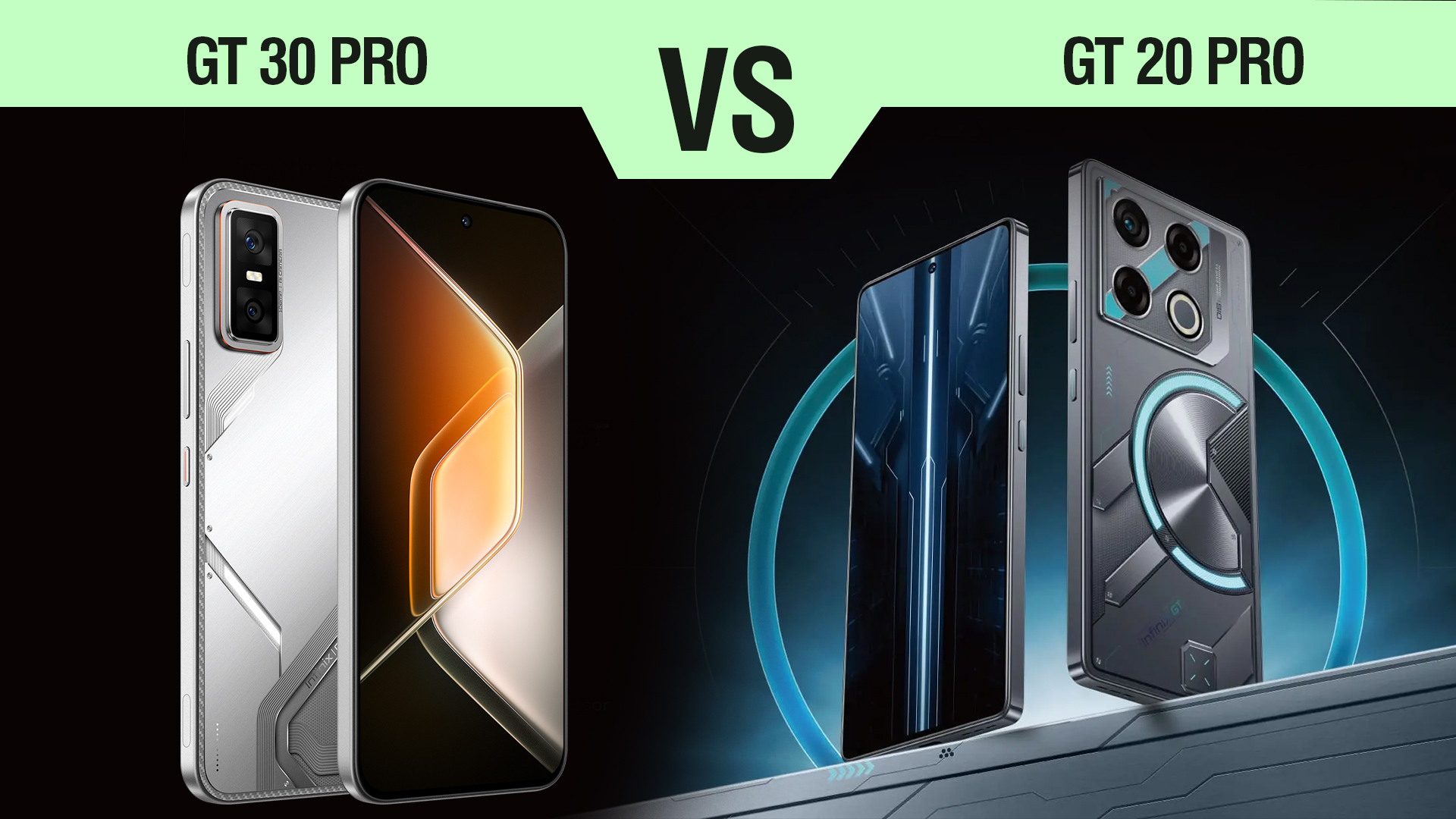
Gaming phones have this annoying habit of either looking like rejected tech props or costing as much as a decent laptop. Infinix decided to fix both problems with their GT series, but which one deserves your money – the GT 20 Pro or its successor, the GT 30 Pro?
Design Language
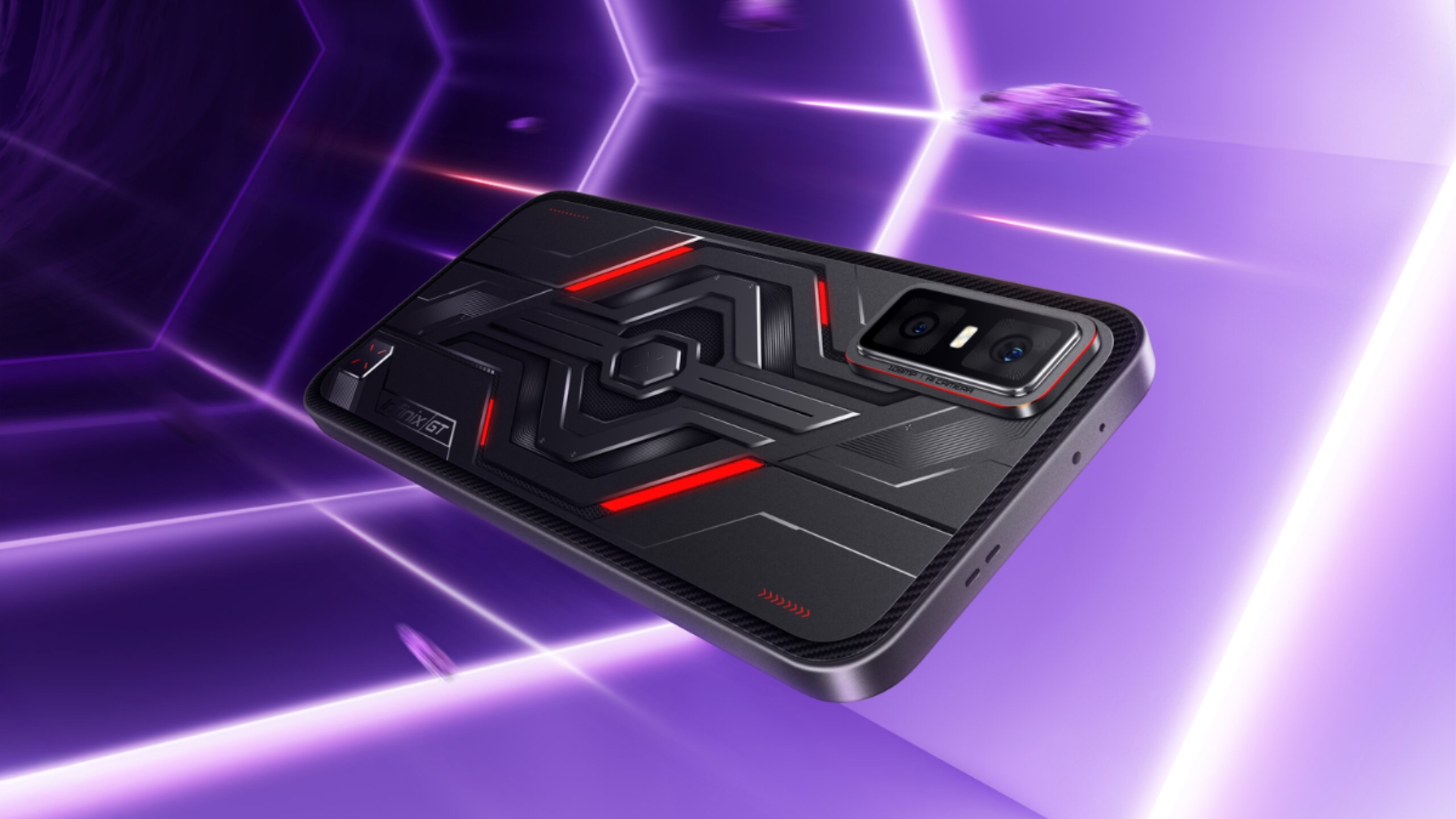
Both phones use the “Cyber Mecha” aesthetic, but the GT 30 Pro refines what the GT 20 Pro started. You get geometric lines and RGB lighting that won’t make you self-conscious in public.
The GT 20 Pro features customizable “Mecha Loop Lighting,” which is a semi-circular RGB strip that lights up for calls, notifications, and gaming. The GT 30 Pro keeps the visual flair but adds something genuinely useful: GT Shoulder Triggers.
These are touch-sensitive buttons with a 520Hz response rate that function like L1/R1 triggers on a game controller. Map one to aim and one to shoot in PUBG, and suddenly you’re not just tapping a flat screen anymore. However, the GT 20 Pro makes do with on-screen controls.
Both phones include an IR blaster (surprisingly useful for controlling TVs) and come with quality cases. The GT 20 Pro weighs 194 grams at 8.15mm thick, while the GT 30 Pro weighs 189g and 8mm thick. These dimensions allow the phones to feel substantial without being brick-like.

Display Quality
The GT 20 Pro sports a 6.78-inch AMOLED with FHD+ resolution (1080 x 2436) and a 144Hz refresh rate. Peak brightness hits 1,300 nits, and thin bezels maximize screen space.
The GT 30 Pro matches the 6.78-inch size and 144Hz refresh rate but bumps the resolution to 1.5K. It also maintains excellent outdoor visibility and the 2,304Hz PWM dimming for reduced eye strain during marathon sessions.
Both displays prioritize vibrancy over color accuracy, which is perfect for gaming but less ideal for photo editing. The GT 30 Pro is the winner here, although the margin is small. That resolution bump matters more on paper than in actual gameplay.
Performance Differences
The GT 20 Pro runs a MediaTek Dimensity 8200 Ultimate with Mali-G610 MC6 GPU, Pixelworks X5 Turbo chip, and up to 12GB LPDDR5X RAM with 256GB UFS 3.1 storage.
Meanwhile, the GT 30 Pro upgrades to a Dimensity 8350 Ultimate with the same RAM option but faster UFS 4.0 storage. It’s officially Krafton-certified for 120 fps in PUBG Mobile and maintains over 50 fps in Genshin Impact on high settings.
READ: Infinix GT 30 Pro Review: All About Gaming, Not the Hype
Both phones handle demanding games without throttling, though they do get warm during extended sessions. The GT 30 Pro’s newer chipset and faster storage give it the edge in sustained performance.
Gaming features overlap significantly: XArena game management, E-Sports Mode for blocking notifications, bypass charging (both phones can power directly without charging the battery, reducing heat and preserving battery health), and a magnetic cooling fan accessory.
Both run clean Android implementations (GT 20 Pro has Android 14/XOS 14; GT 30 Pro runs Android 15/XOS 15) with minimal bloatware. They also both promise two major OS updates and three years of security patches.
Audio Features
Both phones feature stereo speakers with JBL tuning, but neither impress. The GT 20 Pro’s speakers lack bass and sound tinny at high volume. The GT 30 Pro gets “absurdly loud” but distorts when maxed out. For immersive gaming, you’ll want headphones with either phone.
Camera Performance
The GT 20 Pro offers a 108MP main sensor with OIS, two pointless 2MP sensors (depth and macro), and a 32MP selfie camera. It performs impressively in good light with natural colors, but low-light photography is just acceptable. The missing ultrawide lens hurts versatility.
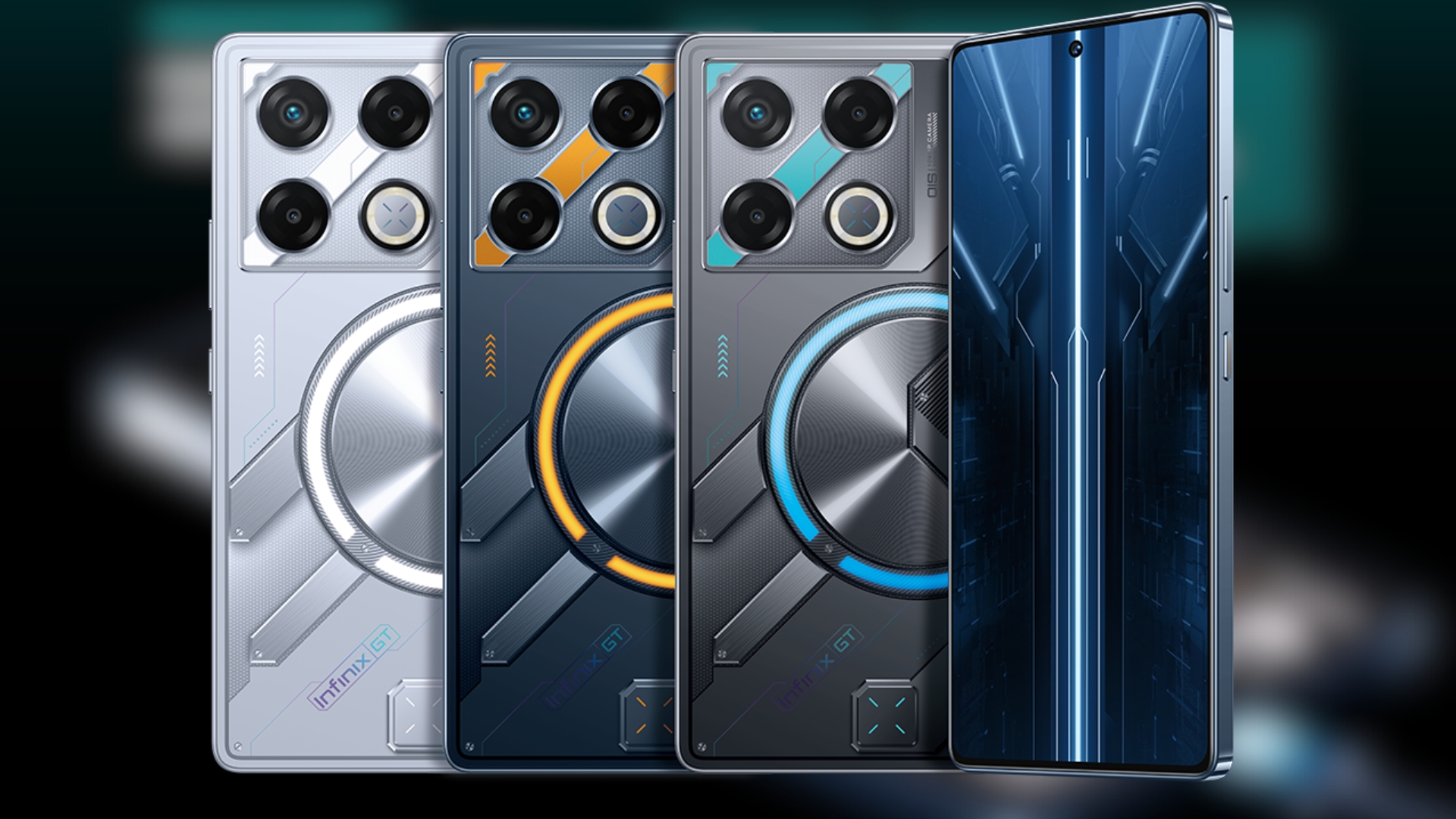
The GT 30 Pro also has a 108MP main sensor but swaps those useless 2MP sensors for an 8MP ultrawide. The 13MP selfie camera (down from 32MP) handles skin tones well. Low-light performance remains the weak point, with a tendency toward overexposure.
Neither phone prioritizes photography, but the GT 30 Pro’s ultrawide lens makes it slightly more versatile.
Battery and Charging
The GT 20 Pro packs a 5,000mAh battery with 45W charging (60% in 30 minutes, full charge in just over an hour). Heavy usage gets you through a full day.
Infinix increases the GT 30 Pro capacity to 5,500mAh with the same 45W wired charging but adds 30W wireless charging and 5W reverse charging (requires MagSafe-style cover). Battery life comfortably delivers a full day of heavy use, sometimes stretching into a second day.
Both feature bypass charging for direct power during gaming sessions.
Key Differences Between the GT 20 Pro and the GT 30 Pro
GT 20 Pro wins on:
- Higher resolution selfie camera (32MP vs 13MP) – Better for selfie enthusiasts
- Pixelworks X5 Turbo chip – Dedicated display processing for Ultra Frame Rate mode with MEMC technology
- Semi-transparent back design – More distinctive gaming aesthetic with visible depth illusion
GT 30 Pro wins on:
- Physical shoulder triggers (520Hz touch response) – Game-changing console-style controls
- Faster storage (UFS 4.0 vs 3.1) – Quicker app launches and file transfers
- Ultrawide camera (8MP vs none) – More versatile photography options
- Larger battery (5,500mAh vs 5,000mAh) – Better endurance, sometimes lasting into a second day
- Wireless charging (30W) plus reverse charging (5W) – More charging flexibility
- Higher resolution display (1.5K vs FHD+) – Sharper visuals
- Newer chipset (Dimensity 8350 vs 8200 Ultimate) – Better performance and efficiency
- Latest Android version (Android 15 vs 14) – Newer features and longer relevance
Both phones cost essentially the same on launch: KES 40,000.
Specifications Comparison
| Feature | Infinix GT 20 Pro | Infinix GT 30 Pro |
| Price | KES 40,000 | KES 39,999 |
| Display | 6.78″ AMOLED, FHD+ (1080×2436), 144Hz, 1,300 nits peak | 6.78″ AMOLED, 1.5K, 144Hz, excellent peak brightness |
| Processor | Dimensity 8200 Ultimate | Dimensity 8350 Ultimate |
| RAM | 8GB/12GB LPDDR5X | Up to 12GB LPDDR5X |
| Storage | 256GB UFS 3.1 | 256GB UFS 4.0 |
| Main Camera | 108MP with OIS + 2MP depth + 2MP macro | 108MP + 8MP ultrawide |
| Selfie Camera | 32MP | 13MP |
| Battery | 5,000mAh | 5,500mAh |
| Charging | 45W wired only | 45W wired, 30W wireless, 5W reverse |
| Special Features | Mecha Loop RGB lighting, cooling fan accessory, IR blaster | GT Shoulder Triggers (520Hz), IR blaster, gaming kit |
| OS | Android 14 / XOS 14 | Android 15 / XOS 15 |
| AnTuTu Score | ~933,398 | ~1,354,460 |
| Weight | 194g, 8.15mm thick | 189g, 8mm thick |
| Gaming Certification | Official Gaming Phone of the PUBG Mobile Super League | Krafton-Certified 120 fps PUBG |
You should get the GT 20 Pro if you can find it discounted or prefer the semi-transparent back design with customizable RGB loop lighting. Otherwise, just get the GT 30 Pro if you want the latest chipset, shoulder triggers that actually change how you game, an ultrawide camera, wireless charging, and slightly better battery life.
READ: Infinix GT 20 Pro Review: You Don’t Need to Overspend on Gaming Power Anymore
For the same price, the GT 30 Pro delivers more meaningful upgrades. Those shoulder triggers alone justify the choice for serious mobile gamers. The GT 20 Pro remains an excellent phone, but its successor learned from its predecessor’s homework and added useful improvements rather than just flashy specs.
At the end of the day, both phones excel at what they promise: serious gaming performance without flagship prices. The GT 30 Pro simply does it better.