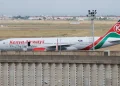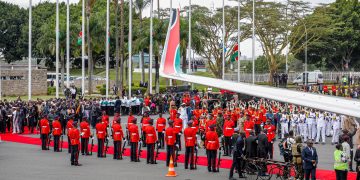




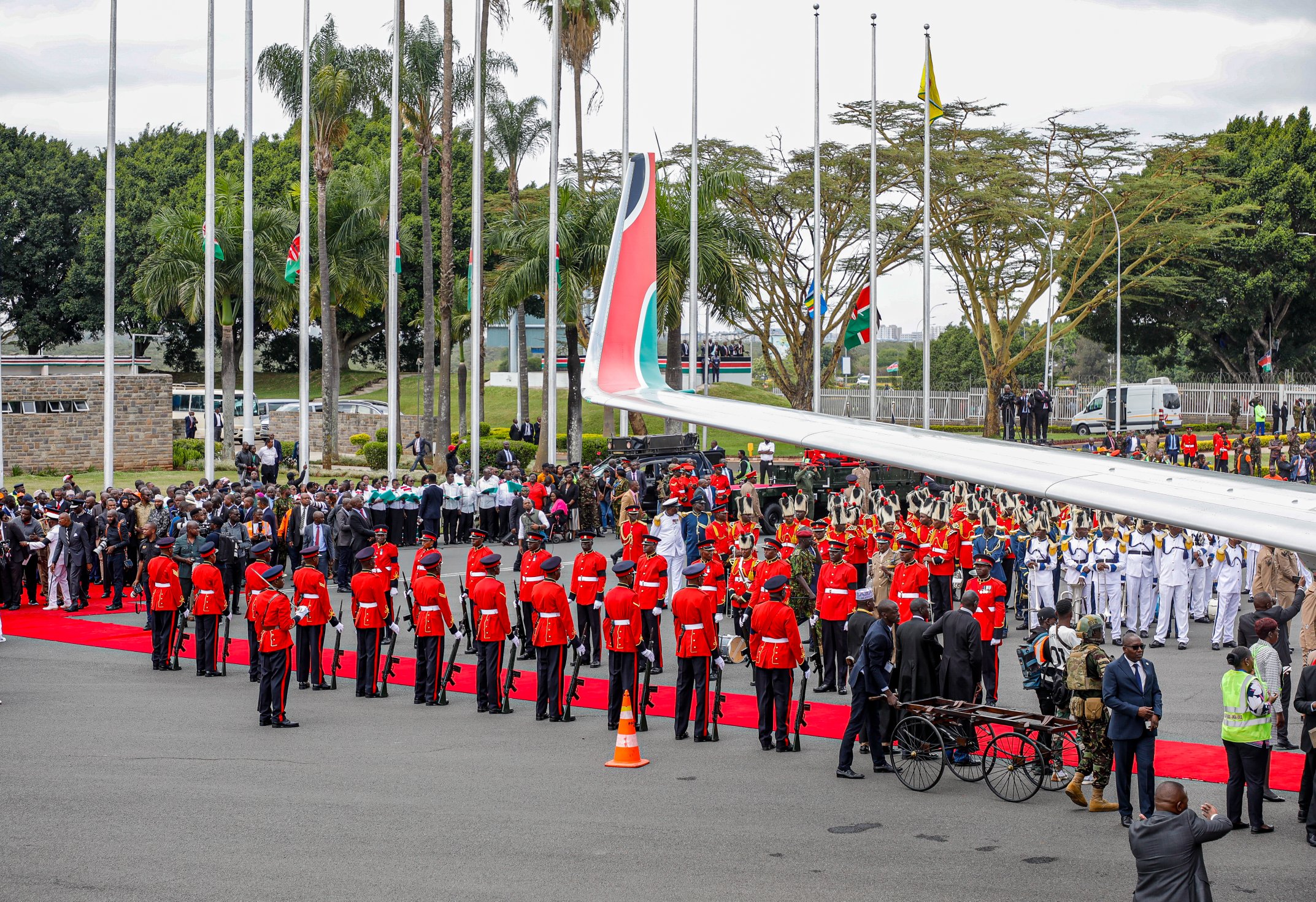
On Thursday morning, the Kenya Airports Authority (KAA) was forced to temporarily close the airspace over Jomo Kenyatta International Airport (JKIA) as thousands of Kenyans gathered to receive the body of the late former Prime Minister Raila Amollo Odinga.
In a statement, KAA announced that the closure would last from 10:26 am to 12:26 pm to allow enhanced security screening and ensure the safe coordination of flight movements during the high-profile arrival.
The authority said the measure was necessary to maintain the highest security standards following the arrival of Raila Odinga’s remains from India.
In a symbolic gesture, Kenya Airways renamed the special flight carrying Odinga’s body from KQ203 to RAO001 once it entered Kenyan airspace. The change was meant to honor his initials and lifelong service to the country as a moment of national reflection.
The temporary airspace closure came amid overwhelming public turnout around the airport and nearby roads, with emotional crowds waving flags, singing, and holding portraits of the late leader.
Security agencies were deployed in large numbers to manage the surging crowds and ease traffic disruptions on routes leading to the airport, although the numbers seemed to overwhelm them at early hours of the day.
Following the arrival, the government announced a change in the funeral program, stating that the public viewing of Raila Odinga’s body would now take place at Kasarani Stadium instead of Parliament Buildings as earlier planned.
Mourners who had been heading to Parliament were advised to redirect to Kasarani and expect heavy traffic along Thika Road and adjoining routes.
“The safety and security of our passengers, staff, and all airport users are our highest priority,” said KAA Acting Managing Director Dr Mohamud Gedi, thanking the public for their patience and cooperation during the temporary closure of JKIA.
“Passengers with flights scheduled during this period are strongly advised to contact their airlines directly for the latest information on flight statuses and potential adjustments to their travel itineraries.”