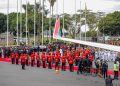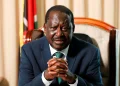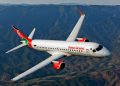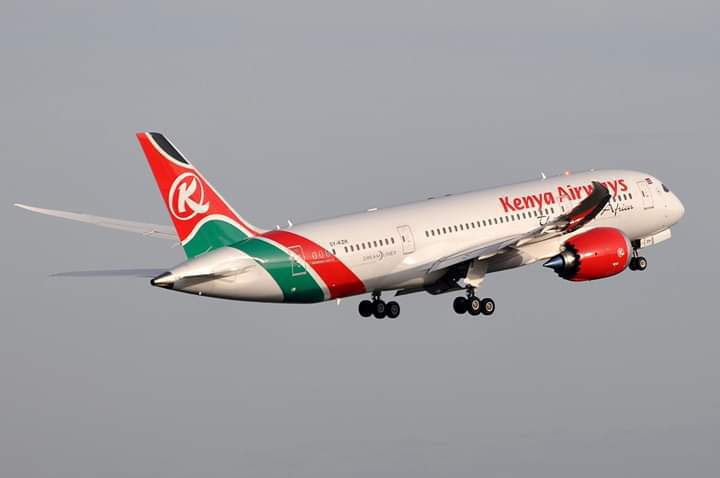





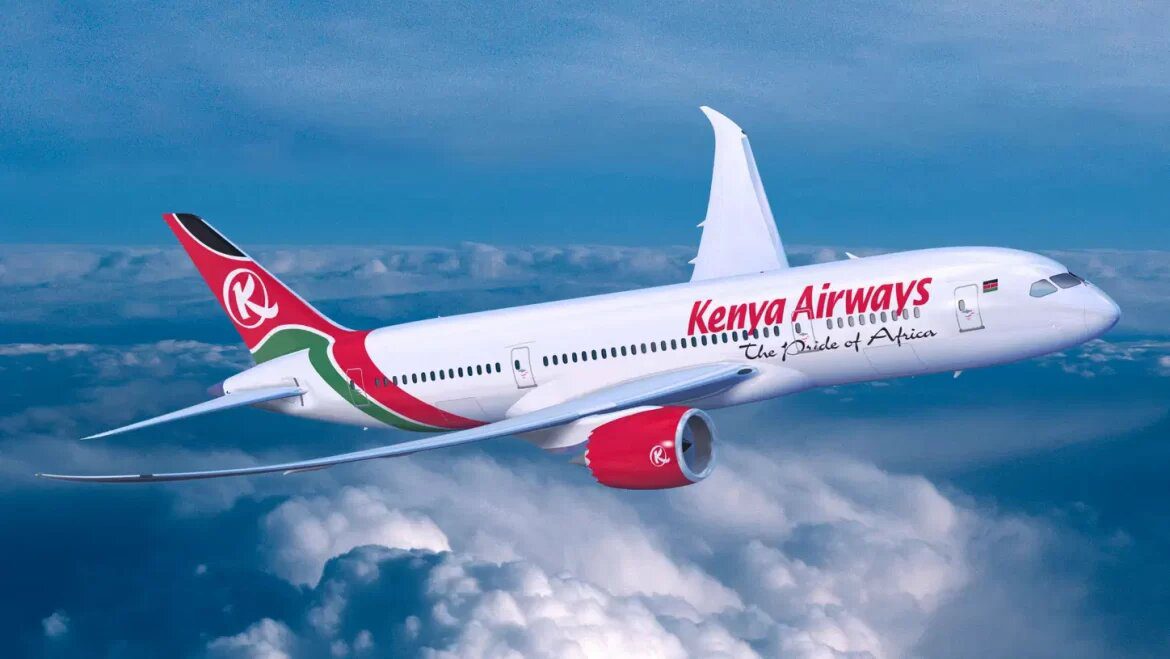
When Kenya Airways flight KQ203 took off from Mumbai today carrying the body of former Prime Minister Raila Amolo Odinga, it wasn’t just another journey home.
Within minutes, thousands of Kenyans and people across the World opened Flightradar24 to follow its every move. By mid-morning, the aircraft had become the most tracked plane in the world, with over 54,000 people watching live.
The sight of that tiny icon crossing the Indian Ocean became a collective moment of grief, pride and remembrance for millions who had followed Raila’s long journey through Kenya’s history.
The Kenya Airways Boeing 737-800 departed Mumbai on a solemn mission to bring home one of Kenya’s most enduring political figures. But as the plane approached home, something deeply symbolic happened: its call sign changed from KQ203 to RAO001.
The gesture, coordinated between Kenya Airways (KQ) and the Kenya Civil Aviation Authority (KCAA), was more than protocol. It was a final salute from the skies, a national tribute to Raila Odinga.
How Flight Tracking Works
If you’re wondering how this whole process works, the technology behind it is called an ADS-B transponder (Automatic Dependent Surveillance–Broadcast), which is fitted on every modern plane.
Here’s a more detailed breakdown:
- The transponder continuously broadcasts the plane’s location, altitude, speed, and direction every second.
- Satellites and ground receivers across the world capture those signals.
- The information is then displayed live on platforms like Flightradar24, FlightAware, and RadarBox, allowing anyone with an internet connection to see the plane’s position on a live map.
To follow a flight yourself, simply visit Flightradar24.com or download the app, enter a flight number, say RAO001 or any KQ flight, and watch it move in real time. You’ll also see details such as its model, altitude, route, and estimated arrival time.
That’s exactly how thousands of Kenyans watched RAO001 glide across the Arabian Sea into Nairobi.
Why the Call Sign Changed to RAO001 Only in Kenyan Airspace
Many Kenyans noticed that the flight’s name changed only when it entered Kenyan airspace around 8:50 a.m., and that’s no coincidence.
In aviation, call signs are tightly regulated by the International Civil Aviation Organization (ICAO) and tied to specific flight plans. While flying over India, Oman, and the Arabian Sea, the plane had to maintain its official code, KQ203.
Once the Kenya Airways flight reached Kenya’s controlled airspace, the Kenya Civil Aviation Authority approved the symbolic switch to RAO001, an honorary identifier visible on local radar and live tracking systems.
On Flightradar24, over 54,000 users watched as the plane glided across the map toward Jomo Kenyatta International Airport (JKIA). For context, that’s a level of tracking activity normally seen only for global events, royal funerals, major world crises, or high-profile state flights.
Flight tracking began as a niche hobby for aviation enthusiasts. Today, it’s a global tool of connection, one that, in moments like this, turns into something more than just a way to pass time.