




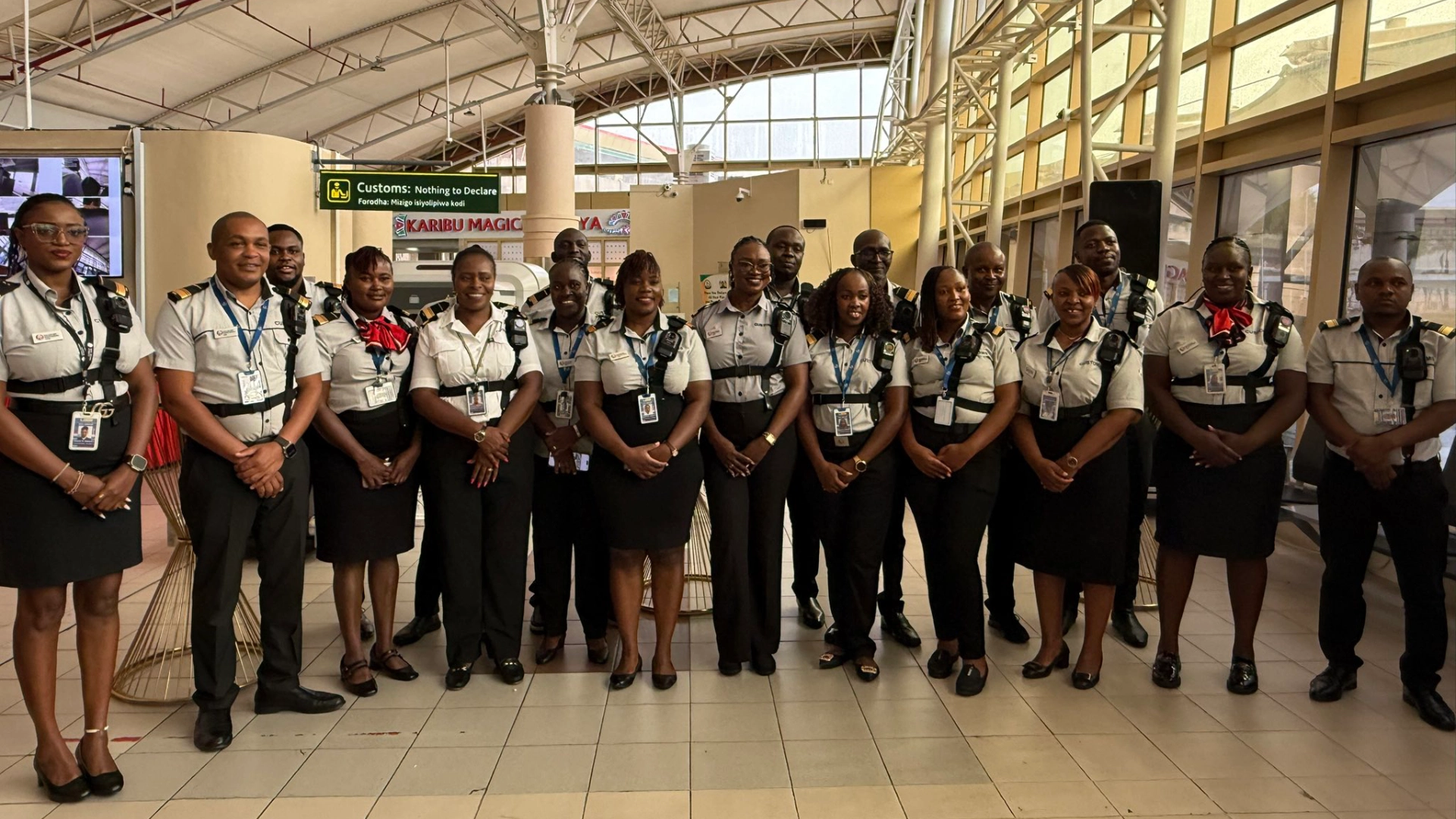
The Kenya Revenue Authority (KRA) has launched body-worn cameras (bodycams) for its Customs and Border Control officers at Jomo Kenyatta International Airport (JKIA).
According to the authority, it marks a turning point in how KRA handles one of its most exposed and contested frontlines: the daily interactions between customs officers and the thousands of travelers, importers, and traders who pass through Kenya’s ports of entry.
The launch included a live demonstration of the cameras during passenger clearance at JKIA. KRA has been candid about what the cameras are meant to fix.
In a statement ahead of the launch, the authority acknowledged that disputes at border points had for too long come down to an officer’s word against a traveler, with complaints dragging on unresolved and trust quietly eroding on both sides.
KRA added in the statement, “The cameras change that equation entirely: every interaction is now a verifiable record, and a complaint that once took weeks to investigate can be resolved in hours using objective footage.”
READ: KRA Brings 500 Fuel Stations Onto eTIMS as Majority Remain Outside System
The initiative sits within KRA’s 9th Corporate Plan and is framed as more than a corruption deterrent. The authority says the footage will double as a management tool, helping it identify process gaps, sharpen officer training, and improve service delivery at entry points.
It also positions the cameras as a protection for officers themselves, giving staff who conduct themselves professionally a documented record of their work.
In the 2023/2024 financial year, the Auditor General flagged the loss of 9.6 million excise stamps, a gap that pointed squarely at revenue leakage and a market quietly filling up with counterfeit goods.
In just three months, between July and September 2024, KRA fired 25 of its own staff over corruption. That number was a sharp jump from what the authority had recorded in previous comparable periods, and the cameras are, in part, an answer to it.
Other countries have already adopted the bodycams. In the UK, for instance, Border Force officers have worn cameras for years, and the results have been evident, resulting in fewer complaints, faster resolution of disputes, and clearer protection for officers who do their jobs properly.
Bodycams have also been credited with reducing complaints against Border Force officers and accelerating the resolution of disputes at ports and airports, with footage serving both as a deterrent against misconduct and as a shield for officers facing unfounded accusations.
Scandinavia and the Netherlands saw similar outcomes, with bribery incidents dropping noticeably after cameras were introduced at customs points.
In Hong Kong and Singapore, the technology went a step further, with agencies pairing cameras with data tools to spot unusual patterns in how officers behave over time.
What those experiences suggest, collectively, is that the cameras work best not as a standalone intervention but as one layer within a wider accountability architecture, a point that will be worth watching as KRA’s rollout matures.
KRA has not publicly detailed how footage will be stored, for how long, or what mechanisms will govern access to recordings when disputes arise. Those questions will define whether the initiative amounts to real accountability or a well-publicized gesture.