




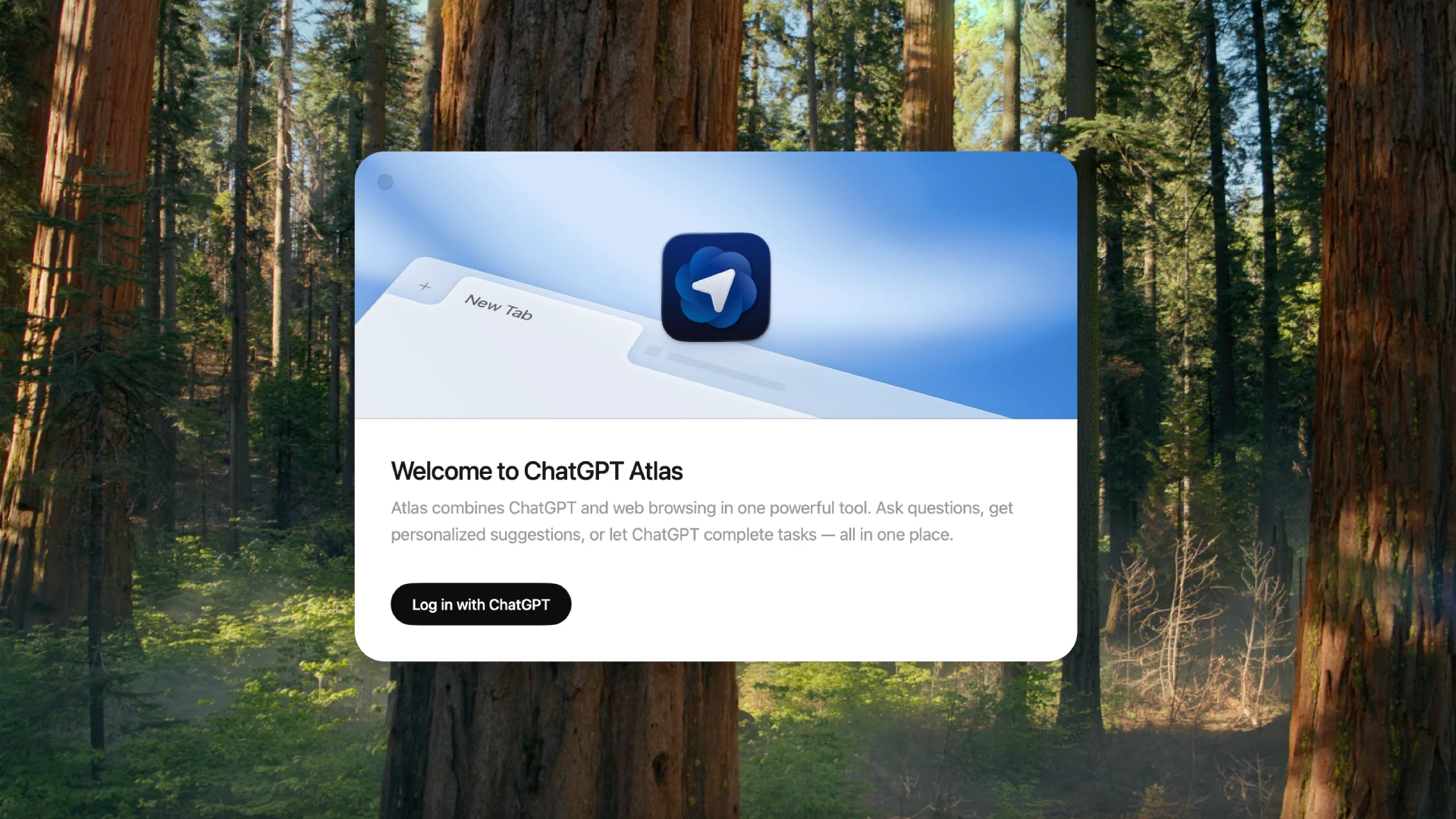
OpenAI unveiled ChatGPT Atlas yesterday, a web browser that puts AI at the center of how people search on the internet. The company livestreamed the announcement after teasing it with a cryptic video showing browser tabs on a white screen.
Atlas is available now for macOS users globally, with Windows, iOS, and Android versions coming later. The browser includes familiar features like tabs, bookmarks, and password autofill, but reimagines the experience around conversational interaction with ChatGPT rather than treating AI as an add-on feature.
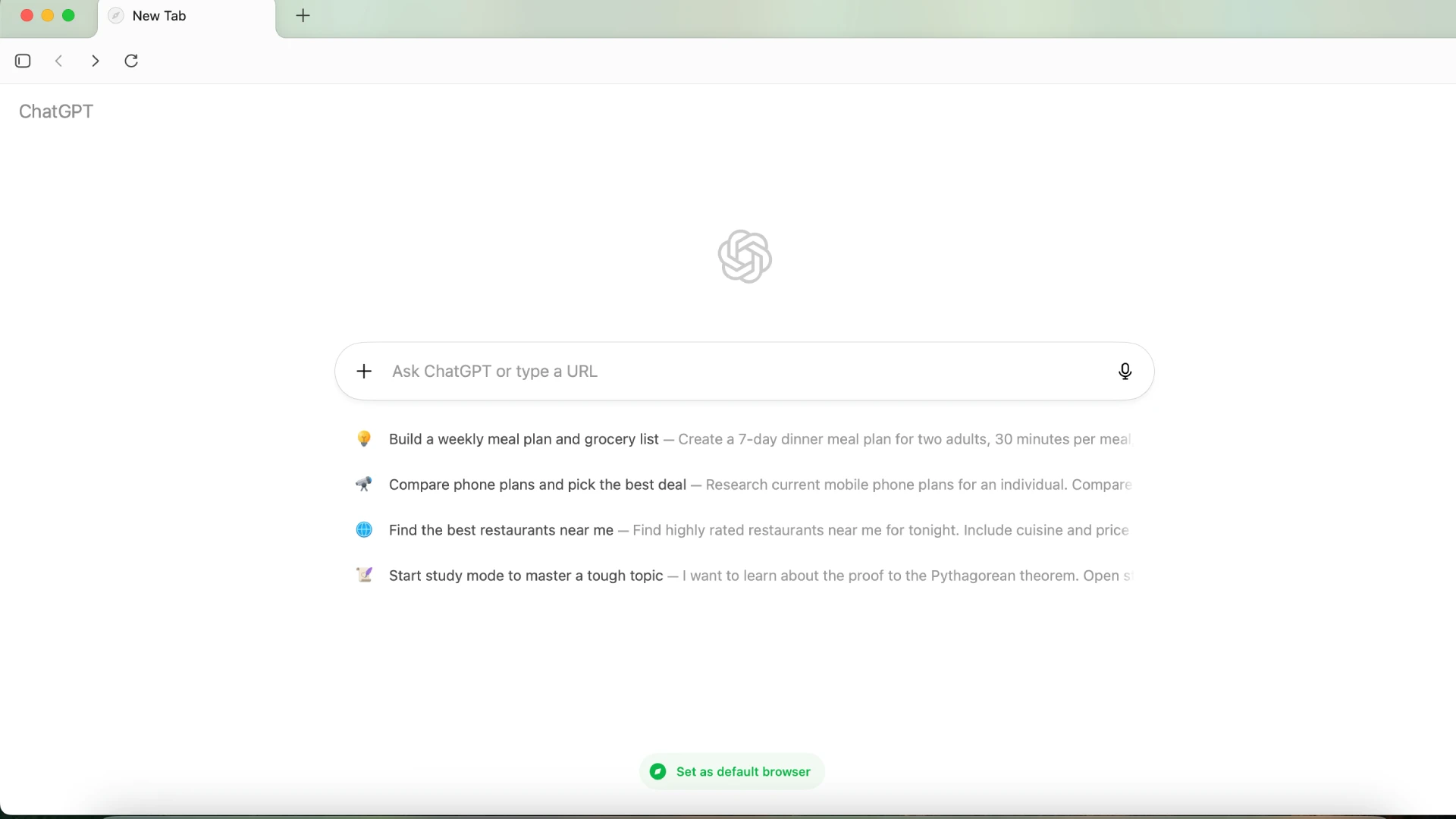
The home screen replaces the traditional search bar with what OpenAI calls a composer bar, where users can type natural language requests. Instead of remembering exact URLs or document names, people can describe what they’re looking for using context. The demo showed Atlas finding a Google Doc based only on a vague description of its contents.
Search results appear on a curated homepage that pulls together information from across the web. Users can also switch to more conventional views showing lists of links, images, videos, or news results similar to traditional search engines.
The most important feature is persistent access to ChatGPT while browsing. A button in the upper right corner opens a sidebar where the chatbot can summarize pages, answer questions about the content, or interact directly with websites. OpenAI CEO Sam Altman described this as chatting with a webpage rather than just viewing it.
When users click links from search results, Atlas defaults to a split-screen view showing both the webpage and the ChatGPT conversation. The browser also includes a feature called cursor chat that lets people select text in an email or document and have ChatGPT clean it up inline.
The browser stores what OpenAI calls memories, essentially a searchable history that users can manage in settings. The company emphasized that incognito mode is available for privacy-conscious browsing.
Agent mode represents the browser’s most ambitious capability, though it’s only available to ChatGPT Plus subscribers at $20 monthly or Pro users paying $200 monthly. This feature lets ChatGPT complete tasks autonomously on behalf of users.
During the demo, the agent was asked to buy ingredients for a recipe and successfully navigated to Instacart to make the purchase.
The agent has access to user credentials to complete these tasks, though certain actions require user approval. People can watch the agent work in real time with the cursor visibly moving across the screen or let it operate in the background. Users can take back control whenever needed.
Will Ellsworth, who leads research on the Atlas Agent, suggested it could handle all kinds of personal and professional tasks, enabling what he called “vibe lifing.” The agent builds on OpenAI’s earlier experiments with Operator and ChatGPT Agent, previous attempts at giving the AI the ability to use computers autonomously.
Ben Goodger, who previously helped develop both Google Chrome and Mozilla Firefox, led the engineering for Atlas. He explained the browser as OpenAI’s answer to the question of what happens when you can chat with your browser rather than just using it.
The launch intensifies competition in what’s becoming the AI browser wars. Google announced plans in September to deeply integrate its Gemini assistant into Chrome, which holds over 70% of the browser market.
Gemini will eventually be able to handle tedious tasks like grocery shopping and booking reservations, though Google hasn’t specified when those features will launch.
Perplexity released its Comet browser over the summer, offering an answer engine instead of traditional search results, along with features like tab scanning, video summarization, and Amazon purchasing. Opera, Microsoft, and The Browser Company have also added AI features to their browsers.
OpenAI first indicated its search ambitions with SearchGPT, a prototype announced in July of last year. Atlas represents the full realization of that vision, positioning the company directly against Google’s dominance in how people access and interact with the web.
Sam Altman wrapped up the announcement by calling ChatGPT Atlas a great browser all around, describing it as smooth, quick, and nice to use.
Whether users will abandon their current browsers for a chat-based experience remains to be seen, but OpenAI is betting that conversation, not clicks, defines the next era of web browsing.