




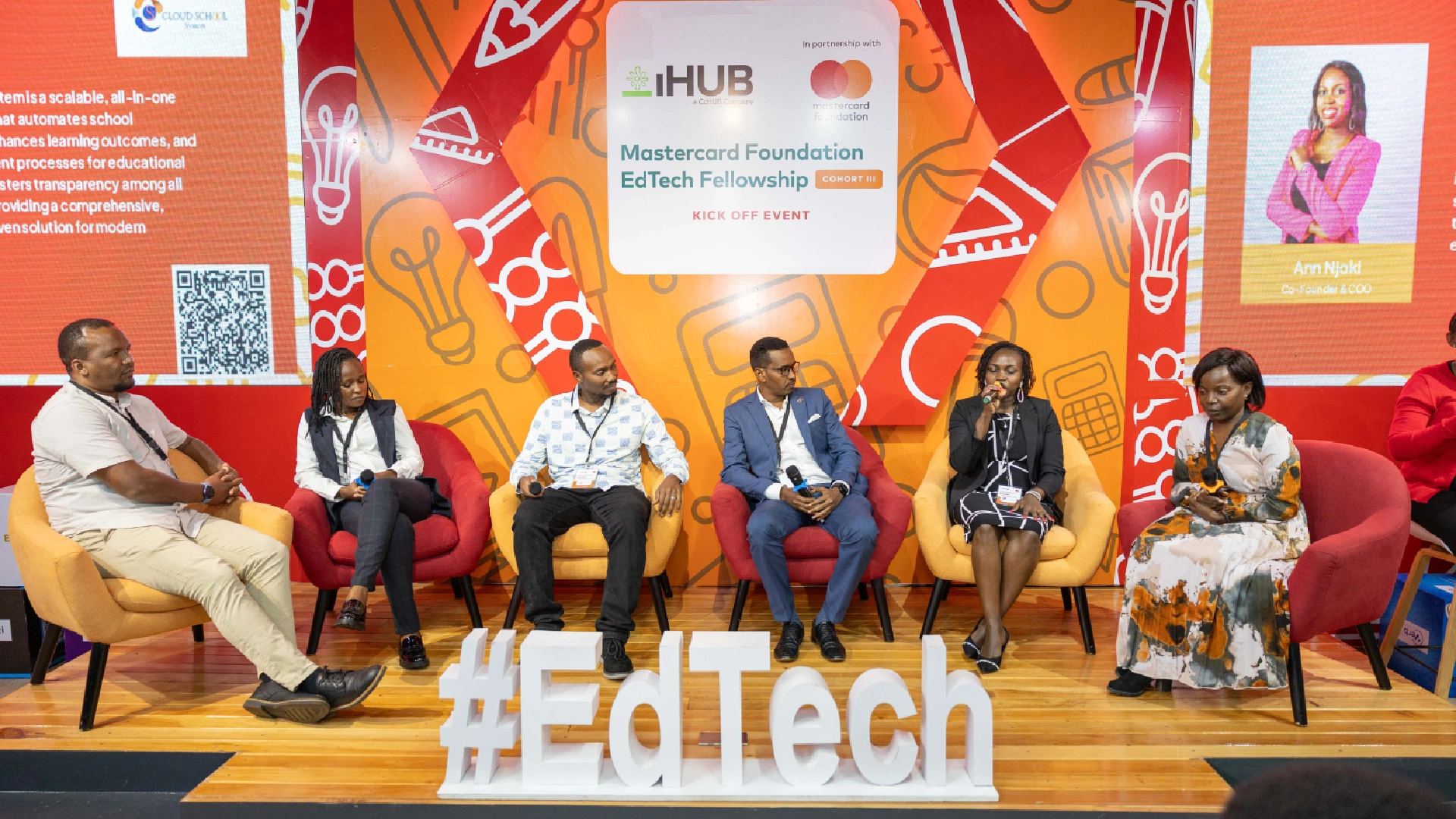
iHUB has opened applications for Cohort 4 of the Mastercard Foundation EdTech Fellowship, a program that selects early-stage education technology startups and gives them funding and support to grow.
Twelve Kenyan startups will be picked for the 12-month program, each receiving $100,000 in equity-free funding alongside mentorship, technical support, and connections to ecosystem partners.
Applications opened on 27 February and close on April 10, 2026. Startups can apply at futureoflearning.ihub.co.ke.
The fourth cohort narrows its focus to four specific problems: education tools for learners with disabilities, solutions for displaced and conflict-affected communities, gender-inclusive EdTech, and education data systems that work within real school workflows.
The framing reflects a gap that has persisted in the African EdTech sector: most products have been built for contexts with reliable internet, predictable school schedules, and households with disposable income.
Underserved learners, whether displaced, disabled, or female students at risk of dropping out, make up a significant share of Africa’s student population, yet remain largely ignored by commercial EdTech.
The Fellowship has been working to shift that dynamic since it launched in Kenya in 2023. Across the first three cohorts, iHUB has supported 36 companies that have collectively reached over 580,000 learners and worked with more than 2,000 schools, while also extending access to 2,000 learners with hearing and visual disabilities.
Some of that impact is visible and practical in specific companies. M-Lugha, a Cohort 3 startup, built a platform delivering early-learning content in mother-tongue languages.
This was a deliberate response to the reality that millions of Kenyan children start school without proficiency in the language they are being taught in.
READ: Kenya’s EdTech Startups Shine at Mastercard Foundation Demo Day at iHUB
Zydii, also from Cohort 3, took the approach of enhancing a mobile-first digital training experience on WhatsApp, making it easier for young people with limited connectivity to access practical, localized skills content.
For Cohort 4, the Fellowship is looking specifically for startups that can perform under constraints.