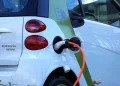






BasiGo has partnered with the School of the Nations to introduce electric school buses in Kenya. The school is the first in the country to make the switch, extending BasiGo’s work beyond its existing public transit operations.
The buses are assembled locally at the Kenya Vehicle Manufacturers facility in Thika, through a partnership BasiGo has had in place since early 2026.
The company is aiming to produce more than 20 buses a month from that site and has set a target of 1,000 electric buses on Kenyan roads by 2027.
Schools take on the buses through BasiGo’s Pay-As-You-Drive model rather than buying them outright. Operators pay a per-kilometer fee that covers charging, maintenance, insurance and battery leasing. BasiGo guarantees the buses will be on the road 90% of the time.
Operators who have adopted the model in public transit have reported operational cost savings of up to 70% compared to running diesel buses, largely because Kenya Power offers a dedicated e-mobility electricity tariff with off-peak rates as low as KES 8 per kilowatt-hour.
The school bus announcement comes after a busy stretch for the company. In November 2025, BasiGo opened three new charging depots in Nairobi, in Komarock, Taj Mall in Pipeline, and Riruta.
The depots use DC fast chargers capable of handling up to 100 buses a day, with a fourth facility in Juja following shortly after.
The company also secured new funding from Proparco, the French development finance institution, in late 2025 to help expand local assembly and the charging network.
More importantly, the school bus segment in Kenya has long been an Isuzu diesel stronghold, which is built on established dealer networks, familiar mechanics, available parts, and a financing ecosystem shaped around a known asset.
READ: Kenya Power Earns KES 191 Million From EV Charging as Demand Jumps 188%
BasiGo’s entry does not just offer a cleaner vehicle. It challenges the entire procurement assumption. The cost-per-kilometer argument, if it holds at scale, reframes what fleet operators are actually buying.
Since BasiGo handles charging infrastructure and offers a lease-style model that shifts upfront capital risk, it removes two of the main structural reasons institutions default to diesel.
The question for incumbents is whether loyalty to the familiar survives a compelling total-cost case made under real operating conditions.