




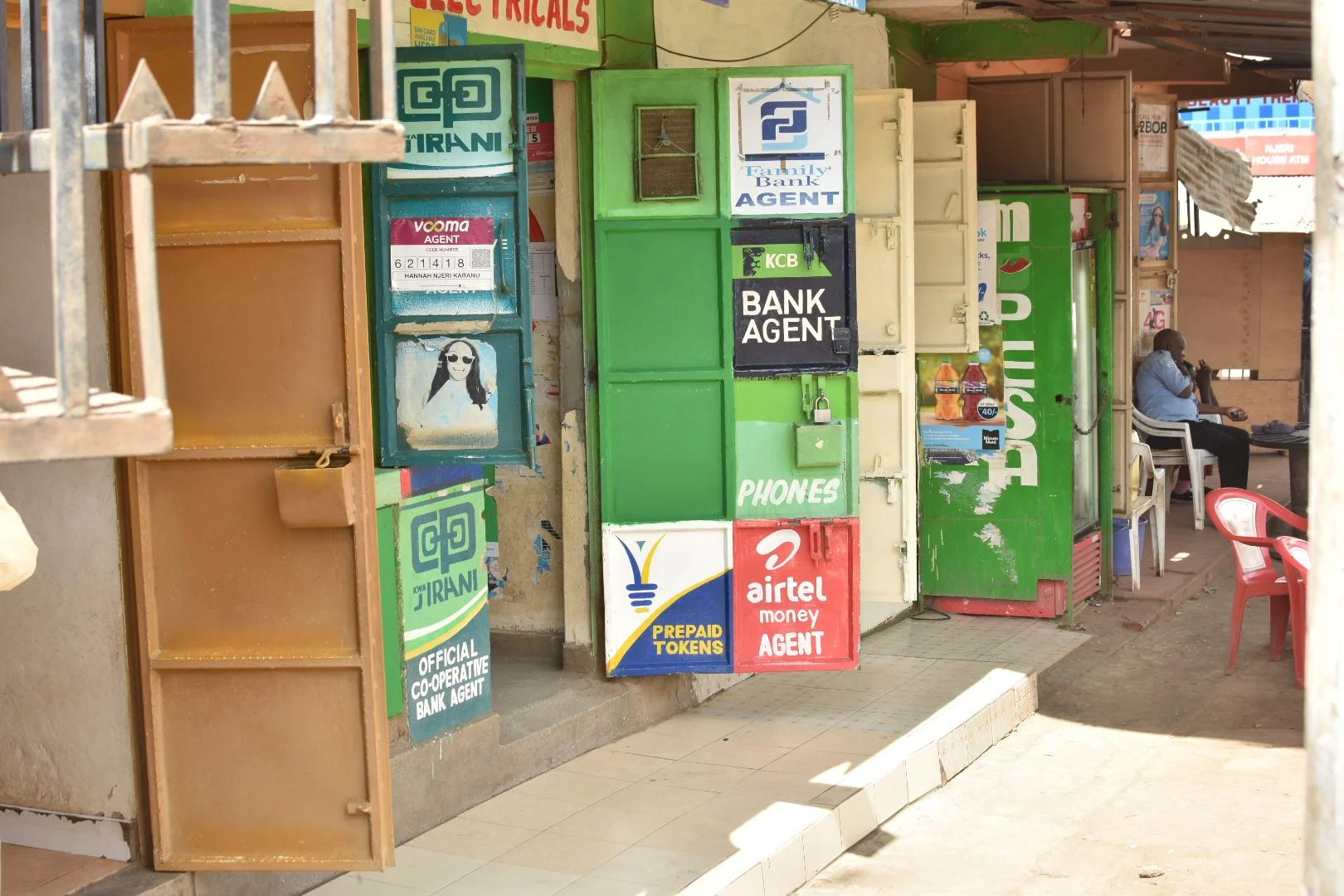
Kenya’s growth in mobile money penetration has led to more mobile money agents, with the number of mobile agents growing to 602,470.
This represents a growth of 20.2% in 3 months, up from the previous total of 501,399 agents.
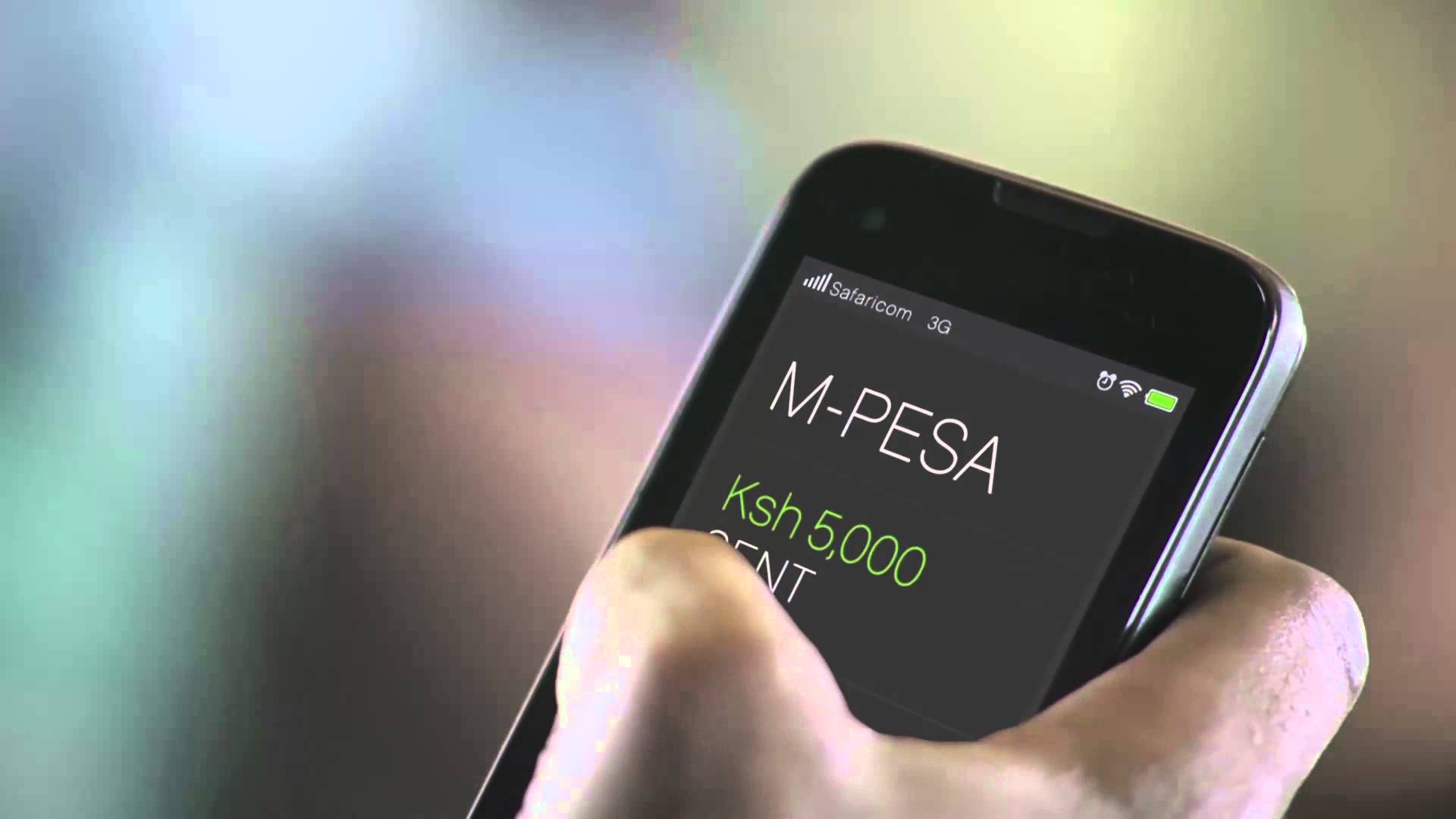
Safaricom’s M-Pesa, the largest mobile money service provider in the country, indicated it has a network of 333,339 mobile money agents in its latest financial year report.
Airtel Money has also indicated it has over 150,000 agents across Kenya. The current network is a significant growth from the 307 agents back in 2007 and over 6,000 by the end of 2008.
Mobile money agents are a core necessity in Kenya’s digital economy. They primarily bridge the gap between hard cash and digital wallets. This heterogeneous group offers different services and abilities to customers.
Their services range from the first step of account opening to depositing physical currency into the digital wallets or making withdrawals.
According to Central Bank of Kenya (CBK) data, KES 8.3 trillion was withdrawn via agents in the year 2025, underlining their importance.
The presence of mobile money agents in major towns and remote areas, alongside the variety of services, has also affected mobile money adoption.
READ: The Mobile Money Paradox of Kenyan Finance: Why the Phone Ate the Bank But the Branch Refuses to Die
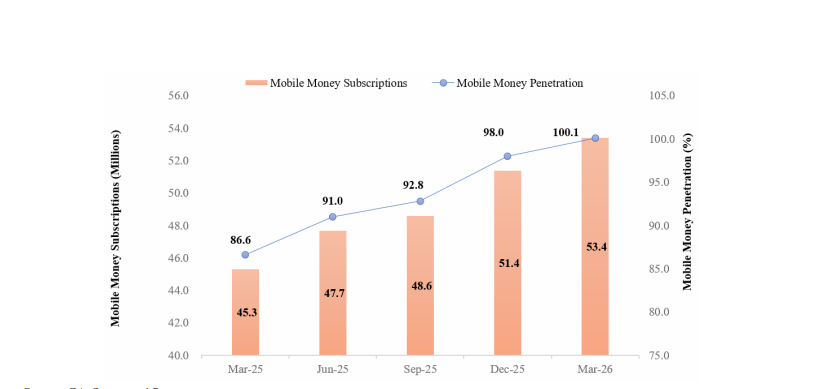
In the 3 months under review, Kenya added 2,012,514 mobile money subscribers, bringing the total to 53.4 million.
According to the latest data from the Communications Authority (CA), subscriptions rose by 3.92%, growing from 51.36 million in the previous quarter. This growth pushed mobile money penetration to 100.1%.
As this growth happens, the government may make the service pricier if the current Finance Bill 2026 passes. Each transaction will effectively attract a 33.4% tax, with the mobile money operators set to pass the cost to users.