

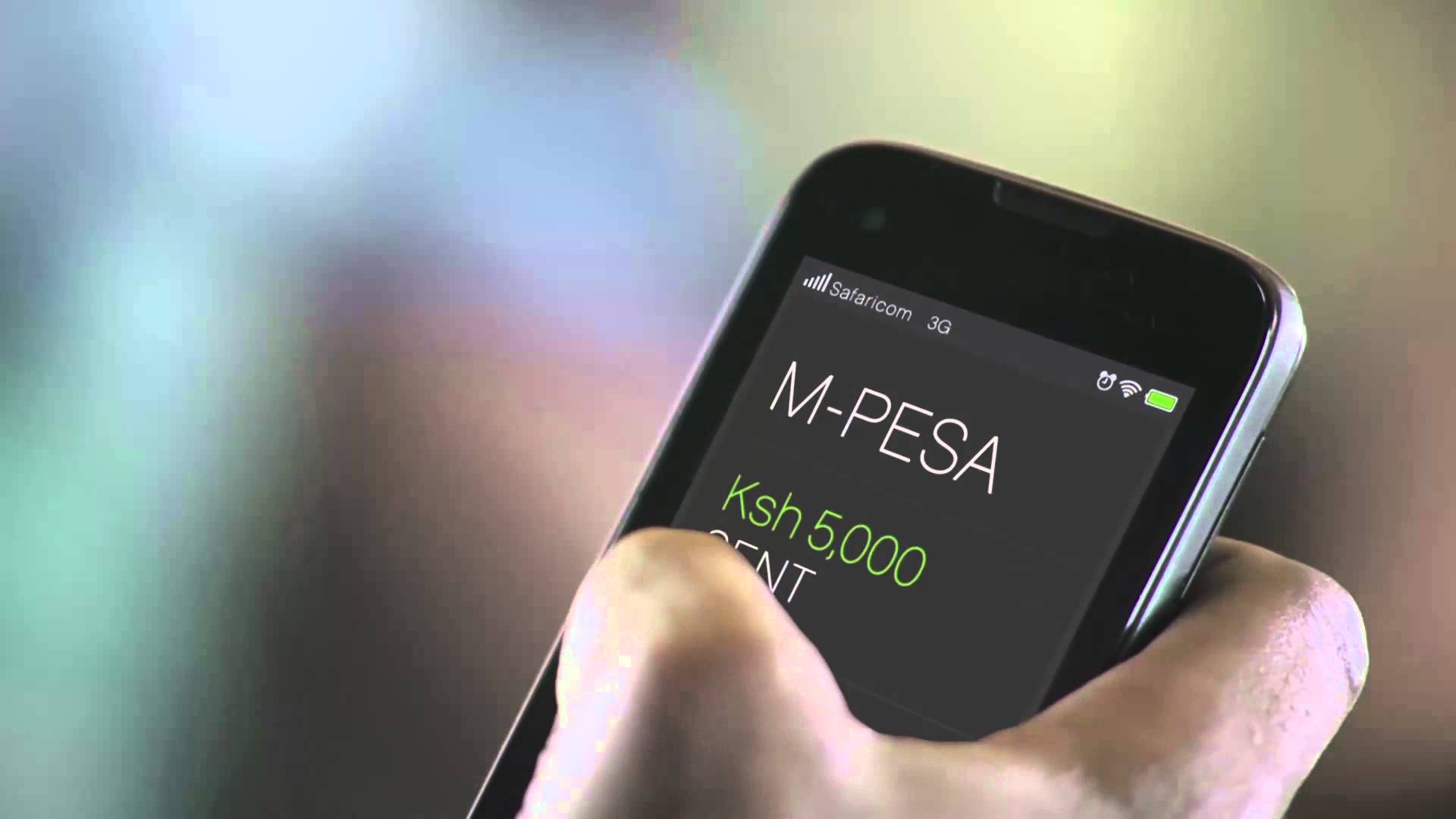





The story of M-Pesa is frequently told as a story of genius mobile money design. The reality is more interesting: it was accidental product-market fit at an extraordinary scale.
The original pilot, run in 2005-06 among Faulu Kenya microfinance borrowers, was intended to reduce the cost of loan repayment.
When Safaricom opened M-Pesa to the general public in March 2007, the use cases immediately escaped the product team’s intentions.
Kenyans began using it as a peer-to-peer financial platform. People used it to send money home to rural relatives, the classic remittance case that no formal bank had adequately served.
“After running the pilot for about nine months, we started to see customer behavior that said, actually, this is much more useful as a person-to-person money transfer system,” Nick Hughes, one of the developers of the service and co-founder of M-Kopa, told the BBC.
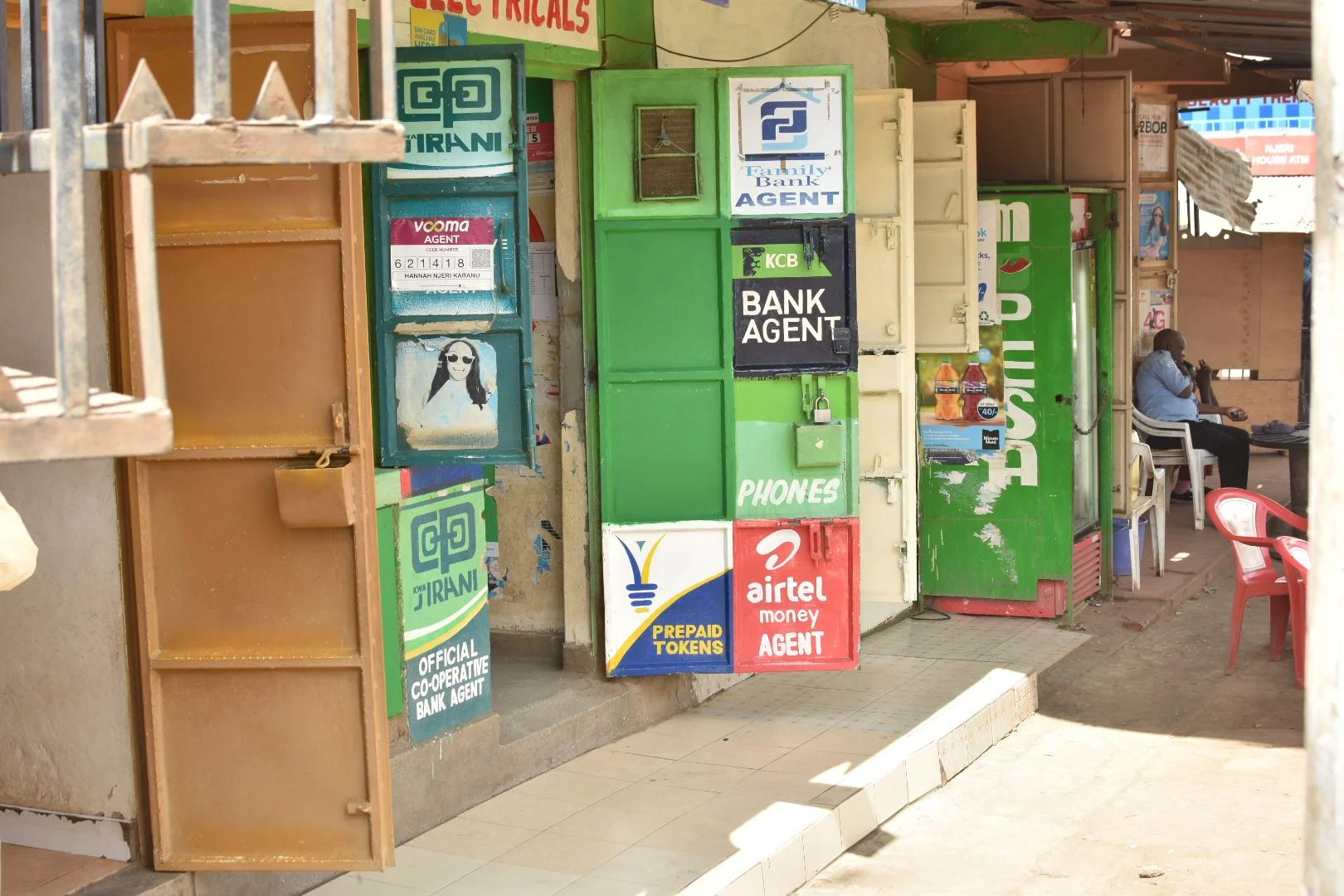
This use case took off and grew even before many had mobile phones. The unintended use case led to a growth in the agent network from 307 to over 6,000 by the end of 2008.
During this period, registered accounts passed 5 million.
| 307 M-PESA AGENTS AT LAUNCH (2007) | 507, 383 ACTIVE AGENTS FEB 2026) | 91.32M REGISTERED ACCOUNTS FEB 2026) | Kshs 8.3T ANNUAL AGENT CASH-OUT (2025) |
CBK’s Hand
Mobile money was quickly becoming the financial spine of a nation. The commercial banks watched M-Pesa’s first two years with contempt and then growing concern. M-Pesa couldn’t pay interest, extend credit, take large deposits, or be regulated as a bank.
However, by 2009, it had more distribution points than all bank branches combined and had trained millions of previously unbanked Kenyans to trust a digital transaction.
It had solved a barrier to financial access, the lack of distribution and trust. M-Pesa solved both in ways the banks had not.
The Central Bank of Kenya (CBK) took a deliberately permissive approach, issuing a letter of no-objection in 2007 while the regulatory classification was debated.
It was a test-and-learn approach that became a global template. The CBK required all M-Pesa customer funds to be held in commercial bank trust accounts, mandated KYC, and required transparent fee disclosure.
More importantly, it did not force the product into a banking license framework that would have killed it.
Mobile Money Kenyan Journey, Phases and Milestones
| YEAR | MILESTONE | WHAT HAPPENED |
| Mar 2007 | M-Pesa launches publicly | 307 agents, fewer than 21,000 accounts. CBK records KES 64 million in first-month agent cash-out. |
| 2008–09 | GROWTH Rural Adoption | Agents cross 7,000; accounts hit 5 million. |
| 2010 | M-Pesa Competitor | Airtel Money Transfer Service brand joins the Kenyan Financial Sector |
| 2012 | GAME-CHANGER M-Shwari: the credit revolution | CBA (now NCBA) and Safaricom co-launch M-Shwari – savings + instant mobile credit. Millions borrow formally for the first time. The banking-telco partnership model is born. |
| 2017 | INFRASTRUCTURE PesaLink and KCB M-Pesa | KBA launches PesaLink for real-time interbank transfers. KCB embeds a full bank account inside the M-Pesa wallet. Accounts surpass 26 million. |
| 2015–17 | SMARTPHONE ERA App banking goes mainstream | KCB, Equity, Absa, and StanChart release full-capability mobile apps. Monthly M-Pesa value crosses KES 300 billion. |
| 2018 | Telkom Launches | Telkom launched T-Kash, its mobile money platform |
| 2018 | CREDIT REVOLUTION Fuliza launches | NCBA, KCB and Safaricom launch Fuliza, an M-Pesa overdraft facility. Within the first year, Kenyans drew over KES 100 billion. By 2024: KES 906 billion annually. |
| Mar 2020 | COVID INFLECTION Fee waiver triggers structural shift | CBK waives M-Pesa fees below KES 1,000. Millions of fence-sitters permanently adopt mobile payments. Cash begins its long retreat from everyday transactions. |
| 2022 | Full Interoperability | CBK mandates a fully integrated ecosystem between mobile money merchant platforms owned by Telcos that is seamlessly interoperable. |
| Aug–Sep 2023 | REGULATION CBK raises transaction limits | Daily limit raised to KES 500,000; per-transaction ceiling to KES 250,000. M-Pesa formally enters big-ticket territory: rent, school fees, car purchases, supplier payments. |
| 2024–25 | TODAY AI, platformisation, KES 8 trillion | All five major banks report 94-99% of transactions through non-branch channels. KCB mobile loans: KES 1.5 billion per day. NCBA digital credit surpasses KES 1 trillion annually. |
Mobile Money Post-COVID Surge and Maturity
The CBK has published mobile payments statistics monthly since M-Pesa’s launch, tracking agents, accounts, transaction volumes, and values.
A look at this data reveals these four series playing out in three distinct chapters. The first phase, spanning from 2007 to 2015, was a period of serious take-off, defined by steep exponential growth as the industry found its footing.
This was followed by a cooling period from 2015 to early 2020, where things started to level off into a phase of steady, predictable moderation.
However, March 2020 marked a complete structural shift; the onset of the pandemic, combined with the CBK fee waiver, triggered a major step change that essentially redefined the landscape and created a new normal for the sector.
Monthly values jumped 66% in nine months and never came back down.
The declining average transaction size is equally revealing: from peak averages above KES 4,000 in early 2024 to around KES 3,200 by 2025, as mobile money deepens into lower-income daily use.
Raising the transaction limit ceiling is a sign that mobile money was finding its way into large commercial deals. A testimony that its use cases were cutting both ways.
The scale of what this infrastructure has achieved is captured in a single headline figure. In 2024, more than 84.8% of Kenyan adults had access to formal financial services, up from just 26.7% in 2006, according to the CBK.
That 58% point improvement in less than two decades is a win for financial inclusion. The CBK is explicit about the driver, stating that the broad use of mobile money services is primarily responsible for this growth.
Mobile Money Agents Transact over a Trillion in a Month

The sharp dip in April 2020 reflects the COVID-19 lockdowns, but this was quickly followed by a surge after the CBK waived fees on transactions below 1,000 shillings.
To appreciate how far the infrastructure has come, consider a single month’s data. In December 2024, the CBK recorded 381,000 active mobile money agents and 82.4 million registered accounts.
In those 31 days alone, accounts processed KES 309 billion in cash-in and KES 753 billion in cash-out. That is over a trillion shillings moving through agent tills in a single month, a figure that dwarfs the system’s entire annual value as recently as 2010.
Early growth rates often exceeded 40%, but the 48% spike in 2020 was an exceptional, pandemic- and policy-driven event.
Since then, the system has matured into a steady annual growth range of 5% to 10%.

The agent network has essentially leveled off at 470,000 to 475,000 since 2024, another sign of market maturity. However, account numbers are still on the rise as mobile money cements its position as Kenya’s primary financial identity layer.
It is worth noting that mobile phone penetration has been on a consistent rise, bringing in new mobile money customers and advancing financial inclusion.
Pay bill interoperability meant customers could make payments without regard to the network they were on, which was another milestone in the maturity of the sector.
A View of M-Pesa
Telco-owned mobile money maturity is best epitomized by M-Pesa, the pioneer and dominant market player. Its revenue across 13 fiscal years has constantly risen from KES 21.84 billion in FY13 to KES 161.1 billion in FY25.
Earnings soared by nearly 50% over the FY22–FY25 period, rising from KES 107.7 billion to KES 161.1 billion with a steady 17% year-over-year growth trajectory.

READ: Safaricom Celebrates 40 Million M-PESA Customers in Kenya
Despite Safaricom being a telecommunication company, M-Pesa has grown and now accounts for 44.2% of the total service revenue the company earned.
Kenyan Bank Response to Mobile Money and the Results
Kenya Commercial Bank (KCB)’s strategy was rooted in a single, clear conviction: since M-Pesa already had the ground covered with its massive distribution, the best move was to embed the bank right inside it.
This vision came to life with the 2014 launch of KCB M-Pesa, a move that effectively placed a full bank account directly into the M-Pesa wallet.
By FY2025, 99% of KCB’s transactions by number pass through non-branch channels, serving 34 million customers of whom 23 million are digital. Its mobile loan book disbursed KES 544 billion in 2025.
That is about KES 1.5 billion every single day.
READ: KCB to Buy Minority Stake in Payments Platform Pesapal
NCBA bet on the telco partnership model. Its predecessor, CBA, co-created M-Shwari with Safaricom in 2012, then doubled down in 2018 with Fuliza. By 2024, NCBA’s digital ecosystem disbursed KES 1.049 trillion across Fuliza (KES 906.4B), M-Shwari (KES 102.4B), and Loop (KES 2.5B).
Equity Group took a proprietary path, building its own technology group after the launch of Equitel. According to the bank’s FY2025 results, 98.2% of transactions happen outside the branch, with 88.4% through fully digital channels.
Standard Chartered and Absa targeted the premium and corporate segments. StanChart invested KES 14.1 billion in digital infrastructure over five years.

Each of Kenya’s five major banks reports digital channel adoption differently, some by transaction volume, some by value, and some by customer numbers.
Together, they paint a picture of a sector that has moved the bulk of its operations online.
Pesalink’s Niche & Bank-Telco Collaboration
Bank apps’ growth has also given the telco-owned mobile money platforms some competition. Pesalink reported that a notable portion of Kenyans utilizing instant account-to-account (A2A) transfers favor their bank apps for payments over telco-owned mobile money platforms.
In fact, among Pesalink users, even for regular transactions, there is a bit of parity. While telco-led fintech leads with 50.15%, bank apps are close with 41.54%.
As it is today, there has not really been any “war” between telcos and banks after mobile money launched. In fact, they found a truce. Most mobile loans (M-Shwari, KCB M-Pesa, and Timiza) are actually bank products delivered through telco pipes.
Last year, Safaricom and the KBA proposed designating Pesalink as Kenya’s lead Fast Payment System (FPS). The goal is to consolidate the country’s disjointed digital payment methods into a single, cohesive infrastructure.
Why Branches Are Still Opening: Volume, Value, and Trust
Despite definitional variation, every major Kenyan bank reports 94–99% of transactions by number occurring outside a physical branch.
However, the 99% figure is a volume number. It counts every airtime purchase, every balance check, and every KES 50 M-Pesa transfer.
Non-Branch/Digital Transaction Share – Kenya’s Big Five

Bank Branches Evolve
Rather than disappearing, the brick-and-mortar branch has evolved into a high-value hub. It has offloaded the ‘noise’ of micro-transactions to the handset, allowing it to focus on the heavy-duty financial movements that still require a physical presence.
The floor for a typical branch transaction is estimated at KES 50,000+. The value is still concentrated in high-ticket internet banking and branch-led high-net-worth interactions.
Based on the latest report by Equity, a single branch visit is worth 71 transactions on Equitel.

The branch hasn’t been replaced, but rather it has been relieved of the routine tasks such as simple airtime purchases, balance checks, and basic transfers. It remains the domain of large cash movements, complex documentation, and high-trust advisory services.
A counterintuitive data point is that most major banks are still opening branches even while reporting 94-99% digital volumes. KCB opened 11 new branches in 2025.
NCBA grew from 89 to 99 Kenya branches in 2024, while simultaneously extending reach through 476 PostBank agents and 99 PostBank branches.
In Kenya’s rapidly urbanizing secondary towns, a new branch is often the first formal financial service point residents have encountered. Digital infrastructure follows physical trust, not the other way around.
The branch is no longer where banking happens for most people. It is where banking matters most for some people.
Whether you think of fintech by mobile network operators, bank-owned apps and USSDs, or Pesalink by the Kenya Bankers Association (KBA), in Kenya, the phone did eat the bank, but the bank found life inside the handset.