






Anthropic has updated its privacy policy, effective July 8, 2026, and the change that will matter most to Claude users sits in a new line item called “Verification Data.”
The policy now states that Anthropic may ask users to verify their age or identity in certain circumstances. Where that happens, the data collected can include a government-issued ID with its number and date of birth, a photo or video of the user, and facial geometry templates, which the policy itself flags as biometric data in some jurisdictions.
This is not a blanket rollout yet because the wording is conditional, and the policy does not require every new Claude user to verify their identity before using the service.
What has changed is that Anthropic now has the legal and technical framework in place to request identity verification when it deems necessary, instead of relying solely on self-reported birthdates.
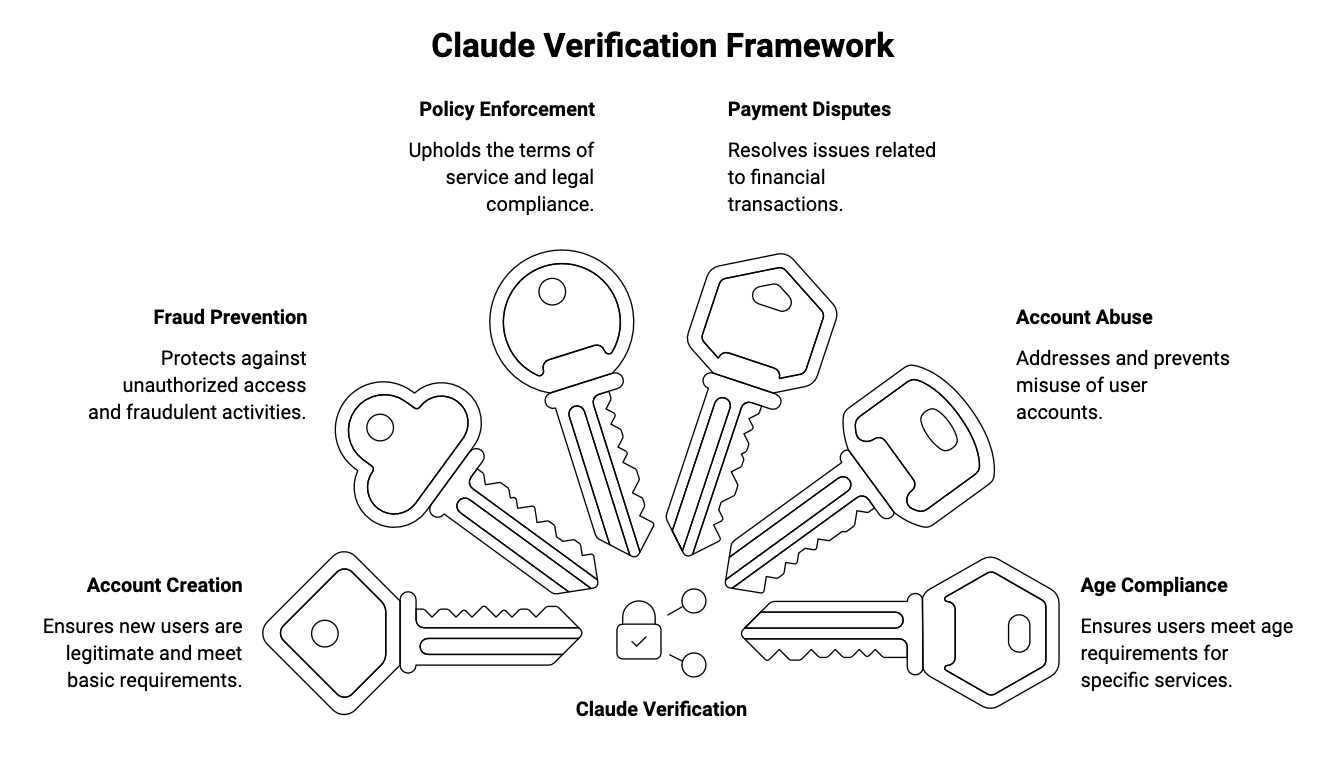
The policy does not clearly state which features require verification, but its wording provides some clues. Identity checks are listed alongside account creation, fraud prevention, and enforcement of the Usage Policy.
This suggests verification is more likely to be used for payment disputes, suspected account misuse, or age-related regulatory requirements in certain regions, rather than as a standard requirement for everyday use.
The policy separately defines “agentic sessions” as interactions where Claude carries out multi-step actions on a user’s behalf. However, it does not explicitly state that these sessions require user verification.
That’s a reasonable assumption based on how regulators typically view higher-risk automated actions, but it’s an interpretation rather than something explicitly stated in the text.
READ:
For most users, the impact is likely to be limited. Most people using the chat service will never be asked to verify their identity.
Those most likely to encounter a verification request are users subject to age checks under local laws, accounts involved in billing or fraud investigations, or users undergoing a policy enforcement review.
Anthropic has not indicated that identity verification will become a standard requirement for paid subscriptions or advanced AI agent features, even though such checks are often used across the industry for higher-risk activities.
For context, Anthropic’s verification policy requests the same types of information that Kenya’s data protection laws classify as highly sensitive. This includes a government-issued ID containing personal details, biometric facial data, and a live photo or video.
Under the Data Protection Act 2019, biometric data is classified as sensitive personal data, meaning its processing already demands a higher justification than ordinary identifiers.
The Artificial Intelligence Bill, 2026, builds on that by requiring high-risk AI providers and deployers to comply with the Data Protection Act when processing personal data, including conducting data protection impact assessments.