




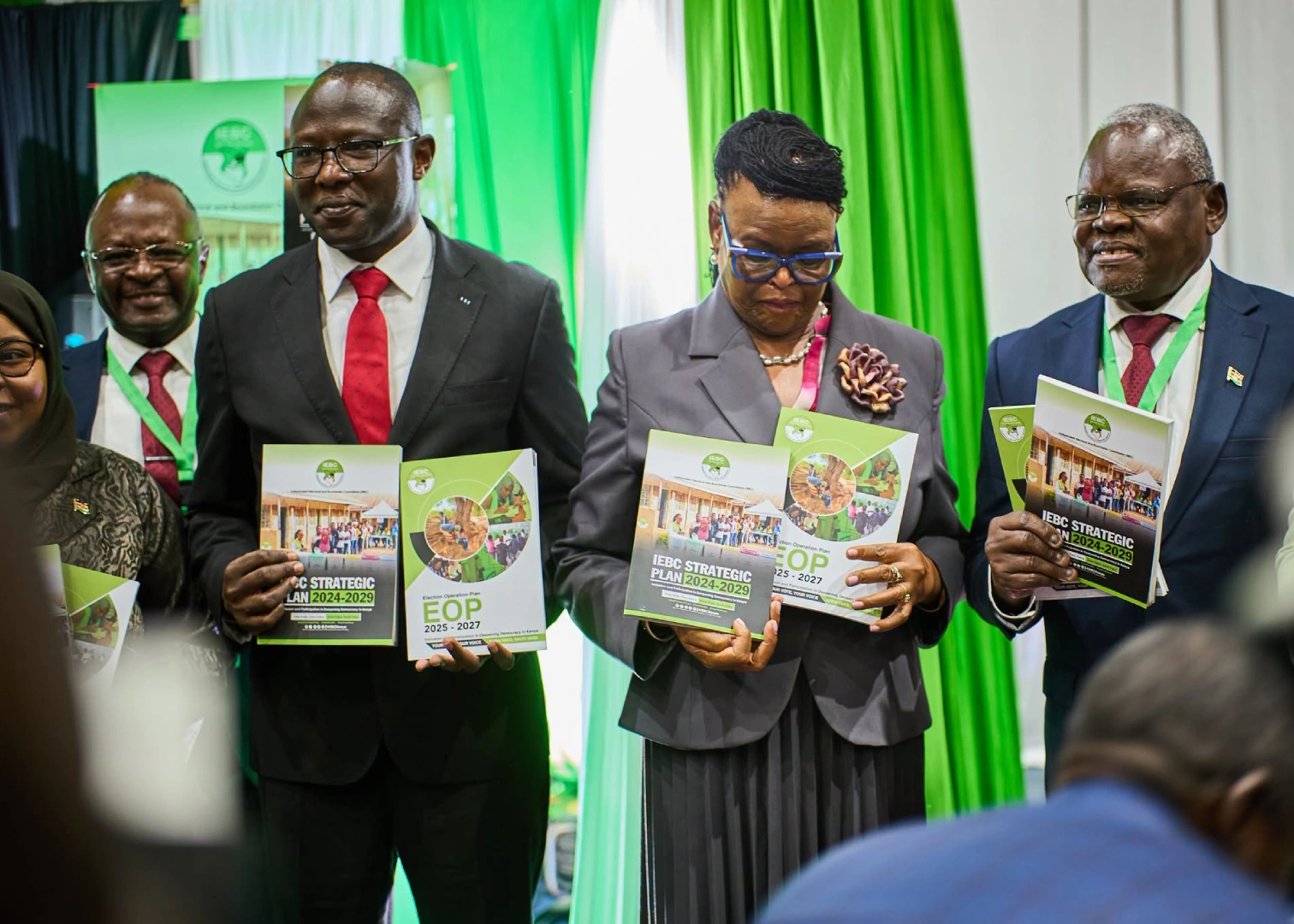
The Independent Electoral and Boundaries Commission (IEBC) launched two planning documents this week that lay out, in unusual detail, how it intends to run the 2027 general election.
The first is a 5-year strategic plan covering 2024 to 2029. The second, more immediately relevant document is the Election Operations Plan for 2025 to 2027, which breaks down the specific activities, timelines, and responsibilities the commission will follow in the lead-up to voting day.
Together they represent the earliest and most structured pre-election planning the IEBC has publicly committed to.
The commission is framing early preparation as the main lesson from past election cycles. IEBC Chairperson Erastus Ethekon said credible elections do not happen by chance, referencing feedback from court decisions, post-election evaluations, and international observer missions that have critiqued how Kenya has managed previous votes.
READ: IEBC Clarifies Why Some Kenyan Voters May Need to Register Again
The Operations Plan is essentially the commission’s answer to those critiques put into a working document.
On technology, the plan takes a notably cautious tone. Kenya has a complicated history with electoral technology, from the server controversies of 2017 to ongoing public skepticism about electronic results transmission.
The commission says technology will play a central role in the 2027 general election but stops well short of treating it as a solution on its own.
Chief Justice Martha Koome, speaking at the launch, said technology’s effectiveness depends on legal safeguards, institutional oversight, and public willingness to trust the systems being used.
Koome also pointed to specific legal gaps the commission wants closed before 2027, including clearer rules around data protection, cybersecurity, and how electoral technologies are audited.
READ: IEBC Warns Against Ballot Photography Citing KES 1 Million Fine
That last point is important because one persistent complaint in Kenya’s post-election disputes has been the difficulty of independently verifying what happened inside the systems that transmitted and tallied results.
The commission says it consulted widely in drafting the plan, including with civil society, development partners, and political stakeholders. It listed IFES, UNDP, The Carter Center, and several others as contributors to the process.
Whether the plans hold up under the pressure of an actual election campaign remains the real test. Kenya‘s elections have a habit of stress-testing institutions in ways no document fully anticipates.
However, the level of specificity in the Operations Plan, and the relatively early point at which it has been released suggest the IEBC is at least trying to get ahead of the problems rather than react to them.