






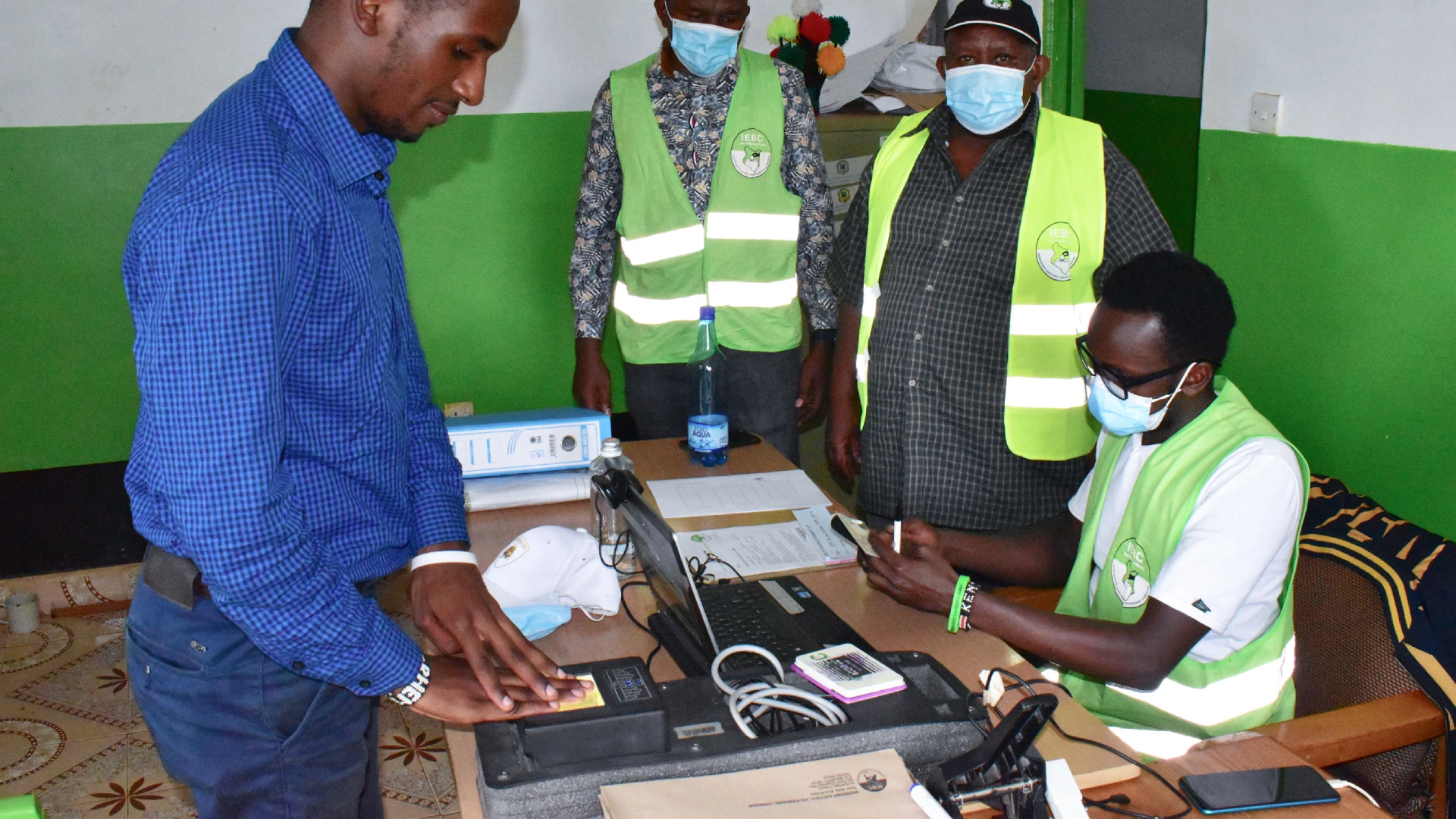
The Independent Electoral and Boundaries Commission (IEBC) is back with the same message, but sharper consequences attached.
Ahead of today’s by-elections in Emurua Dikirr, Porro Ward, and Endo Ward, the commission issued a fresh reminder that photographing or recording inside a polling booth is a criminal offense under Section 7(3)(e) of the Election Offenses Act.
Anyone caught faces a fine of up to KES 1 million, up to 3 years in prison, or both.
Back in February, the IEBC first warned and flagged the problem after the November 2025 by-elections, where voters photographed their marked ballots and shared the images on social media.
The Kenya Human Rights Commission confirmed that the photos were being used to enforce vote-buying arrangements. Candidates or their agents were paying voters who could prove, via a timestamped image, that they had voted a certain way.
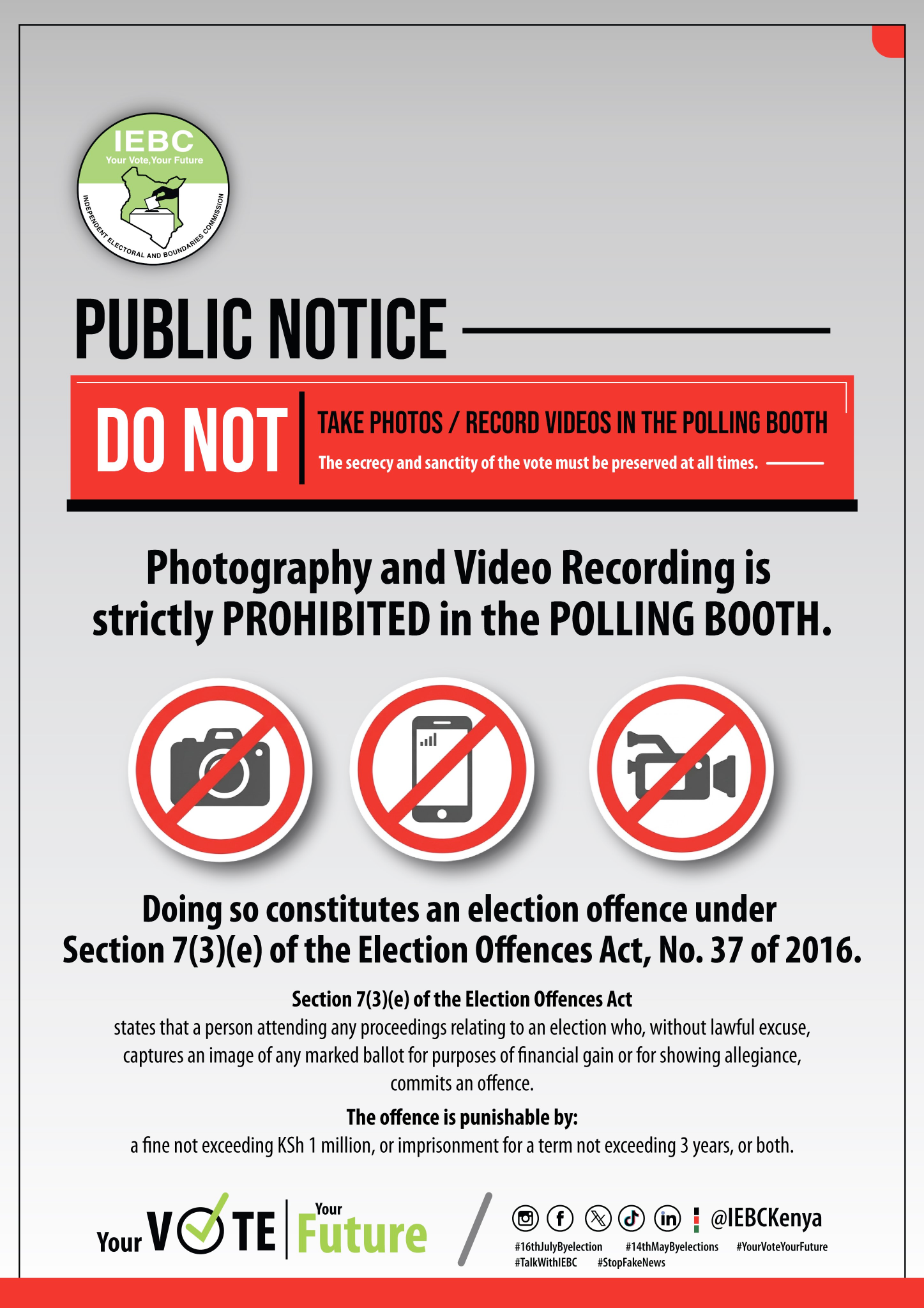
The IEBC’s position has not changed. What has changed is the explicit penalty attached to the warning. Before, the commission pointed to unspecified “administrative control measures.”
Now, there is a number on it. KES 1 million is not a small deterrent, even if enforcement at the booth level remains the harder challenge.
IEBC Chairman Erastus Ethekon has said that photographing or recording a marked ballot exposes voters to undue influence, coercion, and vote-buying and directly undermines the integrity of the electoral process.
The commission’s core argument holds. Ballot secrecy is a constitutional right under Articles 38(3)(b) and 81(e)(i), and a marked ballot on your camera roll is a direct breach of it. It also hands whoever paid you proof of delivery, which is precisely the point.
One thing worth noting is that photos of certified result declaration forms remain permitted once results have been officially announced. The restriction is specific to the voting booth, not the tallying process.
The 2027 general election is where the stakes get much higher. IEBC Commissioner Anne Nderitu has already indicated the commission is considering requiring voters to leave their phones outside the booth entirely before casting their vote, a measure already practiced in several other democracies.
How the commission handles today’s polls and whether the KES 1 million threat translates into actual prosecutions will shape how seriously voters take the rule when the country goes to the ballot in August 2027.