







On April 3, 2026, the IEBC issued a statement that set off a wave of alarm among Kenyan voters.
The Independent Electoral and Boundaries Commission announced that anyone who registered as a voter before 2012 and did not subsequently submit biometric data would need to register afresh.
For many Kenyans already wary of the electoral process heading into the 2027 elections, it raised immediate fears of mass disenfranchisement on the eve of a consequential election cycle.
To understand why the IEBC issued this directive and why it has been received with such deep suspicion, you have to go back to 2012.
Before that year, voter registration in Kenya was an entirely paper-based exercise. Voters signed forms, presented their national identity cards, and were entered into a physical register. There was no fingerprint capture, no photograph, and no digital record.
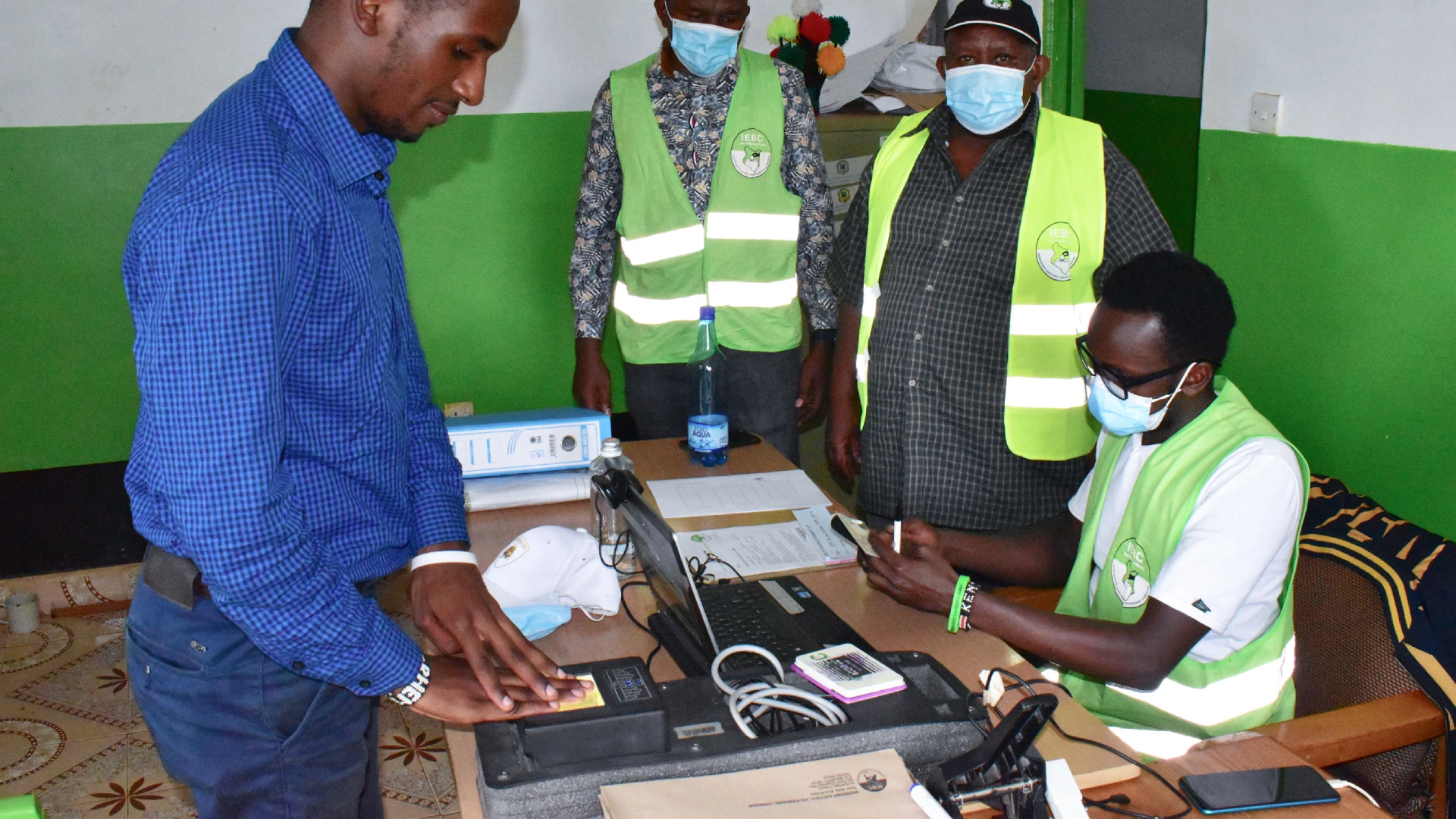
When the 2010 Constitution and the subsequent Elections Act of 2011 mandated that the commission modernize its systems, the IEBC conducted a mass registration exercise using Biometric Voter Registration (BVR) kits.
That exercise created an entirely new digital register, one built from scratch and incompatible with the old paper records.
The commission’s position is simple. On paper, anyone who registered before 2012 and never participated in any BVR exercise exists only in the old manual records, which were never migrated into the current digital database, and therefore cannot be verified by the Kenya Integrated Election Management (KIEMS) technology used at polling stations in 2017 and 2022.
No biometric record, therefore, will mean no vote.
That technical logic is sound, but the problem is what it means in practice and whether the directive is as sweeping as it sounds.
Here is the critical paradox the IEBC’s announcement does not answer clearly. Anyone who voted in 2013, 2017, or 2022 was, by definition, already biometrically registered.
The KIEMS system that verified voters at those elections requires a digital record to function.
If you used that system and voted, you are ideally supposed to be in the database. The pool of voters who registered only before 2012 and never once participated in any subsequent registration or voted in any of those three election cycles is, by any reasonable estimate, very small.
READ: How to Find Your Nearest IEBC Voter Registration Center in Kenya
It would consist largely of elderly voters who have not engaged with the system in over a decade, people who registered young and then emigrated, or individuals who have since died but whose records were never purged.
This is not a large or politically significant group, which makes the IEBC’s decision to issue a high-profile national clarification targeting them all the more puzzling.
So why issue a high-profile national clarification targeting this group roughly 16 months before the next general election?
The KPMG audits conducted ahead of both the 2017 and 2022 elections were specifically designed to identify deceased voters, duplicates, and records lacking valid biometrics.
If those audits were thorough, manual-only records should have been flagged and resolved years ago.
Their sudden resurfacing in 2026 suggests either that previous audits fell short or that a new technical requirement has been introduced that the IEBC has yet to explain publicly, and that unexplained gap is precisely what is feeding the speculation.
A separate concern has emerged around the “N/A” entries on the IEBC’s voter verification portal, raised by voters online. Voters checking their registration details have found their polling station name and stream fields blank, prompting fears that their records are incomplete or have been interfered with.
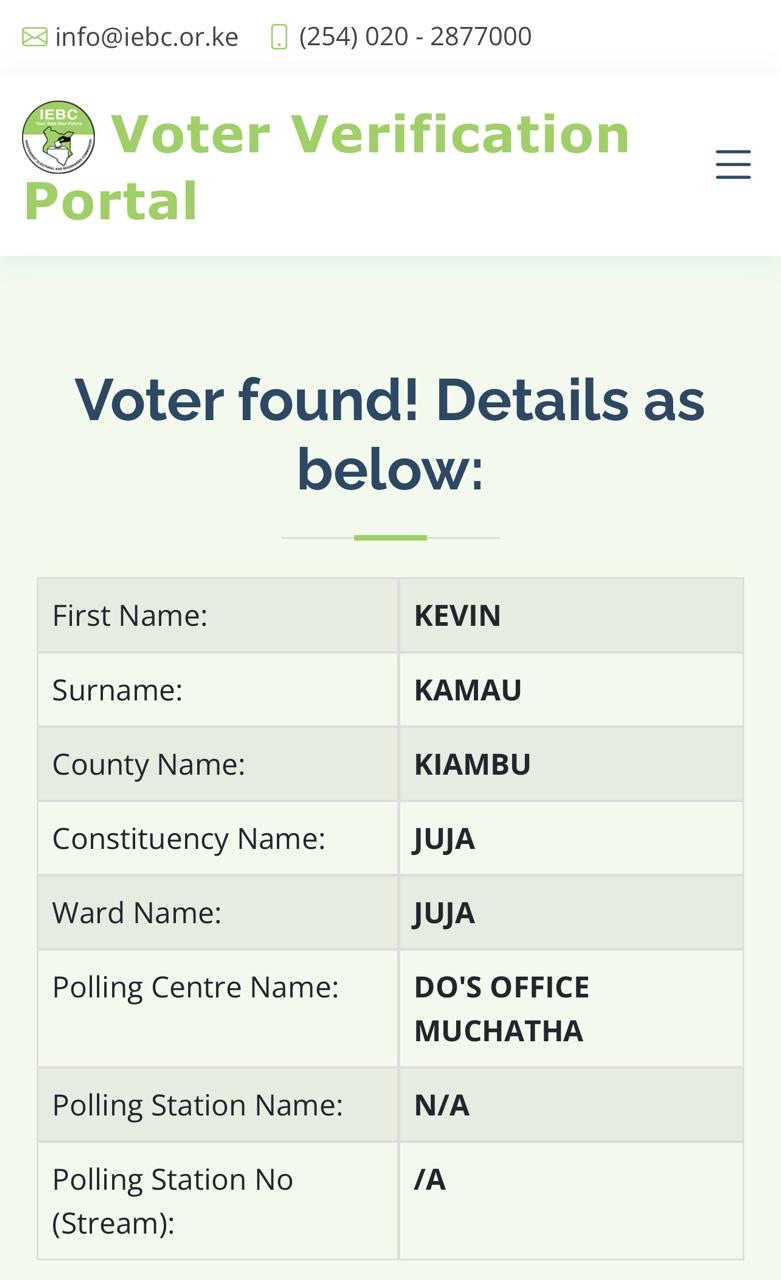
This has landed at the same time as the re-registration directive, amplifying the sense that something is wrong with the register.
The IEBC has since moved to clarify, stating that “voter registration is still ongoing, and the commission by law only splits polling centers into streams of up to 700 voters after the register closes, sorted alphabetically by first name.”
A voter’s portal showing “N/A” is a sequencing issue, not an error.
The problem is that this explanation requires voters to trust a process they cannot see, from an institution whose communication record on these matters has been inconsistent.
READ: IEBC Warns Voters Taking Photos of Ballot Papers Will Be Prosecuted
In the 2022 cycle, many voters retained their 2017 stream assignments during preliminary portal checks, which made the current blank entries feel like a regression rather than a standard procedural state.
In Kenyan electoral politics, voter register changes are never read in isolation. Kenyans have lived through contested elections, disputed results, and allegations of voter suppression, and that history shapes how any change to the voter register is received.
The timing of this clarification, arriving slightly over a year before 2027 and during a period when the IEBC itself is still reconstituting its full complement of commissioners, amplifies that suspicion further.
The 2027 election will be contested intensely. The credibility of the register it is run on will be contested just as intensely. The IEBC has time to get ahead of that, but not much of it.