




Ford has spent the past several years pushing AI deep into its manufacturing and quality control operations, installing AI-powered cameras on plant floors and using automated systems to catch defects before vehicles reached customers.
Now the company is admitting that approach didn’t work as well as expected, and it’s turning to an old solution: people.
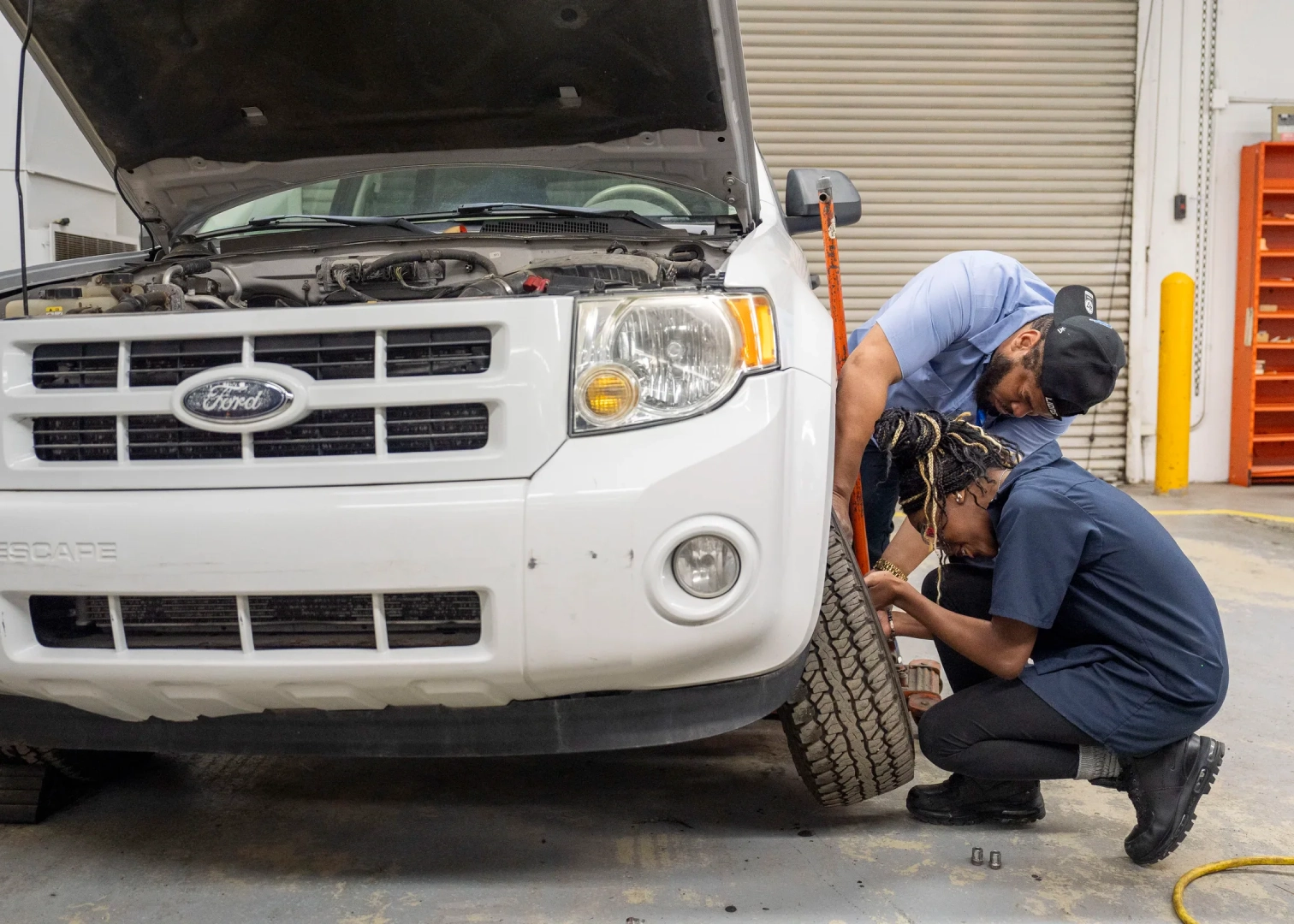
According to Bloomberg, Ford has hired, rehired, or promoted roughly 350 veteran engineers over the last 3 years. Many of them are former Ford employees or engineers who had been working at supplier companies.
Internally, they’ve picked up the nickname “gray beard” engineers, a reference to their decades of hands-on experience rather than their actual age.
Charles Poon, Ford’s vice president of vehicle hardware engineering, explained the miscalculation, saying the company assumed that feeding AI systems its design requirements would be enough to produce high-quality vehicles. That assumption turned out to be wrong.
AI could process documentation, but it couldn’t replicate the kind of judgment that comes from engineers who have spent years catching problems that never show up on paper.
READ: AI Push Fuels Tech Layoffs as Meta Plans 8,000 Cuts
That gap matters more than it might sound. Veteran engineers tend to notice things that are hard to write down: an odd vibration that signals a future failure, a material that wears out faster than expected in certain conditions, or a small design choice that causes bigger problems years down the road.
None of that lives in a spec sheet, which means AI systems trained only on official documentation never learned it either. Once those experienced engineers left the company, that knowledge left with them.
Ford’s chief operating officer, Kumar Galhotra, described the new strategy in simple terms. The rehired specialists now “hunt for failure points before a part ever reaches the plant floor.”
That means they’re involved early, reviewing designs, sitting in on mandatory design checks, and flagging weak points before parts ever get built.
They’re also mentoring younger engineers and helping retrain the AI systems themselves, essentially feeding the software the kind of real-world knowledge it was missing.
READ: Toyota Enters Kenya’s EV Market With New bZ4X Electric Crossover
Ford isn’t walking away from AI. The company still uses internally built tools, including systems called AiTriz and MAIVs, to scan for defects and analyze production data. The shift isn’t about ditching automation but putting people back in charge of guiding it.
So far, the bet appears to be paying off. CEO Jim Farley said the quality improvements are saving the company serious money, citing “hundreds and hundreds of millions of dollars” in reduced warranty and recall costs.
Ford also reclaimed the top spot among mainstream automakers in the latest J.D. Power Initial Quality Study, its best result in roughly 16 years and a ranking it hadn’t held since 2010.
However, Ford recorded 153 recalls in 2025 alone, a costly and damaging stretch that pushed the company to rethink how it catches defects in the first place. Rather than doubling down on automation, it concluded that experienced human judgment was the missing piece.
The bigger takeaway extends well past the auto industry. Plenty of sectors, from aerospace to healthcare to semiconductor manufacturing, rely on people whose expertise comes from years of solving problems on the ground rather than reading manuals.
That kind of know-how is often called tacit knowledge, and it doesn’t transfer easily into a dataset. AI is very good at handling information that can be written down and measured. It’s far less capable of replicating instincts built over a career.