


• Latest
  • All
  • How To
Safaricom Home Fiber

Six-Year Flaw in the Safaricom Home Fiber System Finally Patched

July 17, 2025
Emergency SMS alerts

Government Emergency SMS to Bypass DND and Opt-Out Requests for El Niño Alerts

October 3, 2026
AppBlock: The App That Blocks Apps, Including the One You Use to Uninstall It

AppBlock: The App That Blocks Apps, Including the One You Use to Uninstall It

October 2, 2026
Safaricom AI Pay Lets M-PESA Users Scan Receipts to Pay Instead of Typing PayBill Numbers

Safaricom AI Pay Lets M-PESA Users Scan Receipts to Pay Instead of Typing PayBill Numbers

October 2, 2026
Airtel Money

Airtel Money Valued at $7 Billion Ahead of London IPO Listing

October 1, 2026
DHgate Tablet Cases deals
Safaricom-PesaPal

Safaricom and Pesapal Expand Digital Payments With Scan to Pay and Tap to Pay

October 1, 2026
Copia Global

Copia Kenya Ordered Into Liquidation After Two-Year Rescue Effort

September 30, 2026
CBK Licenses 29 New Digital Lenders, Bringing Total to 281

CBK Licenses 29 New Digital Lenders, Bringing Total to 281

September 30, 2026
M-Pesa and Airtel Money

New Bill Could Let M-Pesa and Airtel Money Invest Customer Funds

September 30, 2026
Hackers Are Hijacking Cloud Accounts to Run AI Models on Someone Else’s Bill

Hackers Are Hijacking Cloud Accounts to Run AI Models on Someone Else’s Bill

September 28, 2026
WhatsApp Business to Charge for Service Messages Above 1,000

WhatsApp Business to Charge for Service Messages Above 1,000

September 28, 2026
WSO2Con Africa 2026

WSO2 Hosts First WSO2Con Africa in Nairobi

September 25, 2026
Huduma centers

Kenya Has 22,000 Digital Services but Still Face a Manual Backend

September 23, 2026
Techweez | Tech News, Reviews, Deals, Tips and How To
  • News
  • Entertainment
  • Reviews
  • Features
  • Editorial
No Result
View All Result
Techweez | Tech News, Reviews, Deals, Tips and How To
  • News
  • Entertainment
  • Reviews
  • Features
  • Editorial
No Result
View All Result
Techweez | Tech News, Reviews, Deals, Tips and How To
No Result
View All Result

Six-Year Flaw in the Safaricom Home Fiber System Finally Patched

Caleb Sama by Caleb Sama
July 17, 2025
in News
Reading Time: 4 mins read
348
0
Safaricom Home Fiber

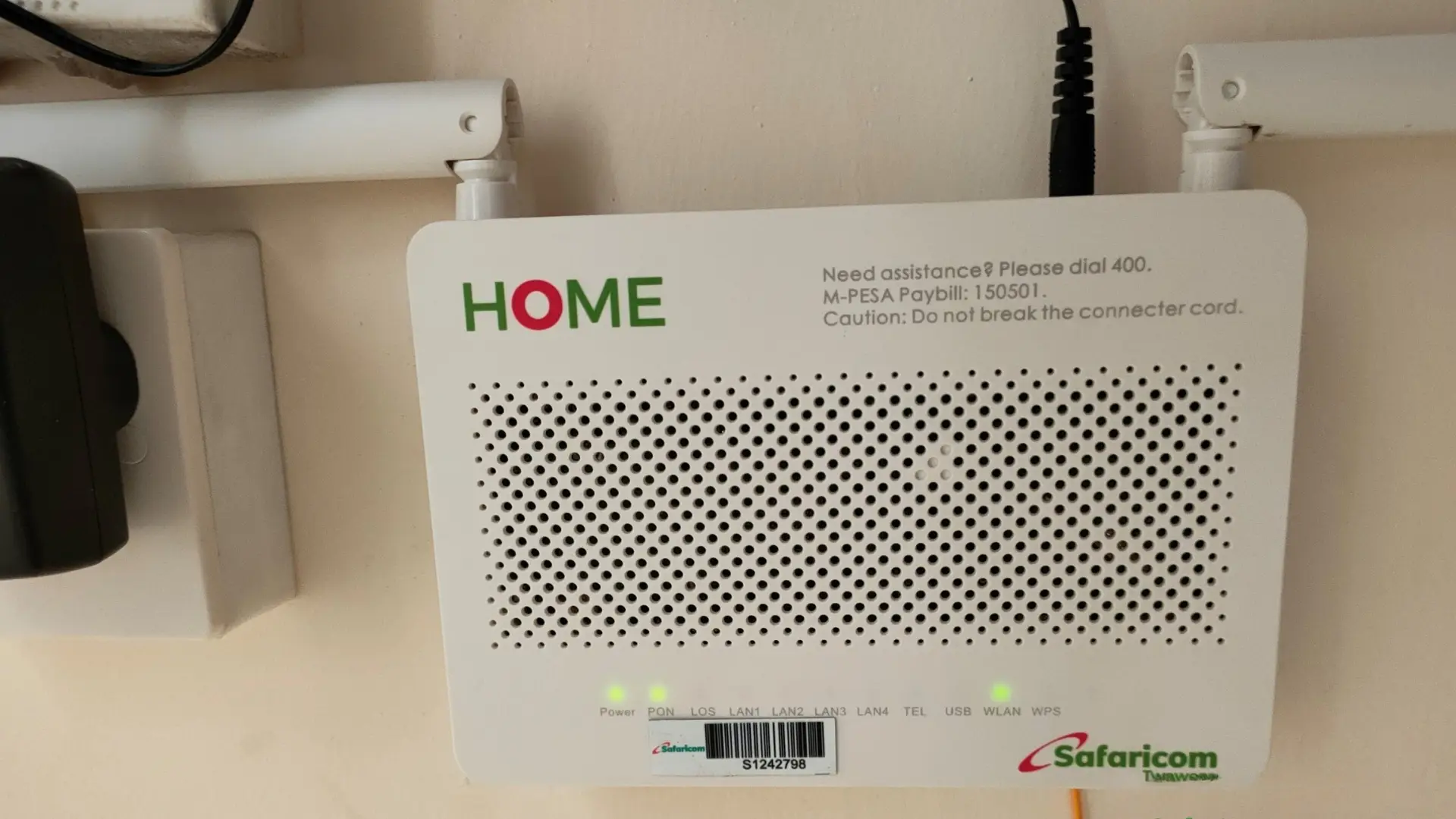
For six years, Safaricom unknowingly ran what amounted to an honor system for internet access. A critical flaw in its Safaricom Home Fiber system meant that thousands of customers could bypass official billing entirely, accessing broadband services for free or at bargain-basement rates.

The vulnerability, which persisted from at least 2018 until 2024, turned Safaricom’s authentication system into something resembling a master key scenario.

While the company required customers to log in with both a username and password through Point-to-Point Protocol over Ethernet (PPPoE), the system accepted a single, universal password across all accounts.

This meant that anyone with knowledge of the generic password could potentially access the network using any valid account number as their username. To picture this, imagine if your bank accepted the same PIN for every account holder, and you just needed to know someone’s account number to get in.

What started as a technical oversight quickly evolved into an informal economy. Safaricom’s outsourced sales agents, who were supposed to help customers set up legitimate connections, became key players in this unauthorized network.

When customers’ subscriptions expired, these agents offered an alternative payment plan that had nothing to do with Safaricom’s official billing system.

For as little as KES 1,000, customers could pay agents to reset their routers and input new credentials. This restored their Home Fiber internet service without any money flowing to Safaricom, effectively bypassing monthly charges that typically ranged from KES 2,999 to 20,000.

The scheme worked especially well with expired or unused accounts. Many legitimate account holders remained completely unaware that their dormant connections were being hijacked to provide service to others.

In some cases, customers were knowingly complicit, essentially crowdsourcing their internet access through shared credentials.

Engineers familiar with the system described it as an open secret in certain neighborhoods. The word spread quietly through communities, creating pockets where nearly everyone knew someone who could get them back online for a fraction of the official price.

Safaricom’s technical team was aware of the vulnerability, but fixing it proved far more complicated than anyone anticipated. The flaw was embedded deep within the legacy infrastructure from the company’s early fiber deployment days.

The authentication system that enabled this workaround was built on older architectural decisions that seemed reasonable at the time but created cascading problems as the network scaled.

Engineers described it as needing to rebuild the foundation while the house was still occupied, a challenging task when you’re adding thousands of new customers every month.

The rapid expansion of Safaricom’s fiber network, which helped cement its position as Kenya’s dominant internet provider, ironically made the vulnerability harder to address.

Any comprehensive fix would require significant changes to backend systems that were actively serving hundreds of thousands of customers.

After years of revenue leakage, Safaricom finally implemented a comprehensive solution last year. The fix involved two key changes that changed its authentication system.

First, the company enforced unique, complex passwords for every single account, eliminating the universal password that had enabled the entire scheme.

Second, they tightened session restrictions to ensure that only one connection per account could be active at any given time, preventing the sharing of credentials across multiple locations.

The new system means that even if someone somehow obtains valid login credentials, they can’t use them unless the legitimate account holder is offline. This effectively ended the informal economy that had grown around shared internet access.

Although Safaricom has remained officially silent about the extent of its losses, internal estimates suggest the Home Fiber vulnerability cost the company tens of millions of Kenyan shillings over the years it remained unpatched.

Given the scale of the network and the number of customers potentially affected, the actual figure could be substantially higher.

Beyond just lost subscription fees, resources were spent in investigating usage patterns, implementing workarounds, and ultimately developing the fix that resolved the issue. There’s also the intangible cost to the company’s reputation and the potential impact on investor confidence.

Still, Safaricom has managed to maintain and expand its market leadership throughout this period. According to regulatory data, the company now controls 36.5% of Kenya’s fixed internet market, serving 678,118 customers as the country’s largest internet service provider.


Tags: FiberSafaricomSafaricom Home Fiber
SendShare196Tweet122
Caleb Sama

Caleb Sama

Chief Editor. Pineapple on Pizza is absolutely great and let no one convince you otherwise. Pop in at: [email protected] to get in touch with me.

Related Posts

Emergency SMS alerts

Government Emergency SMS to Bypass DND and Opt-Out Requests for El Niño Alerts

October 3, 2026
Safaricom AI Pay Lets M-PESA Users Scan Receipts to Pay Instead of Typing PayBill Numbers

Safaricom AI Pay Lets M-PESA Users Scan Receipts to Pay Instead of Typing PayBill Numbers

October 2, 2026
Safaricom-PesaPal

Safaricom and Pesapal Expand Digital Payments With Scan to Pay and Tap to Pay

October 1, 2026
M-Pesa and Airtel Money

New Bill Could Let M-Pesa and Airtel Money Invest Customer Funds

September 30, 2026
Fiber Internet

Fixed Internet Subscriptions Surge 32%, Thanks to Fiber and Starlink

September 18, 2026
Mobile Subscriptions

Mobile Subscriptions Rise to 88 Million as Mobile Penetration Hits 165%

September 18, 2026

Latest

Emergency SMS alerts

Government Emergency SMS to Bypass DND and Opt-Out Requests for El Niño Alerts

October 3, 2026
AppBlock: The App That Blocks Apps, Including the One You Use to Uninstall It

AppBlock: The App That Blocks Apps, Including the One You Use to Uninstall It

October 2, 2026
Safaricom AI Pay Lets M-PESA Users Scan Receipts to Pay Instead of Typing PayBill Numbers

Safaricom AI Pay Lets M-PESA Users Scan Receipts to Pay Instead of Typing PayBill Numbers

October 2, 2026
Airtel Money

Airtel Money Valued at $7 Billion Ahead of London IPO Listing

October 1, 2026
Safaricom-PesaPal

Safaricom and Pesapal Expand Digital Payments With Scan to Pay and Tap to Pay

October 1, 2026
Copia Global

Copia Kenya Ordered Into Liquidation After Two-Year Rescue Effort

September 30, 2026

Best devices

Best Infinix Phones of 2025

Best Infinix Phones of 2025: Budget Prices With Premium Features

December 31, 2025

The Best Infinix Accessories Worth Buying in 2025

November 26, 2025

Best Budget Wireless Earbuds To Buy in Kenya (2025)

October 8, 2025

Samsung Galaxy A36 5G vs Samsung Galaxy A56 5G: Comparison Review

August 29, 2025

Infinix Hot 60 Pro+ vs Infinix Hot 60i: Comparison Review

August 22, 2025

Best Budget Smartwatches To Buy in Kenya 2025

February 13, 2025

Techweez is where tomorrow’s tech stories break today, thanks to intelligent analysis, real-world insight, and visionary storytelling.

Follow Us

Editorials

AppBlock: The App That Blocks Apps, Including the One You Use to Uninstall It

Yubo: The App That Went From Tinder for Teens to 60 Million Users

Tangle Is What Happens When Texting Meets a Phone Call

Absa Next Is Building Something Different From a Banking App

Flighty App: A Flight Tracker With an Early Warning System

Convos Wants to Be the First Messaging App Built for the Age of AI

More News

CBK Licenses 29 New Digital Lenders, Bringing Total to 281

New Bill Could Let M-Pesa and Airtel Money Invest Customer Funds

Hackers Are Hijacking Cloud Accounts to Run AI Models on Someone Else’s Bill

WhatsApp Business to Charge for Service Messages Above 1,000

WSO2 Hosts First WSO2Con Africa in Nairobi

Kenya Has 22,000 Digital Services but Still Face a Manual Backend

  • Terms Of Use
  • Techweez Brand
  • Privacy & Policy
  • Contact Us

© 2024 Techweez - Palahala Media Group may earn a commission when you buy through links on our sites.
A Palahala Media Group Brand. All rights reserved.
.

Welcome Back!

Login to your account below

Forgotten Password?

Retrieve your password

Please enter your username or email address to reset your password.

Log In

Add New Playlist

Techweez | Tech News, Reviews, Deals, Tips and How To
Crunchy Cookies 🍪 Ahead!

Hey there! Just a heads-up: we're big fans of cookies - both the digital and edible kind! 🍪 We use our cookies and some from third parties to ensure your browsing experience on our site is smooth sailing and secure.


But wait, there's more! We also use cookies to gather stats and insights on how you navigate our site. It's like getting a behind-the-scenes peek at your digital adventures!


Don't worry, you're in control. You can adjust your cookie settings anytime to suit your preferences. Feeling curious? Dive into our Privacy Policy for all the juicy details. Happy browsing! 🚀

Functional Always active
Listen, this legal stuff is about as exciting as watching paint dry. But it basically says we only use your stuff for what you asked us to do, and nobody else gets to peek!
Preferences
The technical storage or access is necessary for the legitimate purpose of storing preferences that are not requested by the subscriber or user.
Statistics
It's those sneaky cookie crumbs websites leave behind to count visitors, like counting ants at a picnic! Totally harmless, just for fun facts. The technical storage or access that is used exclusively for anonymous statistical purposes. Without a subpoena, voluntary compliance on the part of your Internet Service Provider, or additional records from a third party, information stored or retrieved for this purpose alone cannot usually be used to identify you.
Marketing
Hey there! Just letting you know we use some fancy gizmos to remember your preferences. This way, we can show you ads that are, well, not completely bananas.
Manage options Manage services Manage {vendor_count} vendors Read more about these purposes
Make cookies
{title} {title} {title}
Techweez | Tech News, Reviews, Deals, Tips and How To
Crunchy Cookies 🍪 Ahead!
To provide the best experiences, we use technologies like cookies to store and/or access device information. Consenting to these technologies will allow us to process data such as browsing behavior or unique IDs on this site. Not consenting or withdrawing consent, may adversely affect certain features and functions.
Functional Always active
Listen, this legal stuff is about as exciting as watching paint dry. But it basically says we only use your stuff for what you asked us to do, and nobody else gets to peek!
Preferences
The technical storage or access is necessary for the legitimate purpose of storing preferences that are not requested by the subscriber or user.
Statistics
It's those sneaky cookie crumbs websites leave behind to count visitors, like counting ants at a picnic! Totally harmless, just for fun facts. The technical storage or access that is used exclusively for anonymous statistical purposes. Without a subpoena, voluntary compliance on the part of your Internet Service Provider, or additional records from a third party, information stored or retrieved for this purpose alone cannot usually be used to identify you.
Marketing
Hey there! Just letting you know we use some fancy gizmos to remember your preferences. This way, we can show you ads that are, well, not completely bananas.
Manage options Manage services Manage {vendor_count} vendors Read more about these purposes
Make cookies
{title} {title} {title}
No Result
View All Result
  • News
  • Reviews
  • Features
  • Editorial
  • Automotive
  • Entertainment

© 2024 Techweez - Palahala Media Group may earn a commission when you buy through links on our sites.
A Palahala Media Group Brand. All rights reserved.
.