





Kenya’s digital future isn’t just about faster internet; it’s about building the infrastructure to handle the most demanding workloads of our time: artificial intelligence (AI), high-performance computing (HPC), and advanced cloud services.
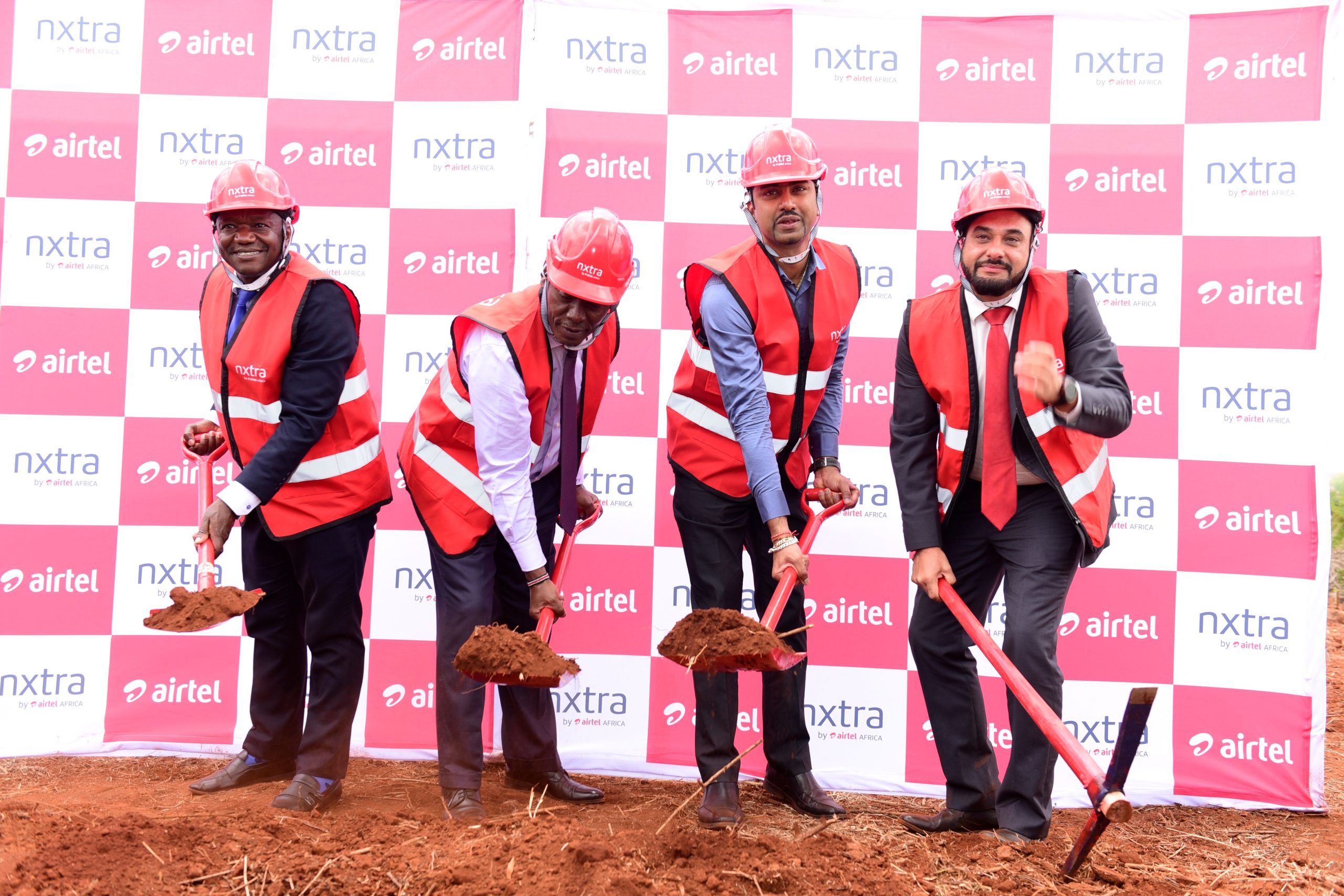
That future came into sharper focus at Tatu City, where Airtel Kenya and Nxtra Africa broke ground on a 44 MW hyperscale data center, slated to be complete by Q1 2027.
More than just the largest data center in East Africa, the facility is being purpose-built to support the computing power that modern enterprises, startups, and governments will need in the AI-driven decade ahead.
A Backbone for AI and Cloud
Airtel Kenya CEO Ashish Malhotra described the project as a turning point for Kenya’s digital adoption.
“As a telco, we are committed to breaking ground on Kenya’s digital future by building infrastructure that not only protects privacy but also enables businesses and individuals to scale securely in the digital age,” he said.
Malhotra framed the facility as a backbone for cloud adoption and cybersecurity, ensuring fintechs, educators, healthcare providers, and innovators can tap into world-class infrastructure locally instead of relying on offshore capacity.
Representing the Government of Kenya, ICT CS William Kabogo called the project “historic in scale and strategic in impact.”
He emphasized its 44 MW capacity, 99.99% uptime, multiple redundant fiber paths, high-density racks, and seven-layer security, noting that it will handle AI and HPC workloads from the start.
For policymakers, the project is a physical extension of Kenya’s National Digital Masterplan 2022–2032, the Kenya Cloud Policy 2024, and the National AI Strategy, all designed to transform the country into a cloud-first, AI-ready economy.
Why Tatu City?
For Stephen Jennings, Tatu City developer, the location itself is part of the story.
“This facility is not just a construction project; it demonstrates the ambition and commitment required to deliver Africa’s digital future,” he said.
Tatu City brings together a 135 MVA substation, 120 km of underground fiber, and a renewable energy ecosystem already producing 5 MW of solar, with more than 95% of its power sourced from green energy.
For a data center designed to run AI models and high-density GPU racks, this blend of scale and sustainability is critical.
Yashnath Issur, CEO of Nxtra Africa, made it clear that Kenya will host Nxtra’s largest investment yet, and one built with the AI era in mind.
“Our aim is to be the best data center provider with the technology and capacity to enable Africa’s digital growth. Kenya is central to this ambition,” he said.
The site will feature liquid on-chip cooling, water cooling systems, and rack densities above 30 kW, ensuring it can host GPU-powered AI workloads and meet hyperscaler requirements from day one.
Communications Authority of Kenya (CAK) reinforced the importance of the project, describing data as “the new currency of commerce.” Kenya’s mobile data usage continues to rise at double-digit rates annually, driven by streaming, fintech, and e-commerce.
The regulator stressed that the Nxtra facility will absorb this surge while enabling innovation in healthcare, agriculture, finance, and education.
CA also highlighted the 2,500 kms of fiber already deployed across 19 regions and pledged continued support to ensure a secure, inclusive, and sustainable digital ecosystem.