







Google is strengthening its cloud storage security with the rollout of an AI-powered ransomware detection feature in Google Drive for desktop.
The update, available on both Windows and macOS, is designed to safeguard files from one of today’s most damaging cyber threats by identifying ransomware activity before it spreads.
This detection system is powered by a machine learning model that has been trained on millions of real-world ransomware examples.
Instead of relying solely on signature-based detection like traditional antivirus tools, Google’s system monitors for unusual behavior, such as mass file encryption or widespread corruption, which are hallmarks of ransomware attacks.
When these ransomware signals are detected, Google Drive automatically pauses file syncing, ensuring corrupted files do not propagate across devices or cloud backups.
Once an activity is flagged, users are alerted via desktop notifications and email.
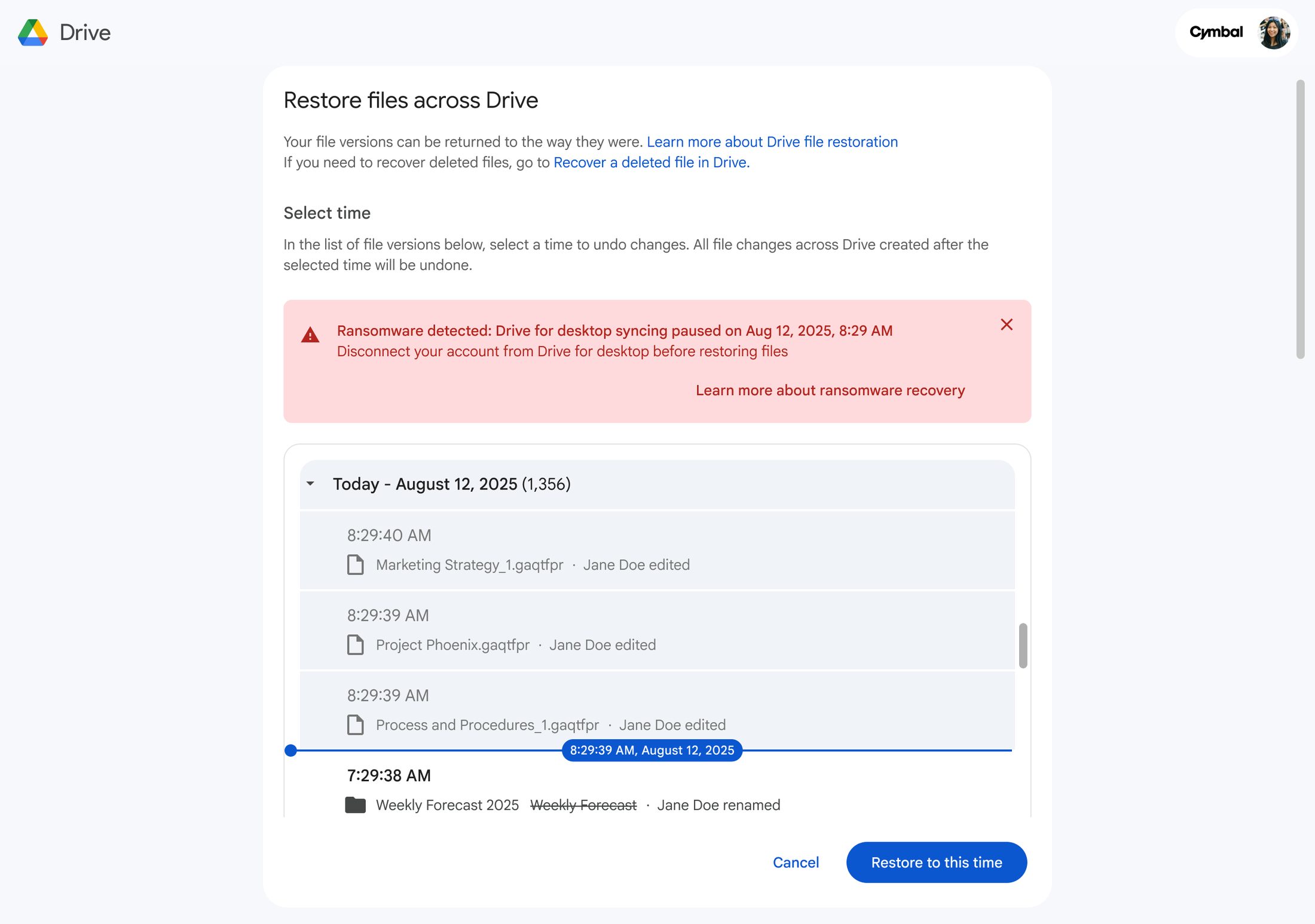
To help them recover quickly, Google also provides tools to restore files to earlier, uncorrupted versions, minimizing downtime and reducing the risk of permanent data loss.
Ransomware attacks continue to rise globally, targeting individuals, small businesses, and enterprises alike. Victims often face tough choices: lose critical files or pay hefty ransoms.
How It Compares to OneDrive
Microsoft OneDrive already provides ransomware recovery options, allowing users to roll back files after an attack.
However, Google’s approach introduces an extra layer of AI-driven prevention, automatically halting syncing at the first sign of trouble. This distinction could make Google’s solution more effective in containing threats before they escalate.
The feature is rolling out in open beta, with general availability expected by the end of the year. According to Luke Camery, Google’s Director of Product Management, the goal is to make ransomware protection standard for all Drive desktop users.