





Tanzania experienced a nationwide internet disruption today coinciding with the country’s general elections.
According to network data from NetBlocks, the outage began around 8:00 AM local time, affecting major services including social media platforms, messaging apps, and independent news sites.
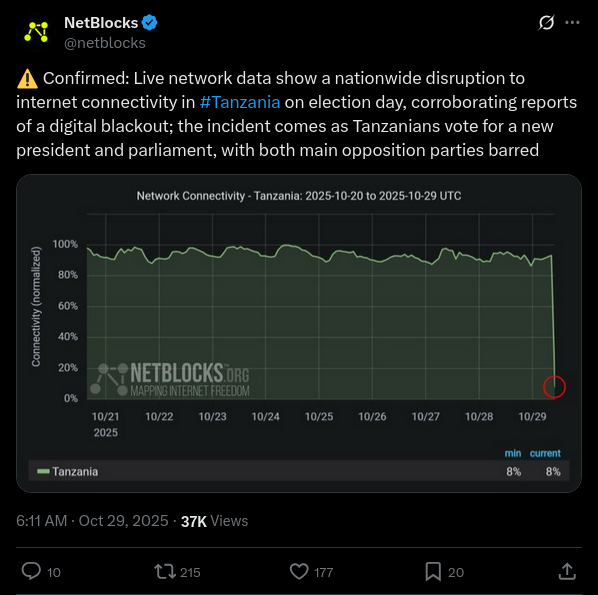
The disruption, observed across several network providers, led to widespread connectivity losses in major cities such as Dar es Salaam, Arusha, and Mwanza.
Users reported difficulties accessing platforms like X (formerly Twitter), Facebook, and YouTube, with VPN usage spiking sharply as citizens sought ways to bypass the restrictions.
Digital watchdog NetBlocks confirmed the outage in a live update, stating that “network data show a nationwide disruption to internet connectivity in Tanzania.”
The organization, which tracks global internet availability in real time, noted that the pattern of disruption aligns with deliberate restrictions often observed during national elections or political unrest.
Cloudflare Radar also confirmed the disruption, noting that traffic from Tanzania began falling around 12:30 PM local time, and is now over 90% lower than the previous week’s average.
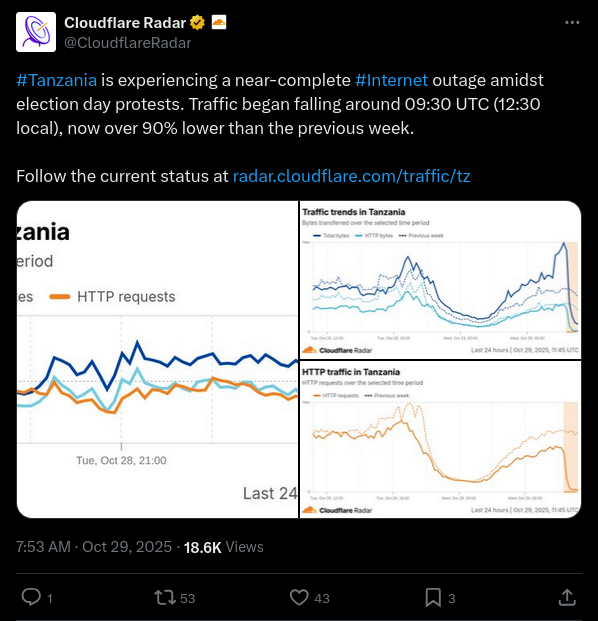
The platform described the situation as a “near-complete internet outage” impacting both mobile and fixed-line networks across the country.
While the Tanzanian authorities have yet to release an official statement, analysts point out that such shutdowns are typically implemented to control the flow of information during sensitive political periods.
By limiting online access, governments can suppress the spread of viral content, citizen journalism, or potential misinformation, but at the cost of transparency, communication, and economic stability.
Not an Isolated Case
Tanzania’s blackout adds to a growing pattern of election-related internet disruptions seen across Africa and beyond. In 2021 in Uganda, authorities imposed a complete internet shutdown ahead of the general elections, citing “national security.”
READ: X (Twitter) Goes Dark in Tanzania
Ethiopia in 2023 restricted access to major social media platforms during protests and regional tensions, while the Democratic Republic of Congo in 2018 blocked internet and SMS services following disputed election results.
Similarly, in 2019, Zimbabwe experienced widespread connectivity restrictions amid demonstrations over fuel price hikes. Together, these incidents reflect a recurring trend where governments use internet control measures to regulate public discourse during politically sensitive periods.
According to Top10VPN, each day of a nationwide internet shutdown can cost a country million of dollars in lost productivity, digital trade, and mobile money transactions.
Beyond economics, such actions erode trust in digital governance and harm democratic engagement, especially among young, connected populations. As of now, internet services in Tanzania remain unstable, with reports of partial restoration in some regions through VPNs.
Global organizations, including Amnesty International, have condemned the blackout, urging authorities to restore access and uphold digital rights during the election process.