




Kenya’s fixed internet market grew nearly 7% last quarter, reaching 2.29 million subscriptions. That’s one of the strongest growth periods the sector has seen in years, and it indicates a real shift in how Kenyans are connecting to the internet.
Fiber-to-the-home connections climbed from 1.2 million to 1.27 million as providers pushed their networks deeper into residential areas, especially in expanding urban neighborhoods.
Most of this growth happened in the 10 to 30 Mbps speed range, which saw the biggest jump and remains the most popular tier across the country. People want reliable connections, but they’re not chasing extreme speeds.
Wireless fixed internet also posted strong numbers. Terrestrial wireless services grew by more than 10%, appealing to customers in areas where laying fiber doesn’t make economic sense.
Satellite internet followed a similar pattern, growing from a smaller starting point but proving that connectivity is reaching places that traditional infrastructure can’t easily serve.
The competitive landscape is shifting, though. Safaricom still holds about a third of all fixed internet customers, with Jamii Telecommunications and Wananchi Group trailing behind.
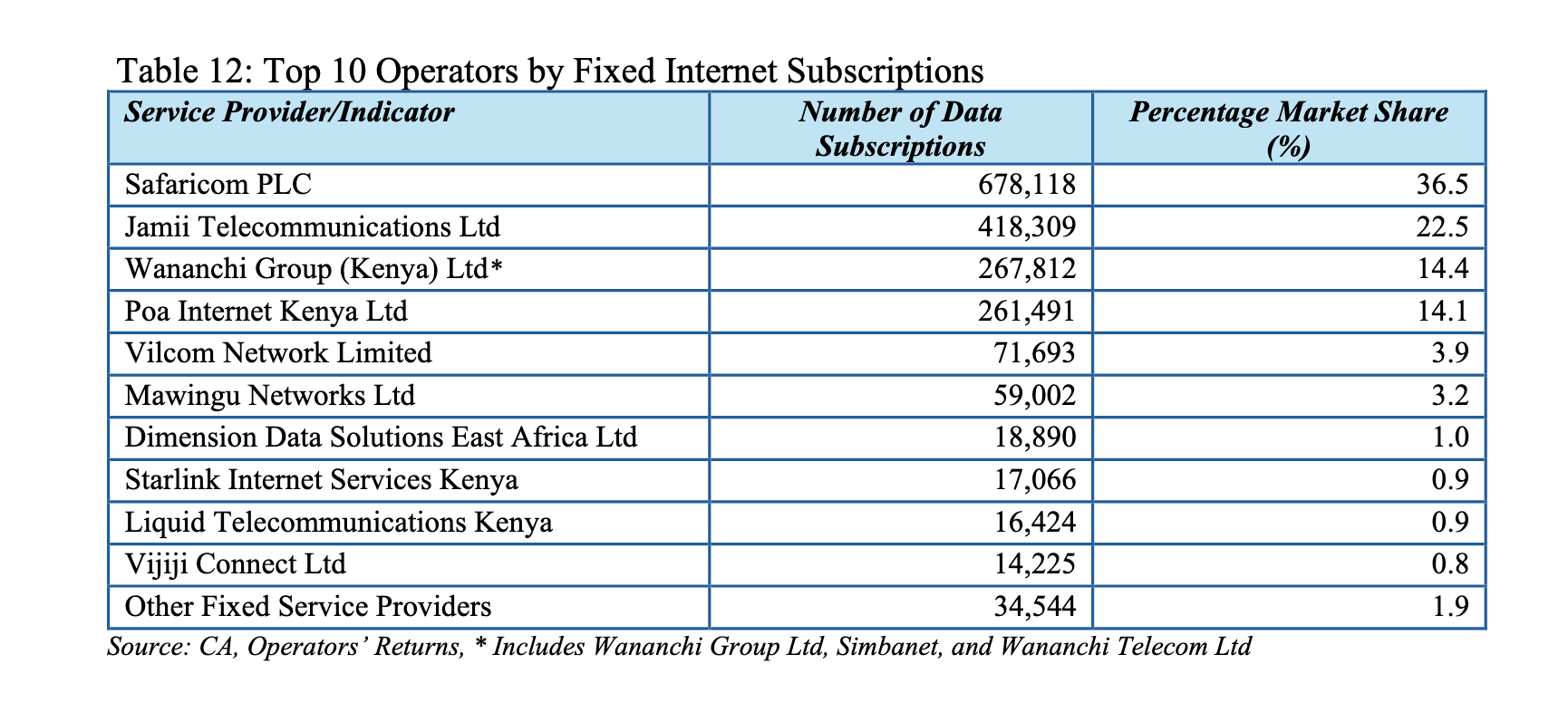
That said, smaller operators like Poa Internet are gaining ground, especially in neighborhoods that larger providers have overlooked or underserved. Price and localized service quality are clearly driving customer choices.
READ: Poa Internet Secures $4 Million to Bring Affordable Internet to More Homes
One surprising trend is the drop in subscriptions to ultra-high-speed packages of 1 Gbps and above. These plans were never common, but the decline suggests that most households prioritize cost over raw speed. Mid-range packages that balance performance with affordability are winning out.
Fixed internet is no longer just a niche option for businesses and affluent households. It’s becoming a serious alternative to mobile data for homes and small businesses that need consistent performance.
Mobile networks still carry most of Kenya’s internet traffic, but fixed broadband is growing fast enough to change expectations around what reliable internet should look like.