





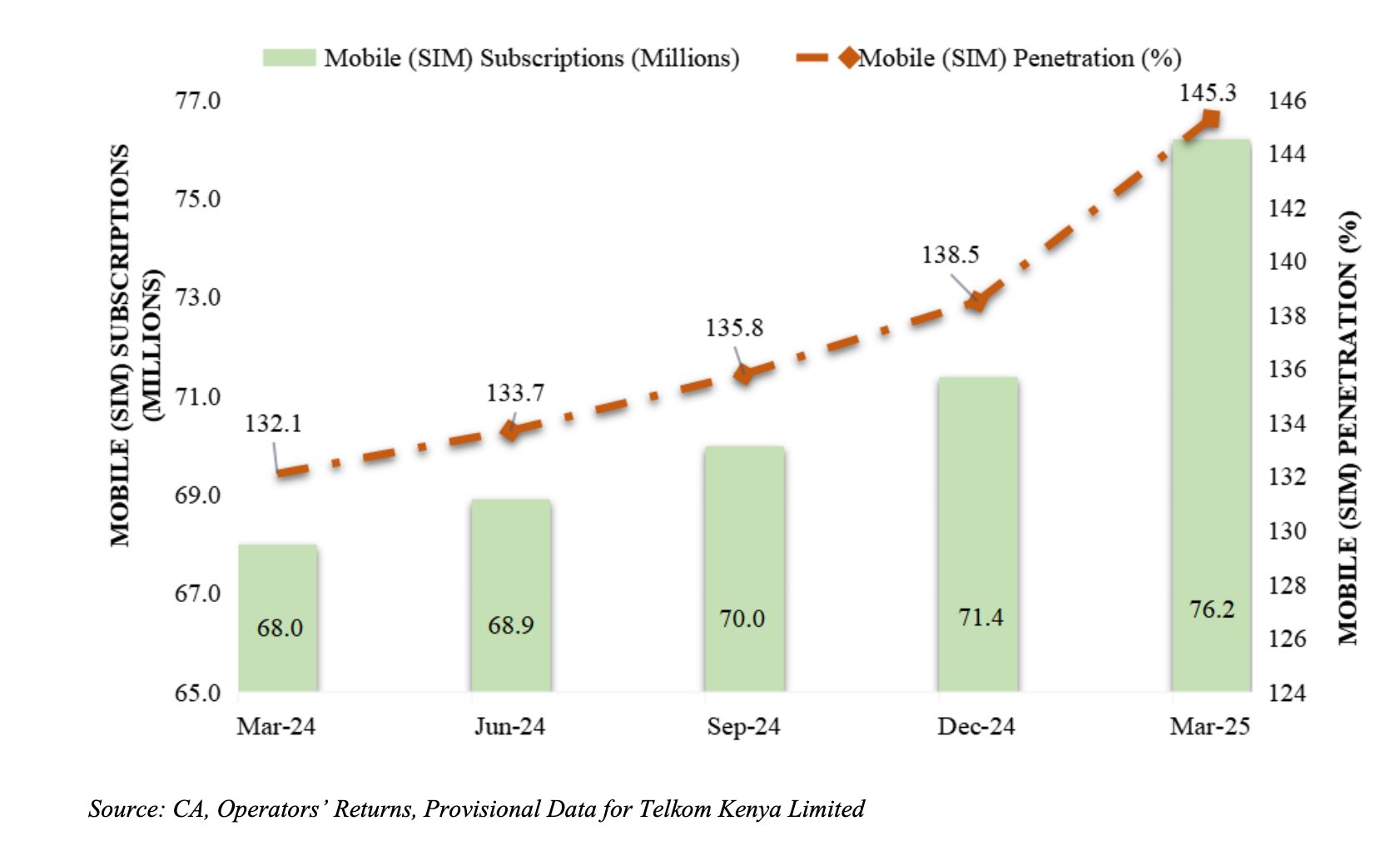
According to the latest sector report, Kenya now has 78.3 million active SIM cards, which works out to roughly 150% penetration.
This doesn’t mean the population is growing that fast or that millions of new people are suddenly getting connected. It means Kenyans are carrying multiple SIM cards to deal with patchy coverage, hunt for better rates, or take advantage of whatever promotion is running that week.
Voice calling held steady at 29.9 billion minutes, barely moving from the previous period. SMS, meanwhile, dropped from 15.2 billion to 14.7 billion messages. People have switched to WhatsApp, Telegram, and similar apps, so traditional texting continues to fade.
The real action is in mobile data as subscriptions hit 60.2 million, with most of that coming from broadband connections. Fourth-generation networks handle about 85% of mobile internet traffic.
Fifth-generation is still niche, but the people using it are consuming far more data (around 40 GB per month compared to 14 GB for 4G users). That gap shows what happens when faster networks meet demand for streaming, cloud storage, and other data-heavy services.
In addition, there are now 75 million devices on the network, and smartphones make up nearly 60% of them. Growth in smartphone adoption is happening, but it’s not explosive.
Plenty of people still use basic feature phones, likely because they’re cheaper and good enough for calls and light browsing.
Market share among the big operators hasn’t changed much, and that’s not the point anymore. The shift is from voice to data. What matters now isn’t how many SIM cards are out there, but how people are actually using their connections.