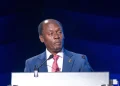






Kenya has once again adopted a stance championing inclusive digital development on the global stage at the WSIS+20 High-Level Meeting held in New York, reaffirming its commitment to a people-centered digital future.
This was at the marking of 20 years of the World Summit on the Information Society (WSIS), culminating in a UN General Assembly consensus outcome that reaffirmed a digital future built on trust, equality, and human rights.
ICT Cabinet Secretary William Kabogo, in a statement read by Stephen Isaboke, PS State Department for Broadcasting and Telecommunications, cited aggressive broadband expansion, the Universal Service Fund (USF), and the rollout of 1,450 digital hubs across the country as evidence of progress.
Kenya also held a crucial role as WSIS+20 co-facilitator alongside Albania, further amplifying its international credentials, particularly around AI capacity building, digital public infrastructure, and cybersecurity frameworks on child online protection.
In a side event, Partner2Connect, Kenya also highlighted investments of over USD 30.97 million and USD 38.72 million in mobile broadband and national fiber infrastructure, respectively, laying more than 8,000 km of backbone network through the USF.
At first glance, Kenya’s messaging closely aligns with the WSIS+20 vision. It emphasizes closing digital divides, improving digital infrastructure, building skills, governing emerging technologies like AI responsibly, and strengthening cybersecurity.
These priorities match the core pillars of WSIS, including infrastructure development, ethical technology use, cybersecurity, and capacity building. Kenya also echoed the summit’s broader goal of creating a digital future based on trust and equality.
However, the critical question is whether this is another polished international announcement with limited tangible outcomes at home.
The WSIS+20 outcome document explicitly prioritizes human rights online, freedom of expression, inclusive digital governance through platforms like the Internet Governance Forum (IGF), and meaningful participation of civil society.
This sits uncomfortably with Kenya’s domestic digital reality. Over the past few years, the country has witnessed mounting concerns around restrictions on information freedom, overbearing regulatory pressure on online platforms, surveillance anxieties, and a visible clampdown on online dissent.
These are all trends that undermine the “trust” pillar Kenya is championing abroad. A relevant contradiction is the recently enacted Computer Misuse and Cybercrimes (Amendment) Act, 2025, signed into law in October.
The controversial law introduced punitive penalties, including fines up to KES 20 million and up to 10 years’ imprisonment for vague offenses like “false, misleading, or alarming information,” and broad powers to block websites without meaningful oversight.
READ: High Court Freezes Ruto’s New Cybercrime Law Pending Review
This casts a lingering doubt on the real commitment to adhere to the recommended WSIS+20 guidelines. Is it for show, just another vague promise internationally, while clamping down on online freedom locally?
Kenya’s WSIS+20 position largely focuses on trust, online human rights, inclusive governance, and ethical technology. On paper, this aligns with the country’s strong support for ambitious global digital goals.
In practice, however, the way these principles are implemented and enforced at home raises important questions. There is a growing gap between what Kenya promotes internationally and what its citizens actually experience, especially when it comes to trusting that these digital rights exist and are protected in everyday life.
The test now will be whether the government is able to square this international digital diplomacy with domestic policy decisions and demonstrate that this is more than another eloquent declaration that is disconnected from local realities.