




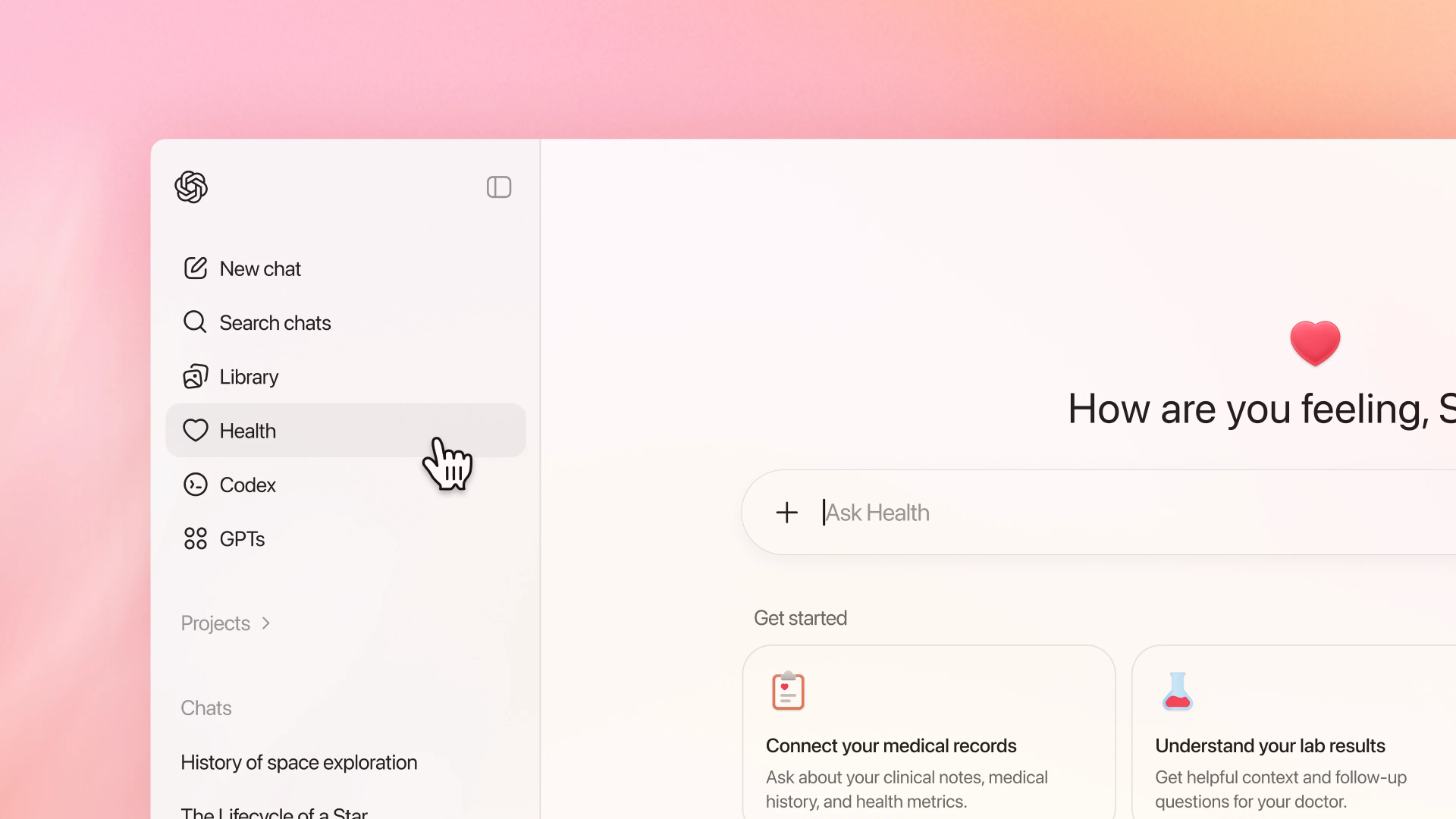
OpenAI has dropped ChatGPT Health, carving out a separate space within ChatGPT specifically for health conversations.
The move was necessitated by the fact that over 230 million people ask ChatGPT health questions every week, and the company figured it might as well give them a dedicated product for it.
ChatGPT Health sits in its own tab with separate chat history and memory from your regular ChatGPT conversations, so your medical discussions won’t bleed into other chats.
If you start asking health questions in the main ChatGPT, the AI will suggest moving the conversation to Health for extra privacy protections.
READ: Family Sues OpenAI After Teen Uses ChatGPT to Plan Suicide
Users can connect medical records through a partnership with b.well, which works with 2.2 million providers. The product also links to wellness apps and wearables like Apple Health, MyFitnessPal, Peloton, Weight Watchers, AllTrails, Function, and even Instacart.
The pitch is that ChatGPT can analyze your lab results, visit summaries, sleep patterns, nutrition data, and fitness routines to give more personalized responses.
It can supposedly help you understand test results, prepare for doctor appointments, plan workouts and diets, or compare insurance options based on your health patterns.
OpenAI says it spent two years developing this with feedback from over 260 physicians across 60 countries, collecting more than 600,000 pieces of input on model outputs.
The product isn’t fully launched yet. There’s a waitlist for beta access, though reports indicate it wasn’t working properly at launch. When it does roll out, it’ll be available globally except in the EU, Switzerland, and the UK, where stricter digital privacy laws apply.
Medical record integration only works in the US for now.
The company is emphasizing privacy hard, likely because it needs to. ChatGPT Health uses purpose-built encryption and keeps conversations isolated from the main ChatGPT experience.
Health conversations won’t be used to train foundation models by default. But there’s no end-to-end encryption, and OpenAI would still need to hand over data if faced with a court order or emergency situation.
READ: You Need to Think Twice Before Using ChatGPT As Your Therapist
OpenAI’s head of health confirmed that HIPAA (the US federal law that protects health information privacy and security) doesn’t apply here since it’s a consumer product, not a clinical healthcare setting.
That’s worth remembering if you were assuming medical-grade privacy protections.
The elephant in the room is whether people should be taking medical advice from a large language model that works by predicting likely responses rather than calculating correct answers.
OpenAI’s own terms of service state the product is “not intended for diagnosis or treatment,” but that disclaimer probably won’t stop people from using it that way.
In rural underserved communities, ChatGPT already handles 600,000 healthcare messages weekly, and 7 out of 10 health conversations happen outside normal clinic hours. People are clearly turning to AI when they can’t easily access doctors.
When pressed about mental health during a media briefing, OpenAI’s CEO of applications, Fidji Simo, said mental health is part of the product and that the company focuses on responding appropriately in distress situations by directing people toward health professionals and loved ones.
OpenAI has been pushing into healthcare for a while now. Last year, the company unveiled HealthBench as a benchmark for evaluating AI systems, hired Doximity co-founder Nate Gross to lead healthcare initiatives, partnered with Kenya-based Penda Health, and joined a Trump administration private sector initiative for AI in patient care.
Earlier this week, OpenAI published a report claiming 40 million daily users seek health advice on ChatGPT and floated policy concepts like requesting full access to global medical data and clearer regulatory pathways for consumer health AI.
People seem to want AI to be deeply embedded in their healthcare decisions, with access to their most sensitive medical information.
Whether that’s a good idea depends on your comfort level with a probabilistic text prediction system having that level of influence over health choices, data privacy concerns notwithstanding.