




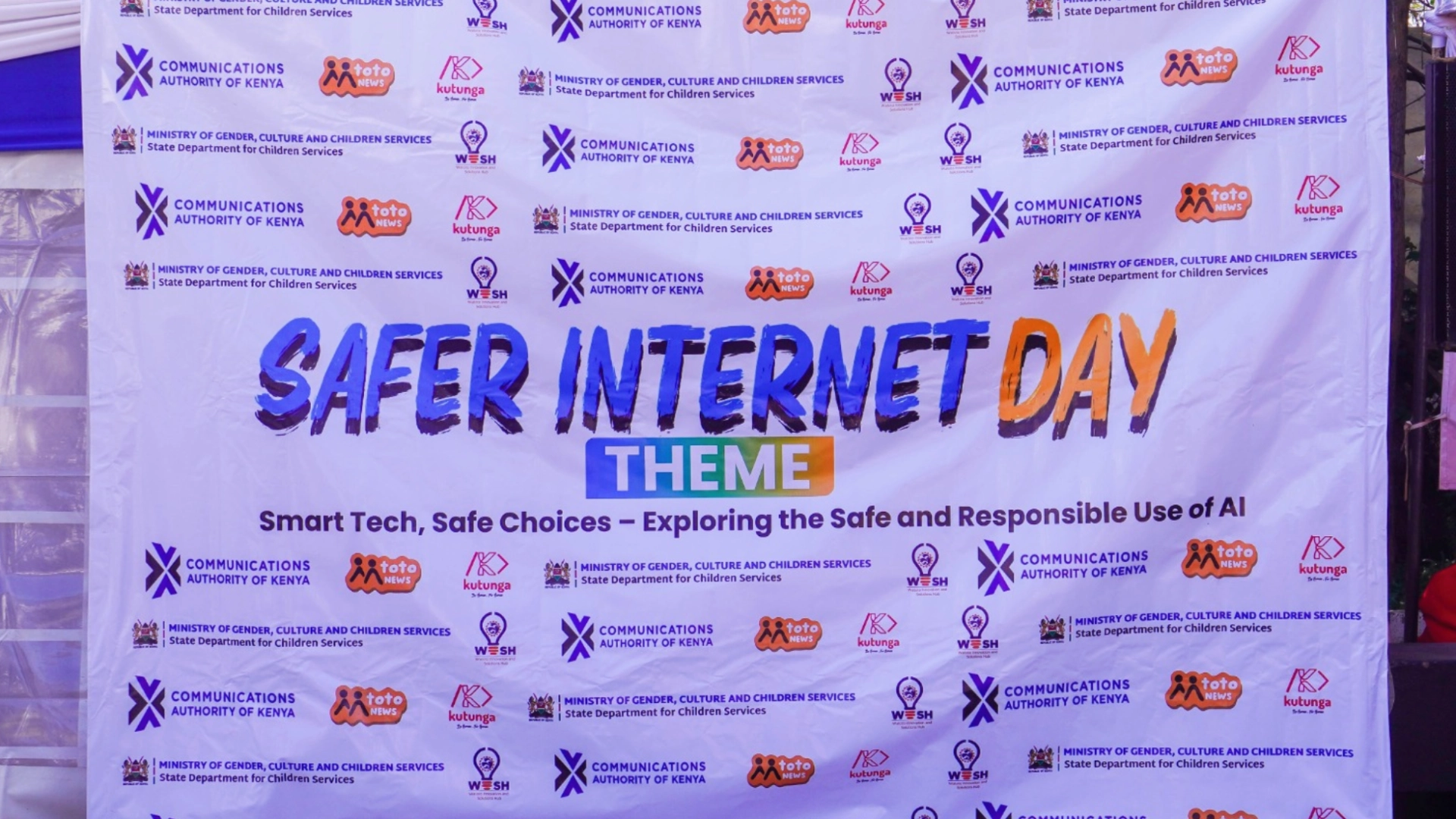
The Communications Authority of Kenya (CA), in partnership with Mtoto News International, held a children’s town hall at St. Luke’s ACK Kenyatta Church. The townhall marked the 2026 Safer Internet Day celebrations.
The event brought together learners from approximately six to seven schools across different grades and education levels, including institutions like Loreto Convent Msongari and Bridge International Academies.
Safer Internet Day is an international event observed annually on the second Tuesday of February by many countries worldwide. This year’s theme, “Smart Tech, Safe Choices — Exploring the Safe and Responsible Use of Artificial Intelligence (AI),” was particularly timely given the growing role of AI in everyday life.
The town hall, which ran for about three hours, was largely student-led. In keeping with its goal of fostering a child-centered and participatory environment, most of the event’s MCs were children, with only a few adults stepping in to provide structure and key information.
To balance the seriousness of the subject matter, the organizers incorporated music, snacks, games, and interactive sessions. Representatives from Mtoto News International, Tech Kidz, the Office of the Data Protection Commissioner, and the Directorate of Children Services shared brief speeches with practical insights for the learners.
READ: Government Warns of AI-Driven Scams At Safer Internet Day Event
A recurring message throughout the event was the importance of ensuring that children themselves are involved in conversations and decisions that directly affect them. A safer internet starts with them, individually.
Speakers also touched on how rapid technological advances, especially AI, are likely to shape the children’s futures. Learners were encouraged to think about both the opportunities AI presents, especially in education, and the potential risks to their safety.
Following the speeches and acknowledgements, the event transitioned into informal discussions over food. These sessions allowed children to ask more questions and share their concerns.
Such open conversations are a critical step toward ensuring that policies meant to protect children online are informed by their lived experiences and perspectives.
The schools in attendance were all Nairobi-based, which may reflect logistical considerations rather than deliberate exclusion. Still, as conversations around online safety and AI become more important, there is value in ensuring that such discussions reach children beyond major urban centers.
It would also signal that children’s voices matter regardless of geography, not just where infrastructure and institutions are easiest to reach.