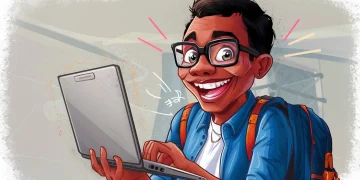






People love to jump on online trends. You’ve probably come across or even participated in the ongoing ChatGPT caricature trend that has gone viral and sparked some divisive reactions online.
If you’re not aware of what I’m talking about, earlier this month, people started to upload their photos to ChatGPT, asking it to create a fun cartoon of themselves with the prompt, “Create a caricature of me and my job based on everything you know about me.”
While there’s a good case to be made of why people want to be involved in this (though it mainly boils down to “it’s fun!”), the trend basically encourages people to feed more personal data to AI, and it’s no trivial thing.
It may appear playful and harmless at first glance, but in truth, you’re advertising to the entire internet how much personal data you’ve shared with an AI system. This then brings up the important question of “How does ChatGPT know so much about you?”
Critics are most concerned that society is normalizing increasingly intimate interactions with AI without fully considering the consequences for data privacy and for the creative economy, especially for artists whose work is used to train these systems without compensation.
The excuse that it’s “just for fun” doesn’t make those concerns disappear.
Perhaps the most revealing aspect of the trend’s popularity is what it has to say about people’s attitudes toward privacy in the age of AI. The ‘Nothing to Hide’ mentality and how we’ve normalized surveillance isn’t ignorance but rational despair.
Most people argue that personal privacy has been compromised by social media, government surveillance, data brokers, and corporate tracking, so much so that one more data stream barely tips the scales.
It feeds into the flawed argument that implies that only people with something to hide need privacy, an argument often used to justify unchecked surveillance.
The common retort “they already have all my data anyway” comes from decades of breaches, scandals, and failed reforms that have brought the masses to the conclusion that protecting privacy is exhausting and ultimately futile.
This perverse logic explains the reason why the caricature trend has gone viral. Most people reason that giving ChatGPT their data is voluntary and produces something fun, unlike the invisible background extraction of data happening constantly.
Unlike government or corporate surveillance, which feels threatening or exploitative, conversational AI feels like a relationship. People willingly share things with ChatGPT that they’d never put on Facebook, even though the data ends up in the same place: the corporate servers.
If you didn’t know, this is how surveillance capitalism wins. Not through force, but through wearing people out until they no longer care. If the trend is successful, it’s because resisting requires constant vigilance, while compliance offers community and makes you feel like you belong.
For now, it may seem easy to dismiss the ChatGPT caricature trend as harmless fun, but the trade-off may soon become clear and, unfortunately, not worth the cost.