





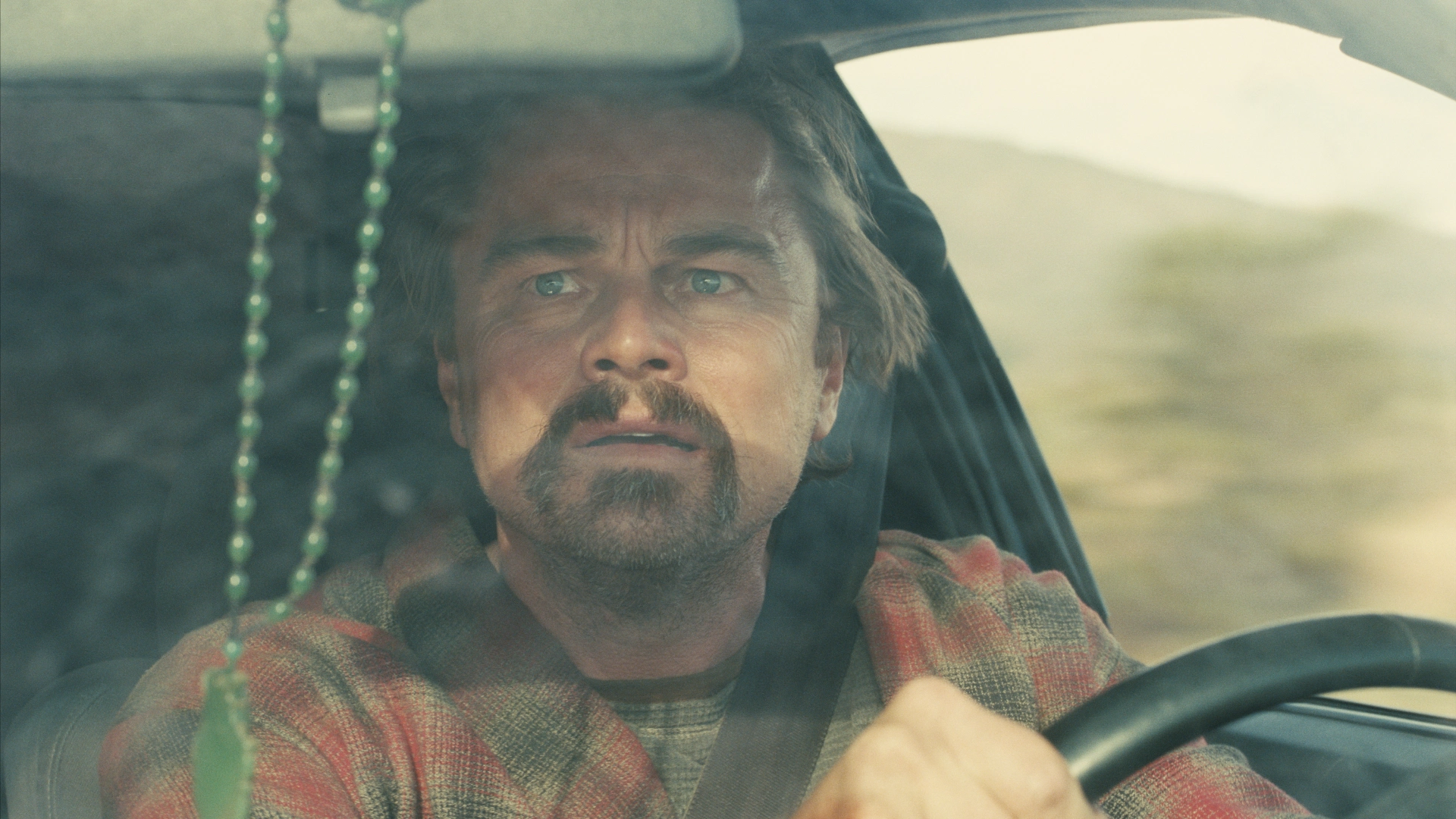
The 98th Academy Awards (or 2026 Oscars) delivered history, a few moving speeches, and the kind of sweep that writes a filmmaker into the permanent record.
Paul Thomas Anderson’s One Battle after Another won six awards, including Best Picture and Best Director, making it the undisputed film of the night. Ryan Coogler’s vampire thriller Sinners was close behind with four, including Original Screenplay.
The individual moments were just as big, as Michael B. Jordan won his first Oscar for Best Actor in Sinners, using his speech to acknowledge the Black actors who came before him.
Behind the camera, Autumn Durald Arkapaw made history as the first woman of color to win Best Cinematography for Sinners, a recognition the industry had long been overdue to give.
Jessie Buckley took Best Actress for Hamnet, Amy Madigan won Supporting Actress for Weapons, and Sean Penn took Supporting Actor for One Battle after Another.
| Category | Winner | Film |
| Best Picture | Adam Somner, Sara Murphy, Paul Thomas Anderson | One Battle after Another |
| Directing | Paul Thomas Anderson | One Battle after Another |
| Actor in a Leading Role | Michael B. Jordan | Sinners |
| Actress in a Leading Role | Jessie Buckley | Hamnet |
| Actor in a Supporting Role | Sean Penn | One Battle after Another |
| Actress in a Supporting Role | Amy Madigan | Weapons |
| Original Screenplay | Ryan Coogler | Sinners |
| Adapted Screenplay | Paul Thomas Anderson | One Battle after Another |
| Cinematography | Autumn Durald Arkapaw | Sinners |
| Animated Feature | Kang, Appelhans, Wong | KPop Demon Hunters |
| International Feature | Joachim Trier | Sentimental Value (Norway) |
| Visual Effects | Letteri, Baneham, Saindon, Barrett | Avatar: Fire and Ash |
| Live Action Short (tie) | Davis / Singh | The Singers / Two People Exchanging Saliva |
The Machine in the Room
The Academy’s official line is that automated tools neither help nor harm a film’s eligibility, provided that human creativity remains at the center of the work. What the rules do not require, however, is that anyone disclose how much of a film was touched by those tools.
Most productions choose not to say anything, and the Academy does not ask. Industry insiders have taken to calling it a quiet arrangement where the subject simply goes unaddressed.
Sinners illustrates how this plays out in practice. The film was widely praised for its visual and technical ambition, including Michael B. Jordan’s dual performance, parts of which were refined using face replacement software driven by machine learning.
None of that came up in the acceptance speeches, and it was not expected to.
The ceremony demonstrated that as long as the technology is deployed in service of the director’s vision and does not draw attention to itself, the Academy is comfortable treating the final product as a purely human achievement.
That simply reflects where filmmaking actually is right now. These tools are already present in the work being celebrated; it’s just that the public conversation around them has not kept pace.
How Studios Are Responding
Hollywood is not responding to this moment with a single, unified strategy. The major players are pulling in different directions, and some are pulling in opposite directions at the same time.
Netflix has made the clearest statement of intent in March 2026 by acquiring InterPositive, a filmmaking technology company founded by Ben Affleck.
Unlike the tools at the center of most AI controversies in film, InterPositive does not generate footage from a written prompt. It studies the raw footage from a specific production, learns its visual identity, and uses that to handle the repetitive, time-consuming parts of post-production that would otherwise take weeks at specialist companies.
For Netflix, the savings across dozens of productions a year will be massive.
Disney and Paramount took a harder line, sending legal warnings to ByteDance over Seedance 2.0, a video generation tool that sparked alarm after a clip appeared online showing Tom Cruise and Brad Pitt in a rooftop fight scene, reportedly created from a two-line written description.
More clips followed featuring Star Wars, Marvel, and Spider-Man characters. Disney’s argument was that ByteDance had used creative assets worth decades of investment as free raw material.
The legal cases now underway could set the boundaries for how much copyrighted film and TV material technology companies are allowed to use when building these tools.
The apparent contradiction is that Disney, while pursuing those complaints, separately signed a three-year, $1 billion deal with OpenAI in December 2025 to make its characters officially available on the Sora video platform. The position is actually consistent.
Disney is not opposed to the technology. It simply wants its characters to appear inside it on Disney’s terms, with Disney’s approval, and with Disney getting paid. Basically, sue the party that takes it without asking; partner with the party willing to negotiate.
Where Does This Leave the Oscars?
The Academy is already discussing whether new award categories may be needed. These could include recognition for craft work that uses automated tools, awards for performers who provide the voice and movement for fully digital characters, and possibly a separate category for films created entirely with generative technology.
Some of this is already happening without a category to put it in. De-aging, face replacement, and digital stand-ins are routine on major productions.
The 2026 Oscars ceremony signaled that the Academy still wants a human being at the emotional core of the work it rewards, and that is unlikely to change soon.
However, the line between what a person made and what a machine helped finish has already moved further than any acceptance speech will let on.
The major studios have always dominated the industry because serious filmmaking required huge amounts of money, specialist crews, and tightly controlled creative assets.
If those barriers fall at the production level, the case for a handful of large studios sitting at the top of Hollywood becomes harder to sustain.
The studios that are thinking clearly about this are not only fighting it out in court. They are buying the right companies, signing the right deals, and positioning themselves to control which tools get used and on whose terms.
The films that won the 2026 Oscars were made by people. That is still what gets rewarded; how much longer that remains the whole story is the question the industry has not yet answered.