








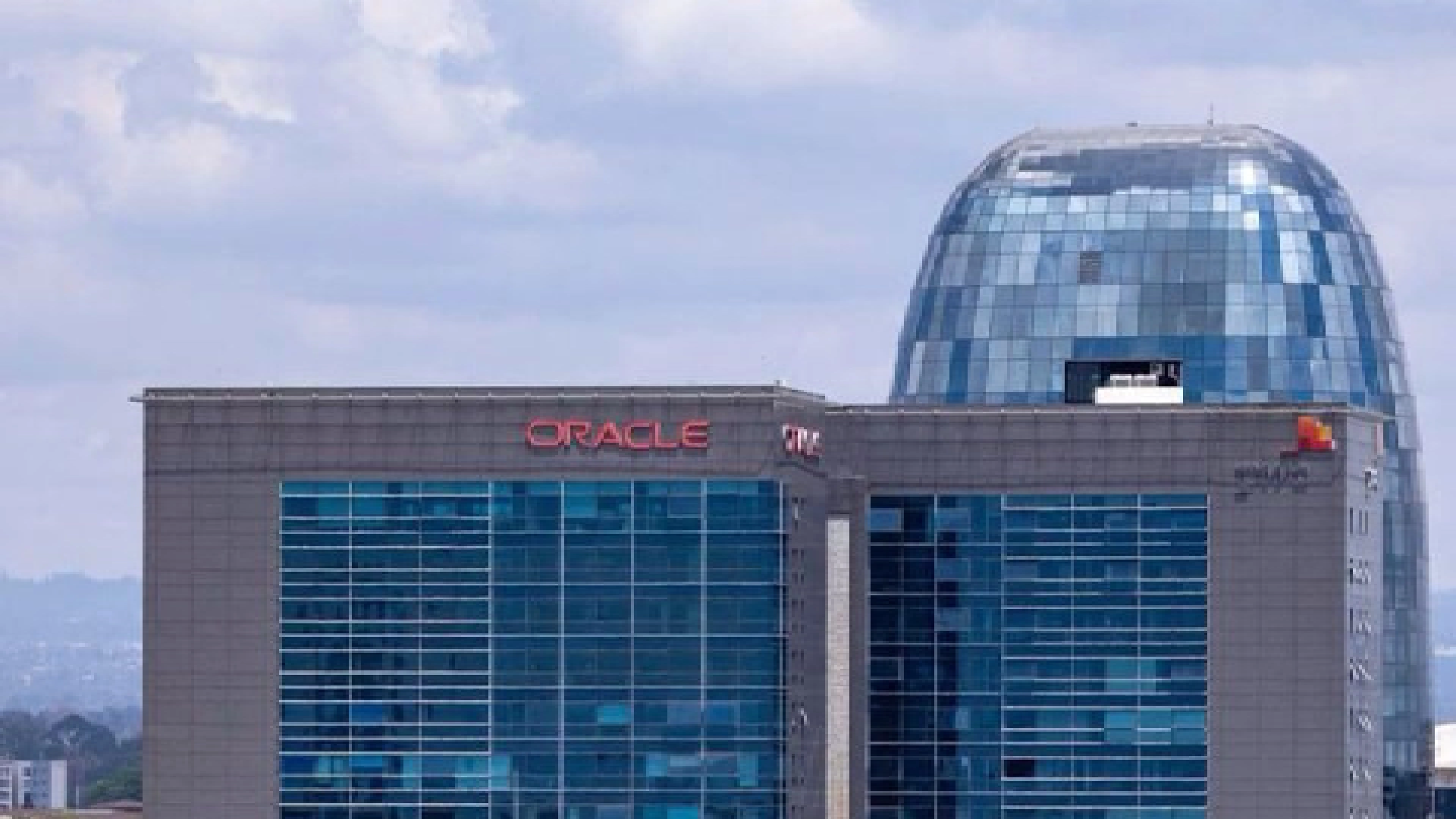
On the morning of March 31, Oracle employees in at least a dozen countries opened their phones to find a message that their roles had been eliminated.
Up to 30,000 people received that email. The irony of this was that Oracle had just posted its best quarter in 15 years.
The company reported net income of $6.13 billion for the period, a 95% jump year on year. Its contracted future revenue stood at $523 billion. There was no operational crisis, no revenue collapse, no existential threat to the core business.
What there was, instead, was a debt load that had quietly become one of the largest in the technology industry and a capital spending plan that its balance sheet could not comfortably absorb.
Oracle is building the physical infrastructure that powers ChatGPT, which includes the massive warehouse-sized buildings packed with specialized computers that run AI around the clock.
That costs an enormous amount of money, and Oracle has committed to spending $156 billion on it over the next 5 years.
Two years ago, Oracle spent about $7 billion a year on this kind of construction. This year that number jumped to $50 billion. To fund this, the company Oracle has taken on $58 billion in new debt, bringing its total borrowings to over $108 billion.
Oracle’s credit rating is one step away from junk status, the point where banks start treating you as a default risk. Cutting 30,000 jobs frees up an estimated $8 to $10 billion a year, and every dollar of it goes straight into buildings and chips.
OpenAI has reportedly been shopping for faster chips to handle tasks where Nvidia’s hardware falls short, covering an estimated 10% of its future computing needs.
The fact that alternatives are being explored while Oracle is still mid-construction on a massive Texas facility is the kind of uncertainty that makes lenders nervous, and some banks have already stopped financing parts of the project.
Nairobi, Sixty-Three Days Later
Two months before the layoffs, Oracle and iXAfrica announced that Nairobi would host Oracle’s first public cloud region in Kenya.
The announcement had been years in the making, first flagged by President Ruto in January 2024, and carried real commercial weight for Kenyan enterprises and public institutions that needed a local cloud option.
Oracle has not disclosed how many Kenyan staff were affected, and no local figures have emerged. The Nairobi office focuses on sales, cloud support, and customer success, doing exactly the kind of work that took the deepest cuts globally.
The physical infrastructure at iXAfrica is almost certainly safe, as it is the whole point of the exercise.
What is less clear is whether Oracle has left enough people on the ground to make that infrastructure useful to the businesses it was built to serve.
A Profitable Company with a Self-Imposed Crisis
Oracle’s stock rose 6% the day the layoffs were announced. The market read the move as a sensible reallocation, not a sign of distress, and in narrow financial terms that reading is defensible.
The company is converting operational headcount into capital expenditure to compete with Amazon and Microsoft in a market where physical infrastructure increasingly determines who wins.
What that framing leaves out is that the cash crunch Oracle is solving was entirely of its own making. The company borrowed aggressively against a $156 billion commitment to a single customer, watched its lenders grow nervous, and then handed the bill to its workforce.
The 30,000 people who woke up to a locked laptop on March 31 did not take that bet, but they just paid for it.