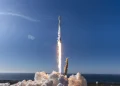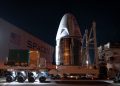








Yesterday evening, NASA’s Space Launch System rocket left Launch Pad 39B at Kennedy Space Center in Florida at 1:35 a.m. local time. About 400,000 people showed up to watch in person, with over 900 journalists from 18 countries credentialed for it.
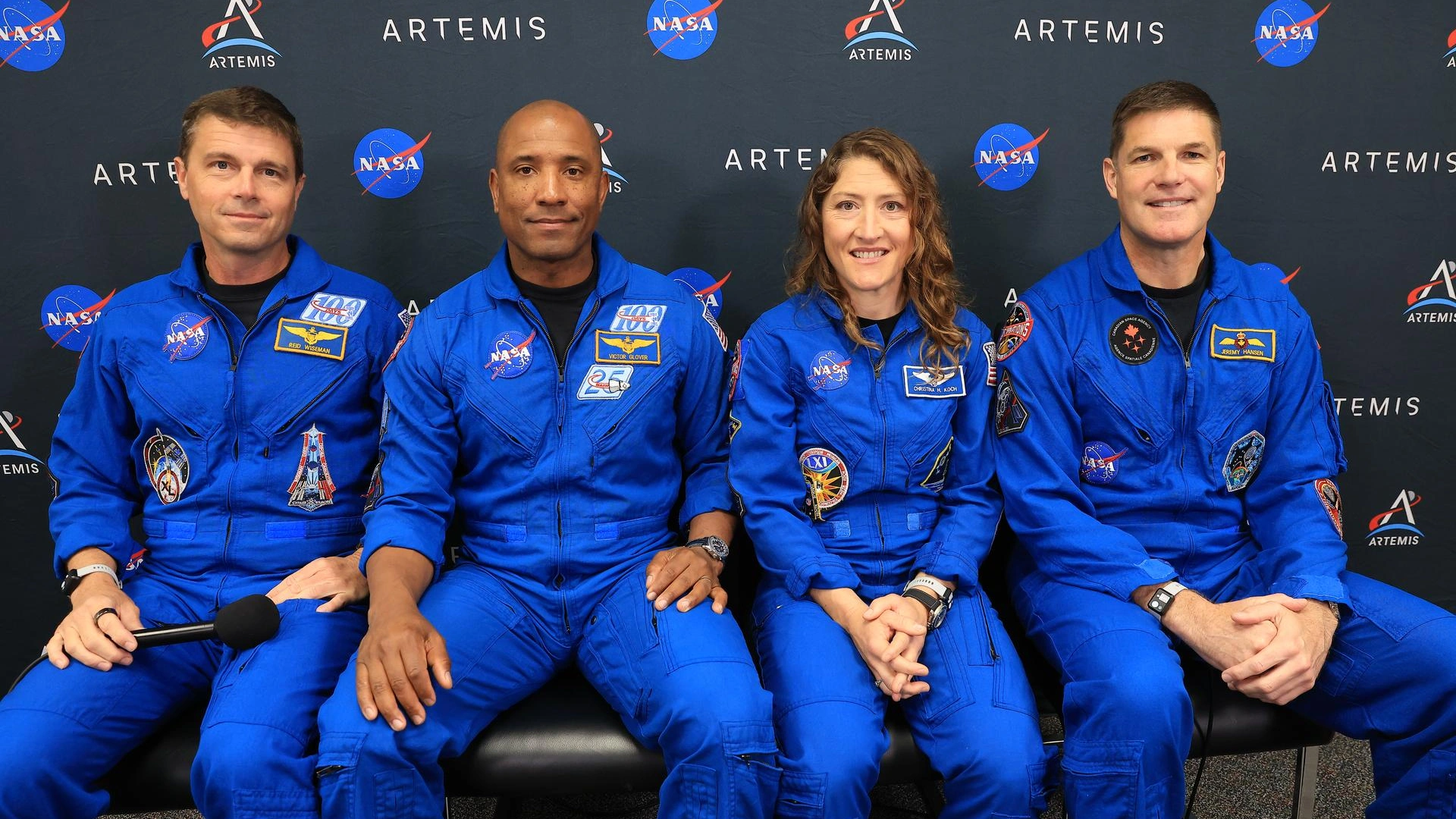
The four astronauts of Artemis II are now heading toward the moon are Reid Wiseman (commander), Victor Glover, Christina Koch (all ISS veterans), and Canadian Space Agency rookie Jeremy Hansen. None of them were alive the last time humans went to the moon.
Where They’re Going and How They’ll Get There
This is not a moon landing. The crew will not orbit the moon either. What they will do, on day 6 of the mission (Monday, April 7), is swing around the far side of the moon, coming within about 6400km of the surface, before the moon’s gravity flings them back toward Earth.
At their farthest point, they’ll be roughly 402,000km from Earth, which is farther than any human has ever been.
To understand the mechanics of getting there, 10 minutes after liftoff, the spacecraft was already in orbit. By this evening, 24 hours after launch, the crew will fire the Orion spacecraft’s engine in a maneuver called translunar injection, which pushes them out of Earth’s orbit toward the moon at about 39,500 kph.
That speed is deliberately specific. Any faster and the spacecraft would leave Earth’s gravitational influence entirely, meaning if something went wrong near the moon, it couldn’t naturally arc back home.
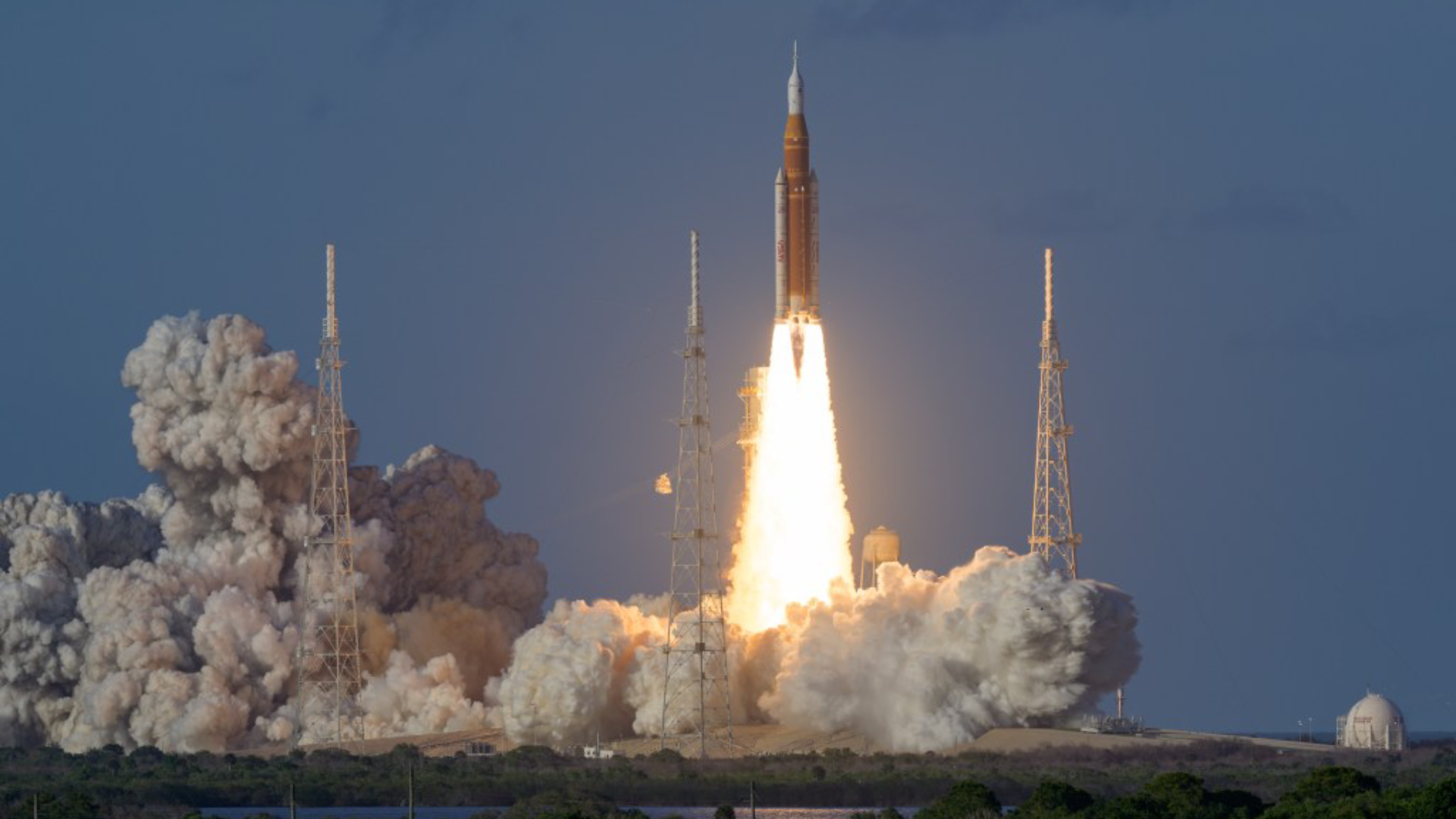
At 39,500 kph, Earth’s gravity still has enough hold on the spacecraft that the moon can slingshot it directly back if the engine fails. It’s a built-in safety net that the mission profile is designed around.
The astronauts will reach the moon’s neighborhood on April 7 and get home on Friday, April 10 – a 10-day trip total.
Coming Back Is the Hard Part
The return entry is more complicated than a typical spacecraft reentry. Missions coming back from low Earth orbit slow down slightly with thrusters and ease into the atmosphere.
Artemis II will hit the atmosphere at around 40,200kph, which is too fast for a straight descent. Instead, Orion will skip in and out of the atmosphere, like a stone across water, gradually bleeding off speed and heat before settling into the Pacific Ocean at about 24 kph.
READ: NASA Brings Space Missions to Netflix at No Extra Cost
Orion is physically larger than the Apollo capsule and carries one more astronaut while offering 50% more interior space. The crew have sleeping hammocks rather than sleeping in their seats.
There’s an actual toilet (a $23 million one that took 6 years to build, for what it’s worth). The computers run 20,000 times faster than Apollo’s, with 128,000 times the memory.
Solar arrays provide power rather than batteries alone. There’s also exercise equipment onboard for the crew to test whether an astronaut rowing vigorously disturbs the spacecraft’s solar array alignment.
What This Mission Is Actually For
This is a shakedown flight for the Orion spacecraft. NASA needs to confirm that the hardware, the flight systems, and the crew procedures all work before it sends people to actually land on the moon.
The mission also has 10 lunar science objectives that mostly include remote observation work, practicing techniques that future crews will use at the lunar south pole, which is the long-term target because water ice deposits there can be used for drinking water, oxygen, and rocket fuel.
One planned highlight is at their farthest point beyond the moon, the crew will attempt to photograph both the full disk of Earth and the full disk of the moon in a single frame, something that has never been done before.
The Artemis program isn’t just NASA. 60 countries have signed the Artemis Accords. The European Space Agency built Orion’s service module. Canada contributed an astronaut. The goal isn’t to plant a flag and leave.
READ: President Trump Wants to Plant a US Flag on Mars
This will be a permanent South Pole base, with annual lunar landings planned from 2028 onward.
Meanwhile, China has announced it intends to land astronauts on the moon by 2030. Russia is partnering with them on a separate lunar station planned for 2035.
The last Apollo mission, Apollo 17, launched December 7, 1972. Wednesday’s launch came 53 years later, and every member of the Artemis II crew was born after that mission ended.