




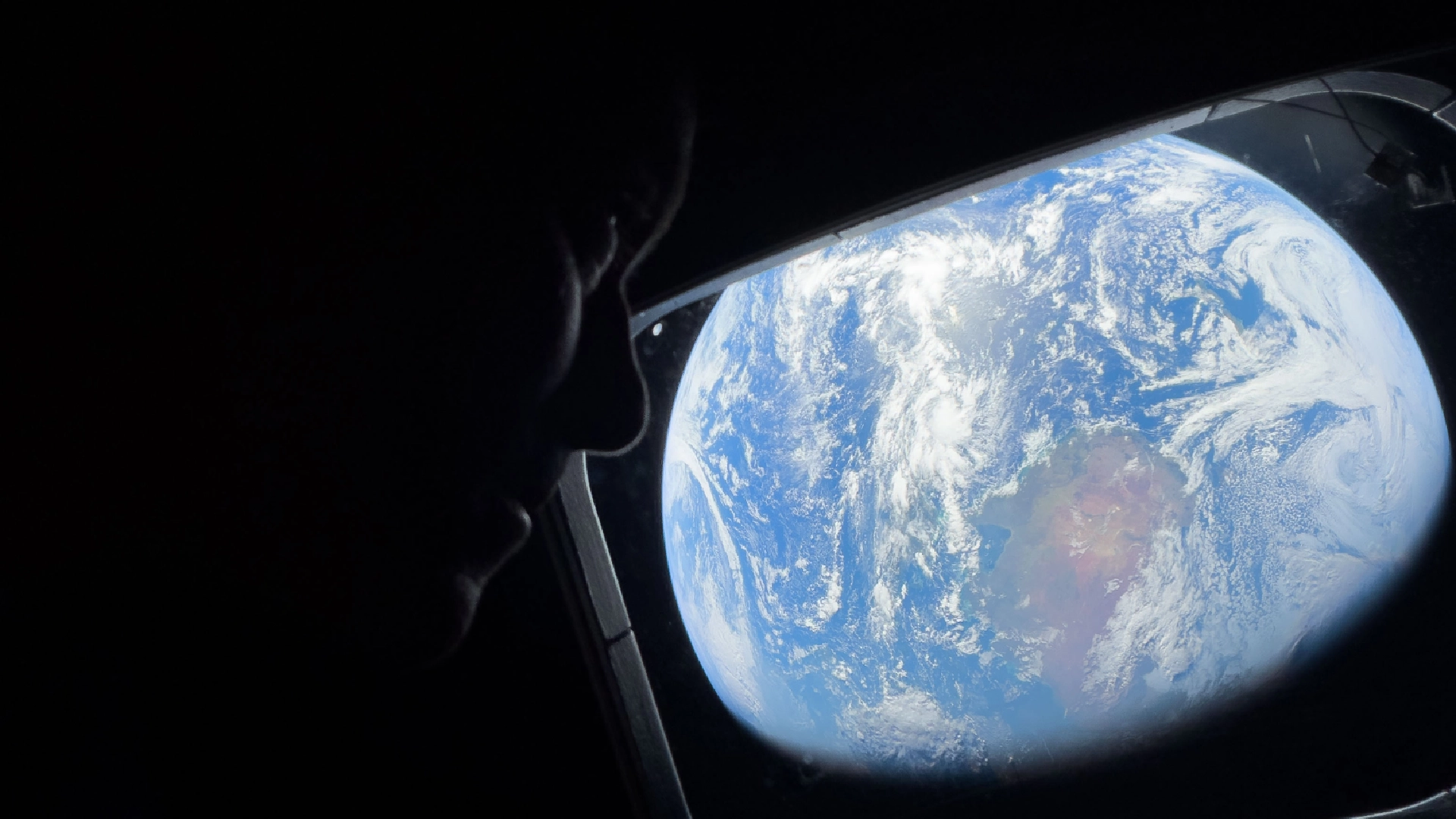
On April 6, 2026, four people were sitting inside a capsule roughly 406,777 KM from Earth, further from home than any human being had ever been.
Americans Reid Wiseman, Victor Glover, Christina Koch, and Canadian astronaut Jeremy Hansen had just broken a record that had stood for 56 years, one set not by triumph but by catastrophe.
In April 1970, an oxygen tank aboard Apollo 13 exploded two days into the mission. Commander Jim Lovell and his crew were forced to abandon the lunar landing, swing around the Moon on a free-return trajectory, and limp back to Earth.
That unplanned arc took them 400,171 km out, and by accident, they became the humans who had traveled farthest from their planet. The record stayed on the books for more than half a century.
Artemis II beat it on purpose. The Orion spacecraft carrying the four-person crew launched on April 1, 2026, as a test mission rather than a landing attempt.
The goal was to push the spacecraft and its systems through conditions no ground simulation can truly replicate, to find out whether Orion could carry people into deep space and bring them back safely.
In doing so, the mission also carried a quieter significance. Victor Glover became the first person of color to travel beyond low Earth orbit. Christina Koch became the first woman to do the same, while Jeremy Hansen became the first non-American.
Together, they represented a departure from the demographic profile of every deep space mission before theirs.
The Artemis program is trying to change the terms of what is possible. The Moon is the immediate target, with a crewed lunar landing now planned under Artemis IV in early 2028, after Artemis III shifts to demonstrating commercial landers in low Earth orbit.
Beyond that, NASA has outlined plans for a lunar gateway and a surface base in the early 2030s, followed by crewed Mars missions later in the decade.
Those ambitions depend on Artemis II going right. Every system that performs reliably on this mission is one more argument for attempting a landing. Every lesson learned here reduces the risk for the crew that will eventually touch down.
There is a temptation to frame record-breaking moments in space as spectacle, as numbers that impress without quite landing. The Apollo 13 comparison makes the Artemis II milestone unusually concrete.
That 1970 crew set their record while improvising survival in a crippled spacecraft, guided by engineers in Houston working through the night. The 2026 crew set theirs while following a plan, in a spacecraft designed to go further still.
The distance record will, however, not last long, definitely not 50 years if NASA’s plans work out. Future Artemis missions will push crews closer to the Moon and eventually onto its surface.