








The world’s biggest prediction markets are processing billions of dollars a week. Kenya, a country that has turned speculation into a national pastime, may be next in line. The country is, by almost any measure, one of the world’s most enthusiastic betting markets.
A GeoPoll study found that in 2024, 82.8% of Kenyans had placed a bet, with Kenya consistently holding the top spot in betting participation across Africa.
By 2025, South Africa nudged ahead at 83%, dropping Kenya to second place at 79%, though that marginal slip does little to diminish the scale of the country’s gambling culture.
Between July 2024 and March 2025, Kenyans were wagering an average of KES 274 million daily. In this context, two American platforms, Polymarket and Kalshi, are reshaping how the world bets on everything from elections to interest rates.
The question is whether they will eventually reshape Kenya too, and whether they already are.
What Are These Platforms?
Prediction markets are not sports betting in the conventional sense. They are platforms where you trade on the probability of future events, with prices shifting in real time based on what the collective market believes will happen.
Both Polymarket and Kalshi operate in this space but are built on fundamentally different foundations.
Polymarket is a decentralized application built on the Polygon blockchain, using the US Dollar Coin (USDC) stablecoin instead of traditional currency. You control your own funds through a crypto wallet, and the platform matches and settles trades on-chain.
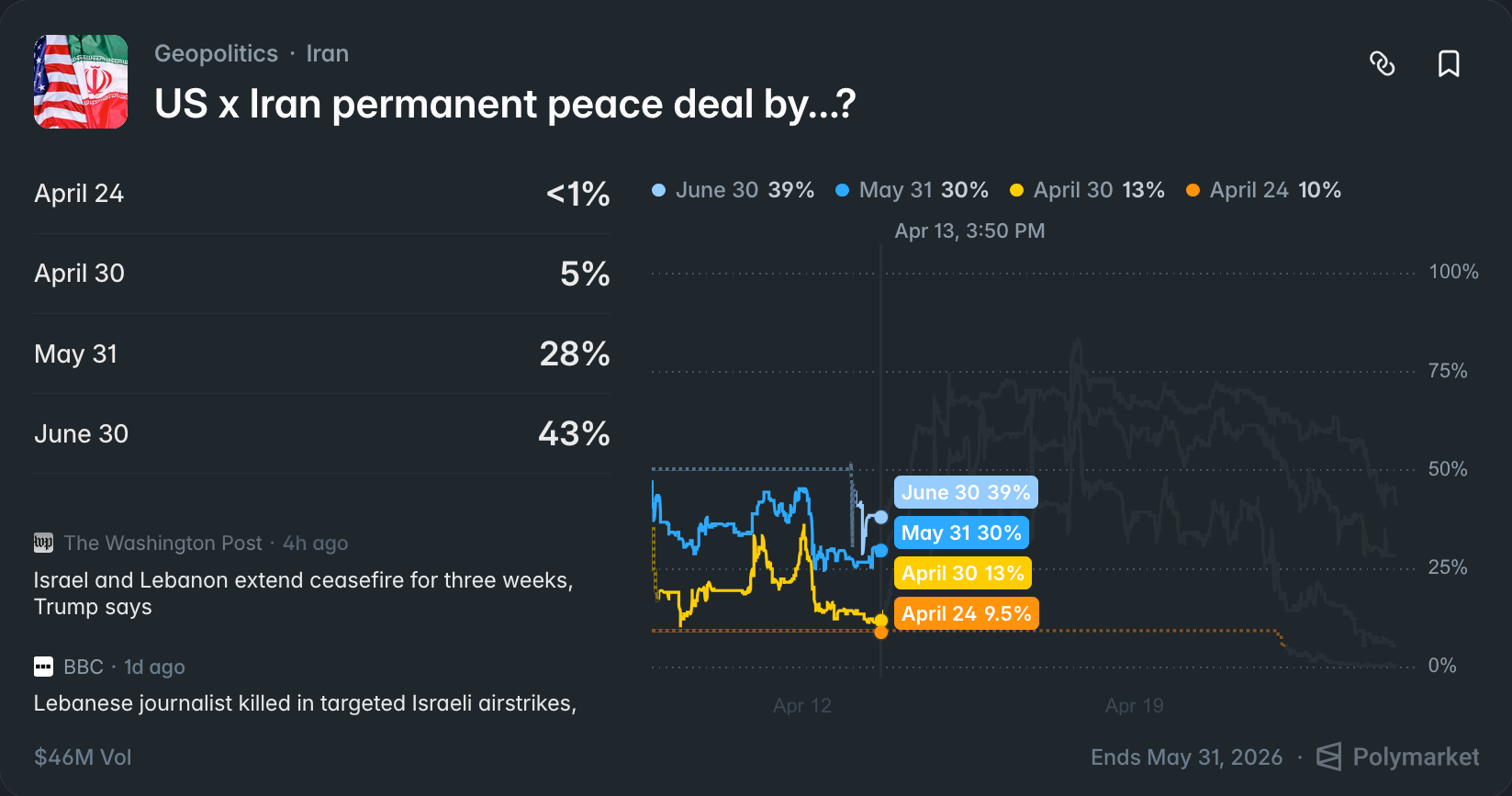
Kalshi, by contrast, operates under the oversight of the US Commodity Futures Trading Commission and uses conventional banking rails. It is the more institutionally legible of the two but also more geographically restricted.
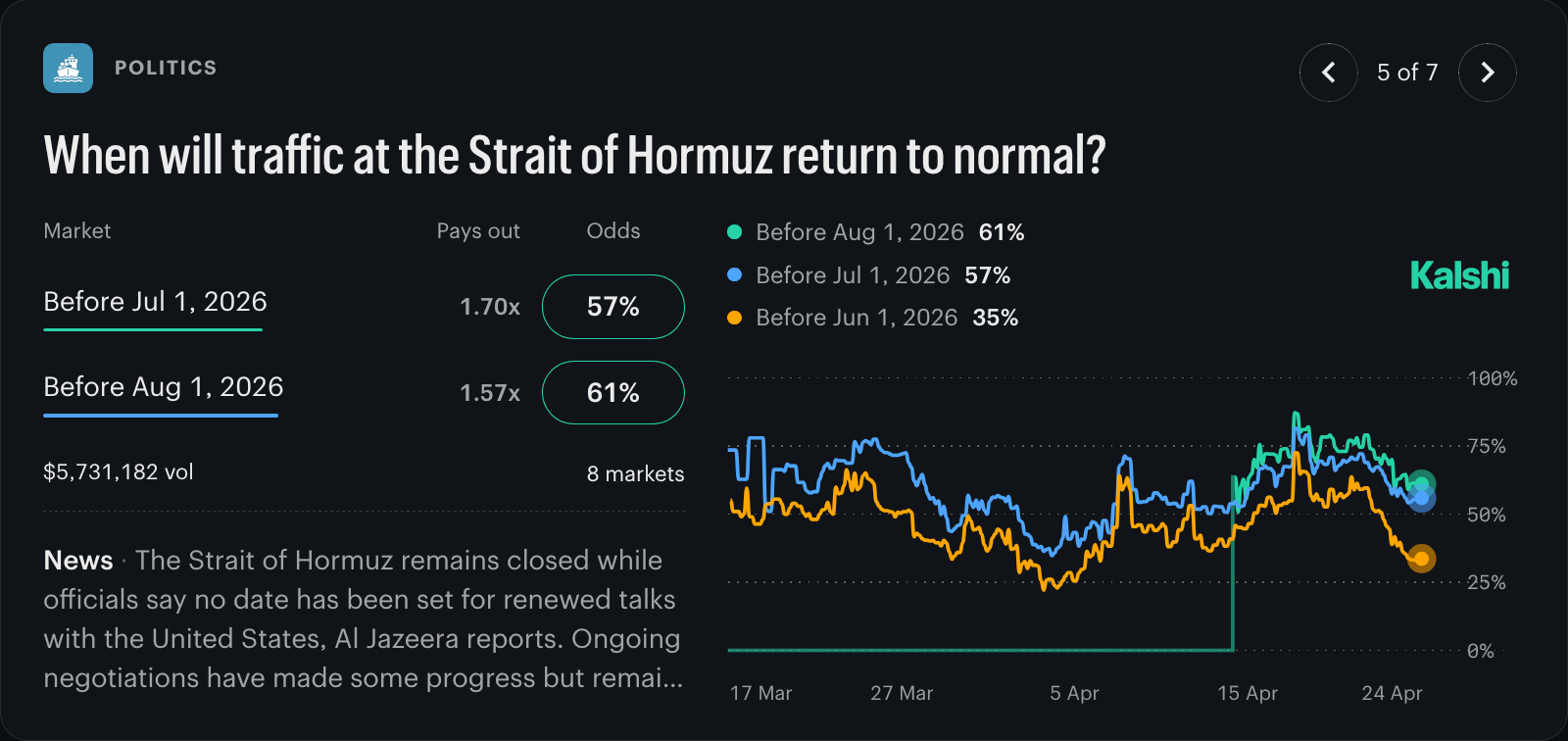
These are early-stage products, but their existence signals local demand for a format that sits between speculative finance and civic engagement.
Users are reportedly placing positions on scenarios as varied as Kenyan political by-elections and geopolitical flashpoints like the Iran situation.
Of the two global platforms, Polymarket is far more accessible to Kenyan users. Its decentralized architecture requires no US bank account and no geo-fenced app store.
Anyone with a crypto wallet and USDC can participate. That combination maps reasonably well onto Kenya’s smartphone penetration and M-Pesa-anchored digital finance culture.
The appetite is clearly there, seeing that Kenya’s betting culture is not simply about entertainment. For many users, especially young urban men, it functions as an actual income strategy.
The same psychological architecture that makes sports betting compelling, including the thrill of prediction, the belief in a correct read, and the hope of an outsized return, is precisely what prediction markets offer.
It looks different on the surface, but the thrill is the same.
The Shadows of Aviator and Worldcoin
Kenya’s track record with novel digital speculation platforms contains two cautionary chapters that any prediction market entrant should study closely.
The Aviator crash game became a cultural flashpoint precisely because it was so frictionless. Its mechanics, cashing out before a virtual plane crashes, became highly addictive, caused massive financial losses, and prompted calls for government intervention.
Aviator did not invent gambling harm in Kenya, but it accelerated it, and the speed was the problem.
The Worldcoin saga offers a different but equally instructive warning. Its iris-scanning operation was suspended in 2023 and subsequently declared unlawful by the High Court in 2025, citing violations of data privacy laws and a lack of regulatory oversight.
The lesson was not that Kenyans resist novel digital platforms. They have demonstrated time and again that the appetite for risk is there. The problem is that regulators tend to arrive after the damage is already done.
Globally, prediction markets fall into a grey area between traditional gambling and high-risk investments. Singapore has already classified Polymarket as an unlawful gambling operator.
In February 2026, the Dutch gambling regulator ordered it to stop operating in the Netherlands, ruling that event-based contracts constitute illegal gambling.
Kenya’s new Gambling Regulatory Authority that replaces the Betting Control and Licensing Board (BCLB) is still formulating its operating regulations after the Gambling Control Act came into force in August 2025 and could follow the same logic the moment these platforms become visible enough to attract scrutiny.
If Prediction Markets Take Off
If prediction markets gain meaningful ground in Kenya, the consequences will cut both ways. A platform that lets you trade on whether the CBK will cut rates or whether a by-election result will go for UDA or DCP is more information-producing than a football accumulator.
Used well, these tools can sharpen both financial and civic reasoning.
The risk is the one Aviator made obvious, which is that Kenyan bettors are not uniquely irrational. They are operating under economic pressure where speculative platforms, whatever their intellectual framing, become a substitute for formal income.
A prediction market with a polished interface, crypto-denominated payouts, and locally relevant markets would be extraordinarily compelling and extraordinarily dangerous in equal measure.
The platforms are already taking root, and whether they become a tool or a trap depends entirely on what happens next.